


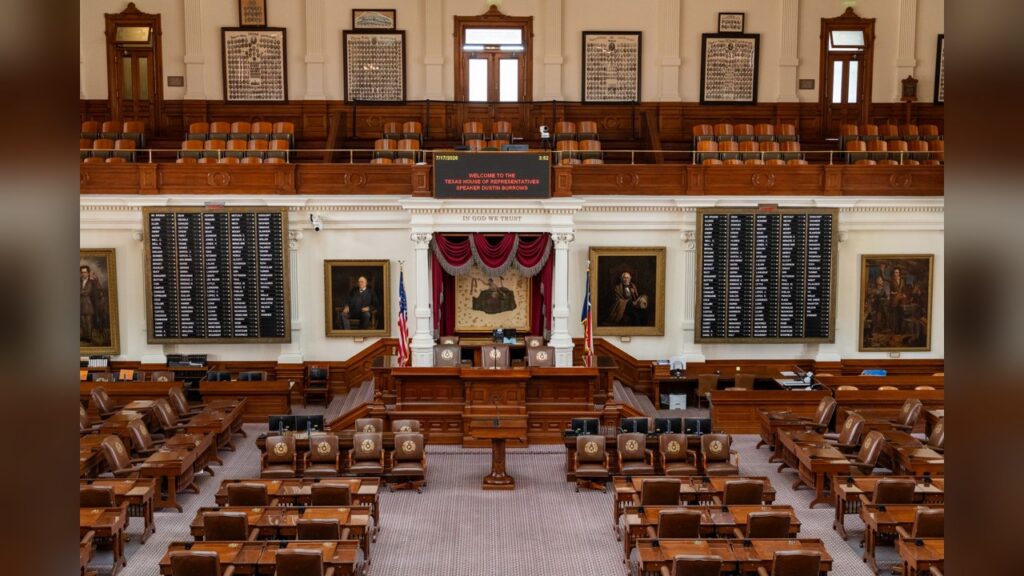
Funny how this works. A poll comes out showing 54 percent of Americans want to add 150 seats to the House of Representatives, and within the same breath, the experts rush in to tell you it’s “politically unlikely.” Ask yourself who benefits from that answer.
The survey, run by Fix Our House, New America, and Verasight, found half the country also supports proportional representation. Half. That’s not a fringe movement. That’s not a couple of cranks at a town hall. That’s a country looking at its government and saying, this thing is broken.
 New America (CC BY 2.0) via Wikimedia Commons
And it is broken. The House has been frozen at 435 voting members since 1929. Back then, the U.S. population was about 123 million. Today it’s over 331 million. You do the math. Each member of Congress now represents nearly three times as many people as their predecessors did a century ago. You think your representative knows who you are? You think they care? You’re a data point in a spreadsheet, a zip code in a fundraising database. That’s not representation. That’s administration.
The American Academy of Arts and Sciences put out a report recommending exactly what the poll found people want: add 150 seats, bring the House to 585 members, and keep expanding so states stop losing representation even when their populations grow. Since 1931, 149 seats have been shuffled between states. States lose seats while their population goes up. Read that again. More people, fewer representatives. The system is literally designed to dilute your vote over time, and nobody in power wants to fix it.
Lee Drutman, a political scientist at New America, makes the obvious point: smaller districts mean voters get more direct representation. More direct representation means incumbents actually have to answer to people instead of hiding behind gerrymandered fortresses. And that’s the whole problem, isn’t it?
 Brett A / Pexels
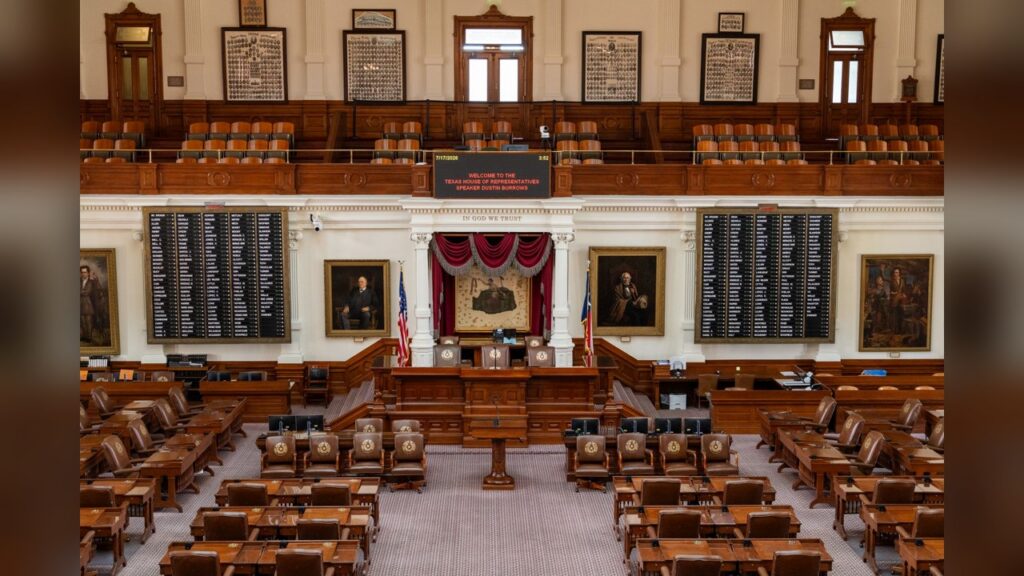
The people who got elected under the current system are the ones who’d have to vote to change it. You think 435 people who clawed their way into a closed club are going to open the doors for 150 more? You think the party bosses want proportional representation, where third parties and independents could actually win seats? Right now the two parties split 100 percent of the pie and call it democracy. Proportional representation means they’d have to share. They’d rather eat glass.
Only 2 percent of people surveyed could even name proportional representation without being prompted. Only about a quarter had heard much about alternatives to the current system. That’s not an accident. The establishment has spent decades making sure Americans never learn there’s another way to do this. The media covers horse races and scandal, never structural reform. The schools teach you the Founders’ debates and then skip straight to “and it’s been 435 ever since, the end.” Nobody mentions that Congress set its own cap and Congress can uncap it anytime it wants. Legislation. One vote. That’s all it takes.
 RDNE Stock project / Pexels
So the poll says Americans want change. The experts say it won’t happen. And the people with the power to make it happen have every reason to make sure it never does. The fix isn’t in because of some shadowy conspiracy. The fix is in because 435 people like things exactly the way they are, and the other 331 million of us aren’t at the table.
The real question isn’t whether 54 percent of voters want this. The real question is what it would take to make the people who ignored them start listening.