


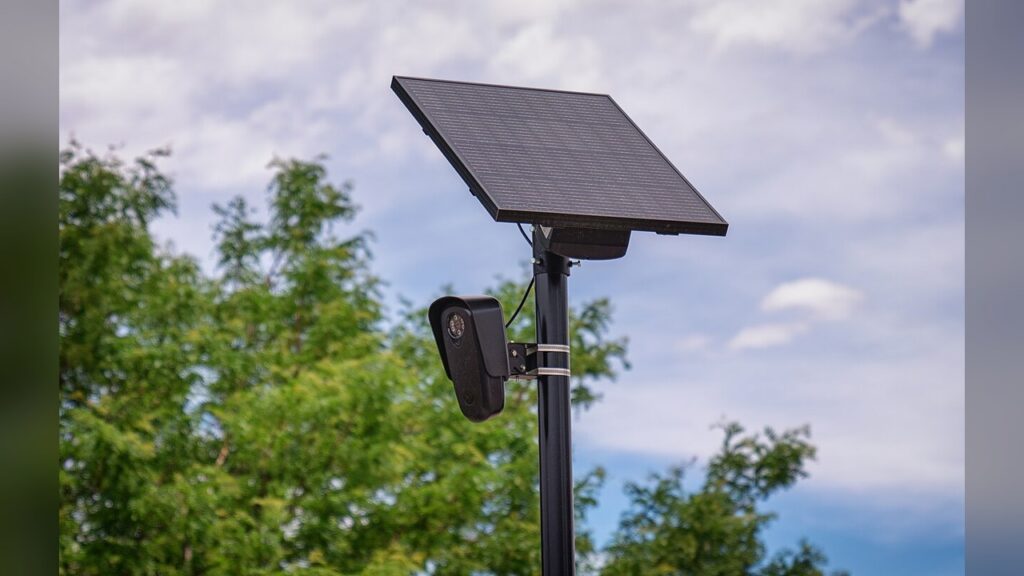
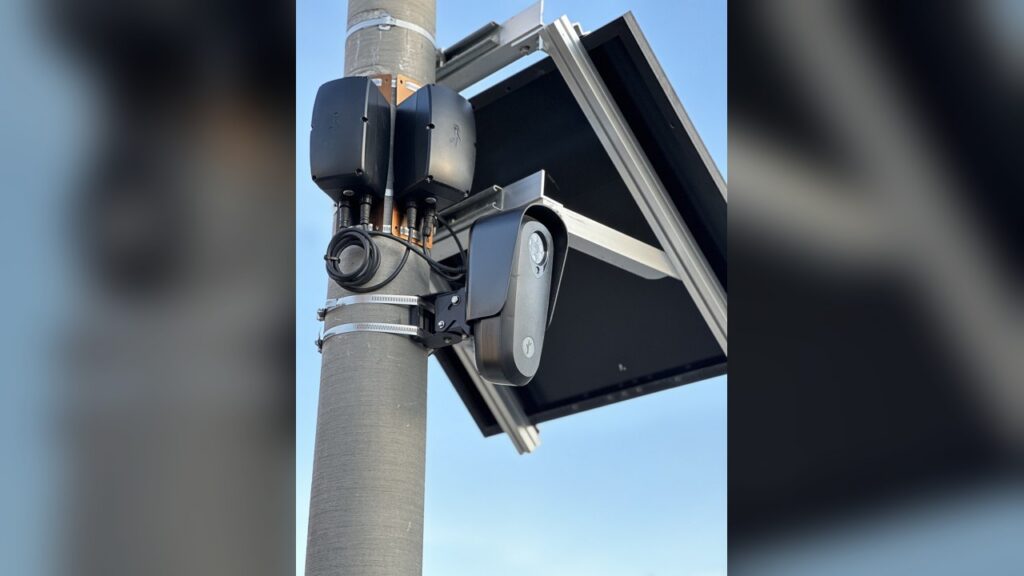
A college kid in Indiana walked outside his apartment the other day and noticed a camera on a pole at every entrance. Not a regular security camera. A Flock camera. One of those AI-powered license plate readers that photographs every vehicle that passes, logs the plate number, the make, the model, the color, and even your bumper stickers and roof racks, then ships all of it to a cloud database where police departments across the country can search it.
He wanted to know if there was anything he could do about it. Funny how that question even needs asking in what used to be a free country.
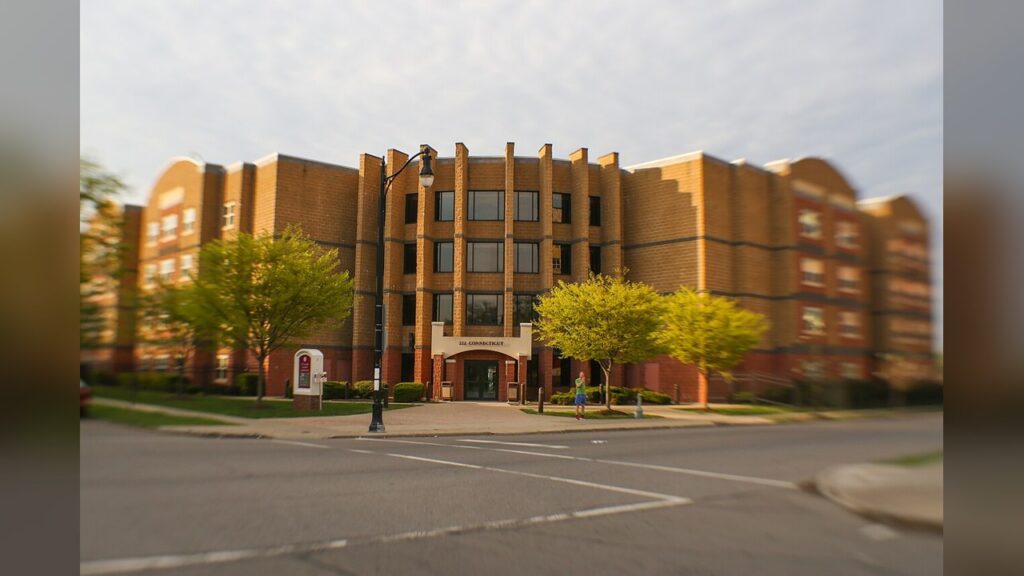
Here is what the kid figured out on his own: these cameras create a permanent record of when residents come and go from their own homes. Every trip to the grocery store. Every late night. Every doctor’s appointment. Timestamped, catalogued, searchable. He is paying rent to live in a building that tracks his movements and hands the data to a private company that shares it with law enforcement agencies he has never heard of, in states he has never visited.
 Bruxton (CC0) via Wikimedia Commons
And nobody told him. Nobody asked him. Nobody voted on it.
Flock Safety’s own marketing materials are a window into how this actually works. They pitch apartment complexes directly. Their sales literature tells property managers that cameras improve “ROI” and “tenant retention.” They cite statistics about unsolved property crimes. They frame the whole thing as a business decision, a cost-benefit analysis, a way to keep units filled and margins healthy. Nowhere in the pitch is there a word about whether the people actually living in those units consented to being tracked.
The company says the cameras are “subtle” in design so they won’t hurt “curb appeal.” Read that again. They designed the surveillance to be unobtrusive so tenants would not notice it and prospective renters would not be scared off. That is not a security feature. That is a stealth feature.
 D'Youville College owns the copyright of this image and they give full permissio (CC BY-SA 4.0) via Wikimedia Commons
Over 200 police and sheriff’s departments in California alone use Flock cameras, and the system has been deployed in more than 4,000 cities nationwide. According to litigation cited in California court filings, the data gets uploaded to a shared, searchable network that out-of-state and federal agencies can access. Audits reportedly turned up search justifications tied to federal immigration and drug enforcement. So a camera on a pole at a student apartment in Indiana could, in theory, feed a database that a federal agent in another state queries without ever getting a warrant.
Ask yourself who benefits from that arrangement. It is not the kid paying $900 a month for a one-bedroom near campus.
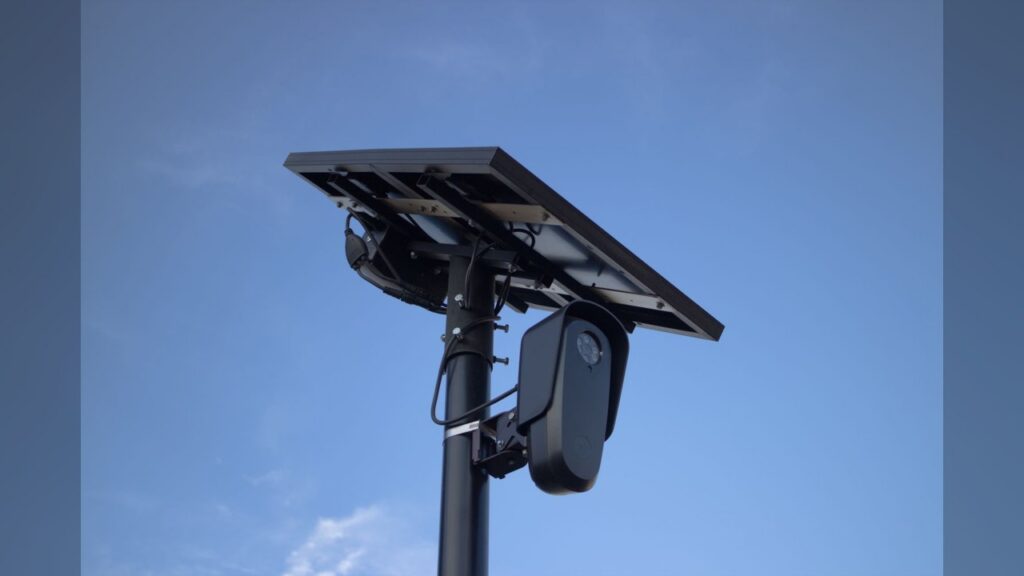
In Barrow County, Georgia, the sheriff’s office posted a warning on Facebook that Flock cameras are “government-owned property” and that damaging one is a felony. Three incidents of criminal damage are under investigation. They said individuals will be “prosecuted to the fullest extent of the law.” So the government installs cameras to watch you, and if you interfere with the camera watching you, you go to prison. The camera has more legal protection than your privacy does.
 Will Freeman / Pexels
A federal judge in Norfolk recently declined to rule that Flock’s network inherently violates privacy rights. That ruling involved a civil challenge to the system’s existence, not a criminal case where flawed plate-reader data was used to justify a stop or arrest. The judge said the cameras are not automatically an invasion of privacy. But the same court filings acknowledge the system can misread plates, generate false leads, and produce stale or out-of-context data that snowballs into stops, searches, and arrests based on a bad match.
The official story is always the same. It is for your safety. It is to solve crimes. It is to protect the community. But the community was never consulted. The cameras went up on poles, the data went to the cloud, the sharing agreements were signed in rooms nobody elected anyone to, and the first time any of it became real to anyone was when a college kid in Indiana looked up and thought, wait, that thing is watching me.
He is not paranoid. He is paying attention.