



There is a particular kind of policy ritual Americans seem incapable of retiring. The deficit expands. The majority clamors for the wealthy to pay more. And the Republican Party, with the reflexive predictability of a Pavlovian dog hearing its dinner bell, proposes cutting taxes on the rich. We are watching it again.
According to Bloomberg’s Katy O’Donnell and Caitlin Reilly, the White House is weighing two proposals that National Economic Council director Kevin Hassett and Larry Kudlow, Trump’s former NEC director, discussed on Fox Business. One would index capital gains for inflation. The other would exempt home sales below $2 million from capital gains tax, quadrupling the current $500,000 exclusion. Kudlow reported that Trump “liked the idea of the indexing, he liked the idea of a bigger exemption.” One imagines he liked them the way a child likes dessert. The details are someone else’s problem.
The details, as it happens, are devastating. The Yale Budget Lab estimates that indexing capital gains would cost $170 billion over a decade if applied only to assets purchased after 2025, and nearly $1 trillion if applied to all existing assets. People earning under $100,000 would receive virtually no benefit. People earning over $3 million would save roughly $350,000. The National Association of Realtors, via Bloomberg, notes that only the wealthiest 15 percent of homeowners would gain anything from raising the home-sale exemption to $2 million. The other 85 percent already avoid capital gains tax through the existing $500,000 threshold.
Meanwhile, the Congressional Budget Office just projected this year’s deficit at $2.1 trillion. Kudlow, on his own program, professed bafflement. He genuinely cannot understand why revenues keep falling, because he believes, against 45 years of empirical evidence, that tax cuts pay for themselves. They do not. The tax cuts in last year’s reconciliation bill alone slashed an estimated $570 billion from federal revenue. This is not a mystery. It is arithmetic.
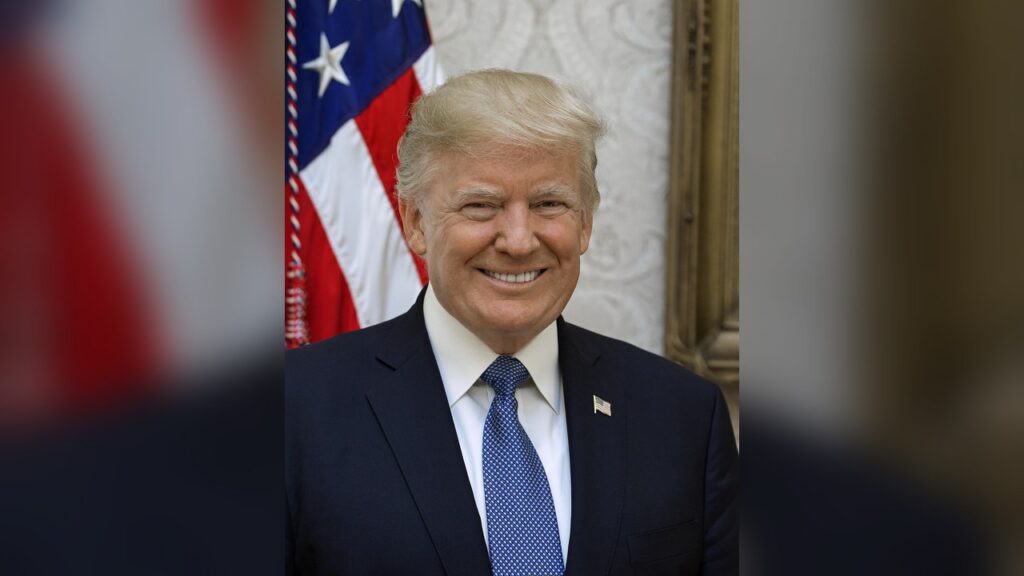 Shealeah Craighead (Public domain) via Wikimedia Commons
What makes this episode structurally interesting, beyond the immediate policy obscenity, is the packaging. The administration will call it a middle-class tax cut. The Center for American Progress has already dissected the rumored “Tax Cuts 2.0” framework, including the proposal to lower the 22 percent bracket to 15 percent. Seventy-six percent of households sit in brackets below the 22 percent bracket. They would receive nothing. Sixty-four percent of the benefit would flow to the top 10 percent. The Tax Policy Center confirmed as much. Calling this a middle-class tax cut requires either staggering ignorance or the kind of rhetorical confidence that only comes from never having been held accountable.
The polling is unambiguous and has been for some time. Gallup has asked since 1939 whether the government should redistribute wealth by heavy taxes on the rich. In the depths of the Great Depression, only 35 percent said yes. Today, 52 percent do. An April Pew Research Center poll found that 61 percent of Americans believe the rich do not pay their fair share, including 41 percent of Republicans. A 2023 Pew survey found that nine in ten adults are bothered that corporations and the wealthy underpay. The Institute on Taxation and Economic Policy projects that Trump’s full tax agenda would cut taxes for the richest 5 percent by 2026 while raising them on everyone else, with the poorest 20 percent paying an additional $790 annually.
The historical pattern is clear. The 2017 Tax Cuts and Jobs Act was skewed toward the wealthy. Its individual provisions expire in 2025. Rather than letting them lapse, the administration wants to make them permanent, at a cost of $1.4 trillion over ten years, while layering new giveaways on top. This is not a scandal in the journalistic sense. It is the system operating precisely as its architects designed it. The question is whether anyone besides the architects’ beneficiaries will continue to tolerate the design.
The literature on regressive tax policy and its political durability is, at this point, voluminous. I would commend it to the administration, but I suspect they would find it “too academic,” by which they would mean “inconvenient.”