


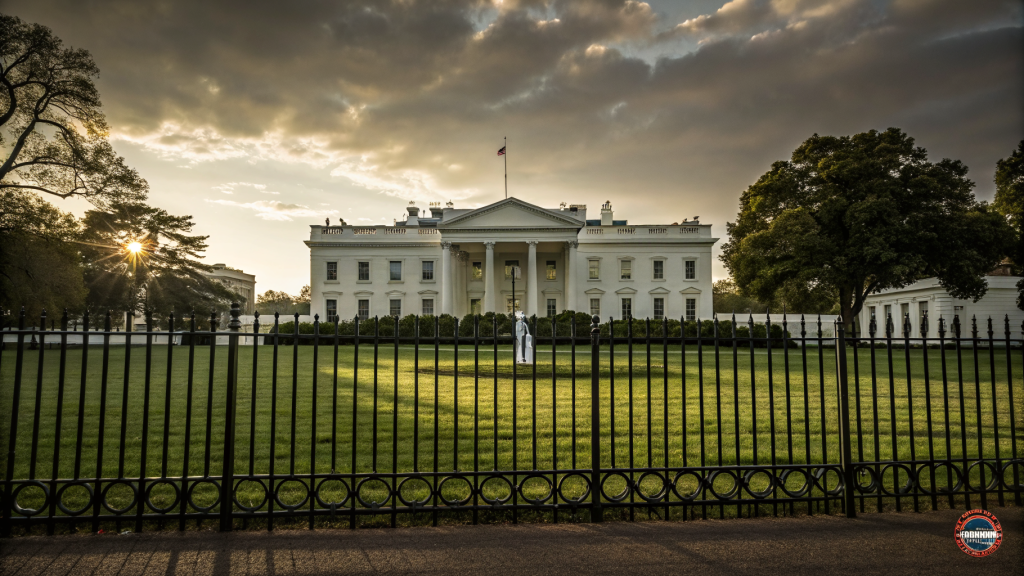
Donald Trump launched a war against Iran on February 28 because, he said, 50 years of sanctions had failed. Five months and countless bombs later, he is betting that sanctions will end it. The White House branded this whiplash “Operation Economic Fury,” as though a catchy name might disguise the fact that the president of the United States is circling back to the exact strategy he dismissed as useless when he used it to justify bombing.
The man stood in Las Vegas last week and told a crowd that no other president had done what should have been done 50 years ago. Then he pivoted, on a dime, to the tool he said never worked. This is not strategy. This is a man who broke something he cannot fix, flailing through his toolbox and grabbing the first hammer he already told you was broken.
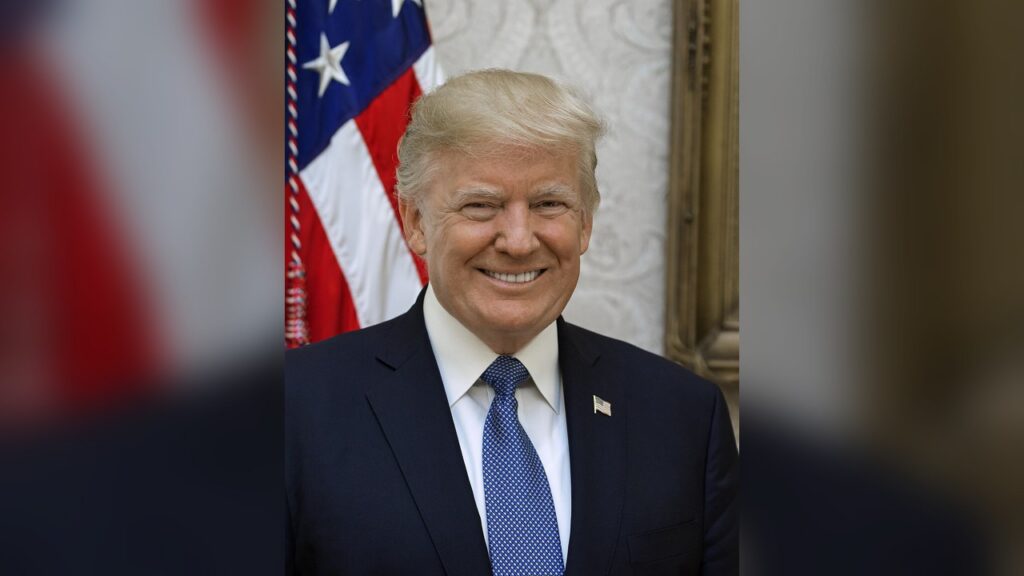 Shealeah Craighead (Public domain) via Wikimedia Commons
Trump told reporters Iran is “broke, totally broke” and claimed 300 percent inflation. The Iranian government’s own figure is 88.6 percent. The IMF estimates the economy contracted 5.4 percent. Iranian oil loadings have collapsed from 1.8 million barrels per day to under 500,000. Those are real numbers. They describe real suffering by ordinary Iranians who did not choose this war. But they do not describe a country on the verge of surrendering its sovereignty, and Trump’s own officials know it.
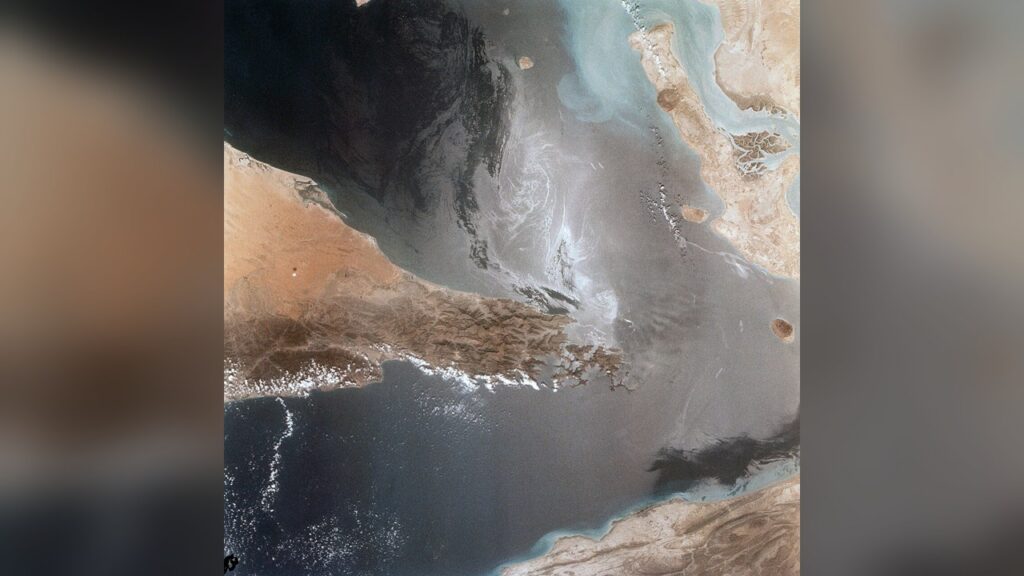
Richard Nephew, the Columbia University scholar who ran Iran sanctions strategy for the Obama administration, put it plainly: “Trump has systematically weakened his own hand through his inadequate use of force, inarticulate elucidation of an objective, and vacillation on negotiations.” Nephew stressed that sanctions cannot bite as fast as a shuttered strait. The Strait of Hormuz carried one-fifth of the world’s oil and LNG before this war. It is now closed. Oil prices jumped more than 5 percent on Monday after Trump opened his mouth, and rose again Tuesday. Every American filling a gas tank is paying for this president’s incoherence.
Meanwhile, the human cost compounds on both sides. U.S. weapons stockpiles have dwindled. American inflation is up. Borrowing costs are rising. The war is unpopular here. It is devastating there. And the people bearing the weight in both countries are not the ones who launched the missiles.
 NASA (Public domain) via Wikimedia Commons
Iran’s Supreme National Security Council issued six conditions for reopening Hormuz: an end to U.S. threats, a permanent ceasefire covering Iran and its allies, lifting the naval blockade, compensation for war damage, lifting sanctions, and releasing frozen assets. These are maximalist demands, and they are a direct response to a war Iran did not start. Trump responded with his own maximalist demands, including compensation for the USS Cole, a 2000 attack carried out by al-Qaeda. He also demanded Iran compensate families of Iranian protesters killed by their own government, which is either a negotiating tactic or a confession that he does not understand who killed whom.
Iran says it is not even negotiating directly with the United States. It is talking to Oman. Vice President JD Vance said Saturday he was confident about a deal. Then Trump posted on Truth Social and oil markets tanked. The left hand does not know what the right hand is tweeting.
 Arthur Devis (Public domain) via Wikimedia Commons
Esmail Baghaei, spokesman for Iran’s Foreign Ministry, said the real risk is that American politicians will “strangle their own remaining chances of a less humiliating exit from a crisis of their own making.” He is not wrong.
The path forward is not more bombs and not more sanctions. It is a ceasefire, the lifting of the naval blockade, the reopening of Hormuz under shared international management, and direct good-faith negotiations with guarantees that this violence will not simply restart. The people of Iran, the people of the United States, and every nation dependent on Gulf oil deserve leaders who choose diplomacy over ego. Trump started this. He has the power to end it. Every day he does not is a choice.