


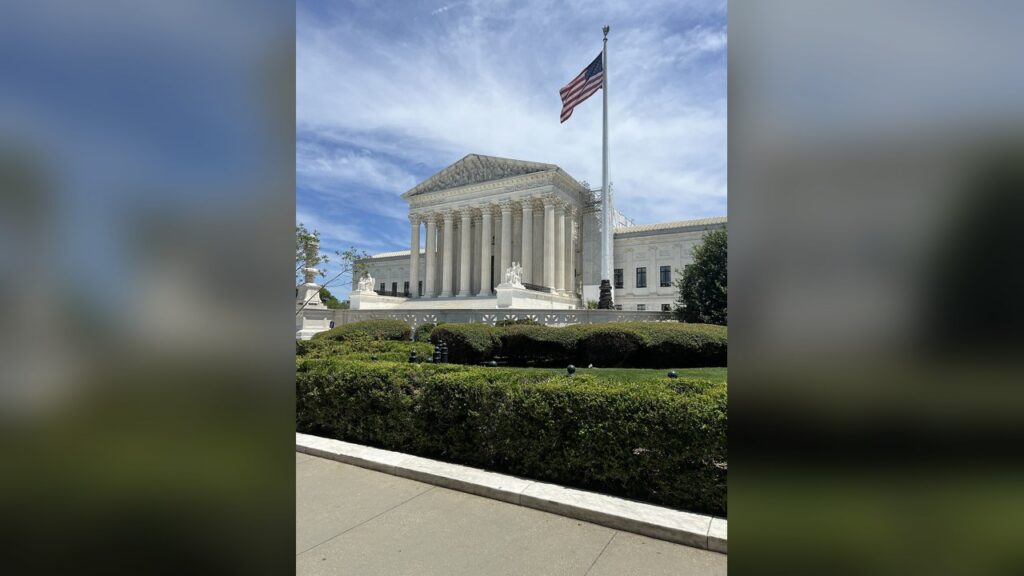
There is a particular kind of exhaustion that sets in when one is asked, for the second time in a calendar year, to explain why the Fourteenth Amendment means what it has always meant. The language is not ambiguous. “All persons born or naturalized in the United States, and subject to the jurisdiction thereof, are citizens of the United States.” The Supreme Court settled this question in 1898 in United States v. Wong Kim Ark, and settled it again in 2026 in Trump v. Barbara, and yet here we are, watching a president issue a second executive order on birthright citizenship as though the first defeat were merely a draft revision.
The new order, modestly titled “Continuing to Protect the Meaning and Value of American Citizenship,” is narrower than the first. It targets three categories of people: children of foreign terrorist organization members, children of certain diplomatic personnel, and children whose mothers allegedly entered the United States specifically to give birth. The Vox reporting is characteristically precise on the point: several of these provisions are unconstitutional on their face, because the people they target are, by definition, subject to U.S. law. A terrorist on American soil can be arrested, prosecuted, and imprisoned. That is what “subject to the jurisdiction” means. It is not a complicated concept, and yet it requires restating, apparently, because the executive branch has decided to treat settled constitutional doctrine as a negotiation.
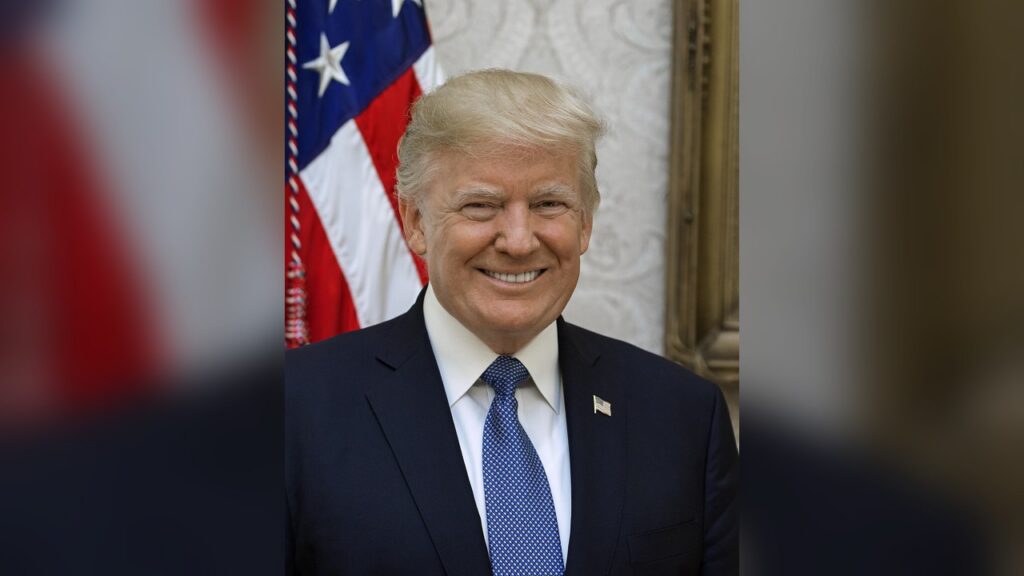 Shealeah Craighead (Public domain) via Wikimedia Commons
What we are watching is not policymaking. It is a structural stress test. Trump lost Barbara with four justices dissenting, four justices who were willing to overrule more than a century of precedent on birthright citizenship. The new order is calibrated to see whether one of the two Republican justices in the majority can be peeled off. Hold the four dissenters, pick up one more vote, and the order stands. The arithmetic is not fanciful. It is, as the Vox analysis notes, a plausible outcome. And that is the genuinely alarming part: the distance between settled constitutional law and its erosion is now one vote on a six-three conservative court.
The December 24 ruling blocking the National Guard deployment to Chicago compounds the picture. The Supreme Court rejected Trump’s request to deploy troops to protect ICE agents, a significant loss on the emergency docket. But the administration’s response to these adverse rulings is not retreat. It is iteration. Narrow the order. Relitigate the principle. Find the justice whose threshold is just low enough. This is how precedents die: not in a single dramatic ruling, but through a sequence of increasingly targeted incursions, each one designed to seem reasonable in isolation while collectively dismantling the edifice.
 U.S. Department of Agriculture Lance Cheung/Visual Information Photographer (Public domain) via Wikimedia Commons
One might call this strategy, if one were inclined toward generosity. One might also call it what it is: a systematic effort to locate the Court’s breaking point and then push past it. The first order would have stripped citizenship from Americans whose mothers were undocumented or temporarily present, a category that included former Vice President Kamala Harris. The second order targets categories so small that one Vox reporter noted it is unclear some of the affected people actually exist. The scope has contracted, but the underlying claim has not. The claim is that the president can define who counts as a citizen, and the Constitution is an obstacle to be engineered around rather than a law to be obeyed.
Judge John Coughenour, a Reagan appointee who blocked the first order, said he had been on the bench for over four decades and could not remember another case where the question was as clear as this one. That was not a partisan statement. It was a statement about the relationship between text and meaning, between precedent and stability, between a constitutional republic and whatever this administration imagines it is running instead. The Fourteenth Amendment was ratified in 1868 to prevent exactly this kind of governmental caprice. It is doing its job. The question is whether six justices will let it continue to do so, or whether the seventh attempt, or the eighth, will finally find the crack.
 U.S. Department of Agriculture Lance Cheung/Visual Information Photographer (Public domain) via Wikimedia Commons
Watch: https://www.youtube.com/watch?v=Y1HNa_XhTN4