



Donald Trump has told us the war with Iran is almost over 32 separate times. Thirty-two. NBC News counted. Each declaration was followed by more threats, more strikes, more escalation. That is not a peace strategy. That is a man standing on a pile of rubble insisting the building is fine.
Last month, after Trump’s fragile ceasefire collapsed, the United States unleashed 13 straight days of missile strikes and bombing runs against Iran. Iran fired missiles and drones back at U.S. military bases across the region. Then Trump abruptly called off further strikes in August, citing “progress in peace talks.” The 60-day negotiating window his team was given to hammer out an agreement over Iran’s nuclear program has now expired with nothing to show for it. The talks, by all accounts, never really got off the ground.
So the bombs paused. The diplomacy failed. And the man who ordered both wants credit for both.
At a House Republican gathering this week, Trump called the war a “short-term excursion” that could end soon, then pivoted in the same speech to proclaiming “we haven’t won enough.” He told reporters at the White House: “We have hit them harder than virtually any country in history has been hit, and we’re not finished yet.” The ceasefire is “over,” he said, because Iran attacked ships in the Strait of Hormuz. But also, he insists, Iranian leaders are “desperate to make a deal.” Which is it? He does not know. He has never known.
 Wikideas1 (CC0) via wikimedia
Senator Mark Kelly of Arizona named the problem plainly: “They didn’t have a plan. They have no timeline. And because of that, they have no exit strategy.” That is not an opinion. That is a diagnosis. You cannot end a war you never defined. You cannot withdraw from a conflict whose goals shift every time the president gets in front of a microphone.
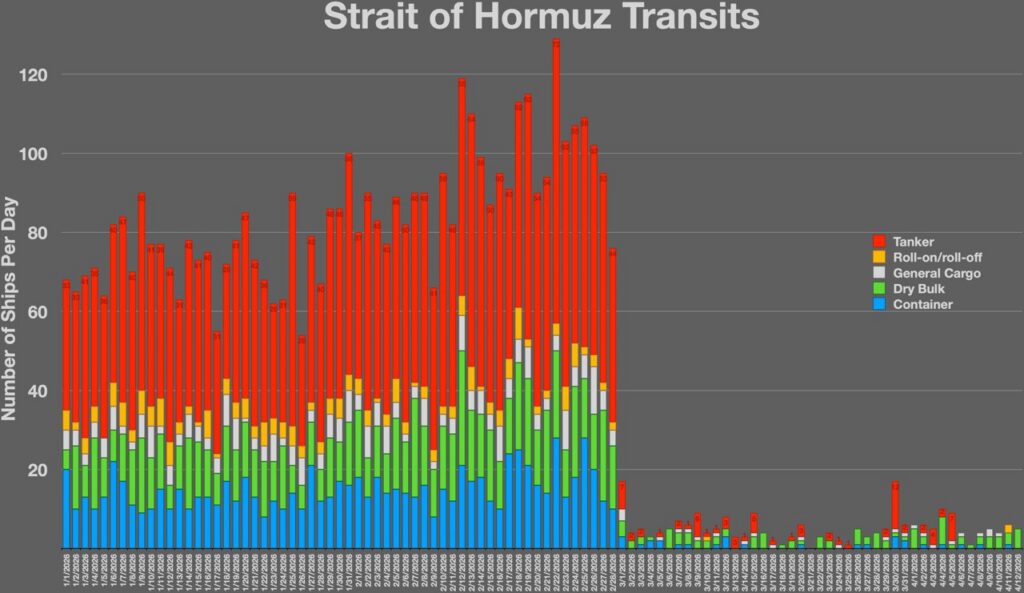
Meanwhile, the people who actually bear the cost of this aimless escalation are not in the White House briefing room. The Wall Street Journal reports that Iran is preparing a secret plan to widen the conflict: sabotaging internet cables in the Persian Gulf, fueling domestic unrest in Kuwait and Bahrain, potentially attacking Kuwait with ground forces. Iran has urged its proxy militias in Yemen and Iraq to target Saudi Arabia. The Houthis attacked Saudi ships in the Red Sea on Monday. Iran fired drones at UAE oil tankers transiting the Strait of Hormuz this month. Every U.S. ally in the region is now a potential front line because the president of the United States launched a bombing campaign with no endpoint and no objective.
This is what accountability looks like when it is absent. A president bombs a country for 13 days, declares victory 32 times, fails at diplomacy, and then tells you the other side is desperate. Meanwhile the architecture of a regional war assembles itself in plain view. The people who will die in Kuwait, in Bahrain, in the Strait of Hormuz, in Iranian cities, are not abstractions. They are the human cost of a foreign policy built on one man’s need to always be winning.
Congress has the constitutional authority to end this. The public has the moral obligation to demand it. Thirty-two declarations of victory and zero plans for peace is not a strategy. It is a scandal. The only question that matters is whether anyone with the power to stop it will.