


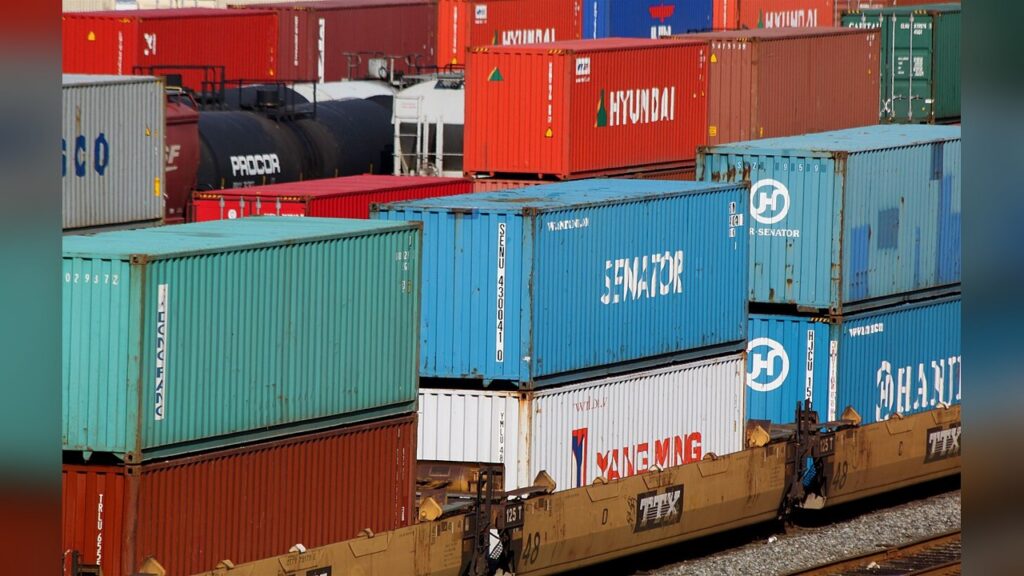
Here’s a question I’d love to ask whoever designed the “de minimis” exemption: so let me get this straight. If I order a pair of socks from overseas and they cost $799, they waltz into this country tax-free, no questions asked. But if I run a small business in Michigan and import the same socks at $801, I’m paying duties like everybody else. And this was the system for years. And nobody in Washington thought that was a problem?
On Thursday, the U.S. Court of International Trade looked at that setup and said, yeah, the president can shut it down. Three judges in New York ruled that Trump had the authority under the International Emergency Economic Powers Act to kill the de minimis exemption, which let goods valued under $800 come into the country without paying a dime in import taxes. Trump signed the executive order back in February 2025. A company called Detroit Axle, an auto-parts distributor, sued in May to stop it. They lost.
 Joe Biden: Gage Skidmore from Peoria, AZ, United States of A (BY-SA) via wikimedia
Now, Detroit Axle’s lawyers argued that Trump didn’t have the power to scrap the loophole under IEEPA. And here’s where it gets interesting, because earlier this year the Supreme Court took away most of Trump’s broad tariffs, ruling that IEEPA doesn’t let the president unilaterally impose duties on trading partners. But the trade court drew a line here, and it’s a line that actually makes sense: closing an existing exemption is not the same thing as inventing a brand-new tariff. You’re not creating a tax. You’re ending a free pass.
Trump called it a “BIG WIN” on Truth Social and described the exemption as one of the “most DESPICABLE loopholes in American Trade Policy.” For once, the hyperbole undersells it. According to the administration’s own numbers, this loophole cost the U.S. an estimated $10.8 billion in foregone tariff revenue in 2024 alone. That’s billion with a B. Packages were flooding in under $800, duty-free, with less scrutiny. The administration says it was a highway for tariff evaders, counterfeiters, and fentanyl traffickers. And the response from the people profiting off it was to sue.
 Beyond My Ken (CC BY-SA 4.0) via Wikimedia Commons
I have questions for Detroit Axle and anyone else who looked at a $10.8 billion hole in the tariff wall and thought, “Actually, this is fine.” Who exactly was this loophole serving? Because it wasn’t the guy running a machine shop in Toledo who pays his import duties like a law-abiding citizen. It was the giant e-commerce platforms shipping container-loads of cheap goods into this country one $799 package at a time, each one sailing past the customs counter like it had a VIP pass.
The court made the right call. You don’t need a law degree to understand that a “privilege” granted by the government can be taken back by the government. Detroit Axle wanted the courts to treat a tax break like a permanent property right. The judges said no. Good.
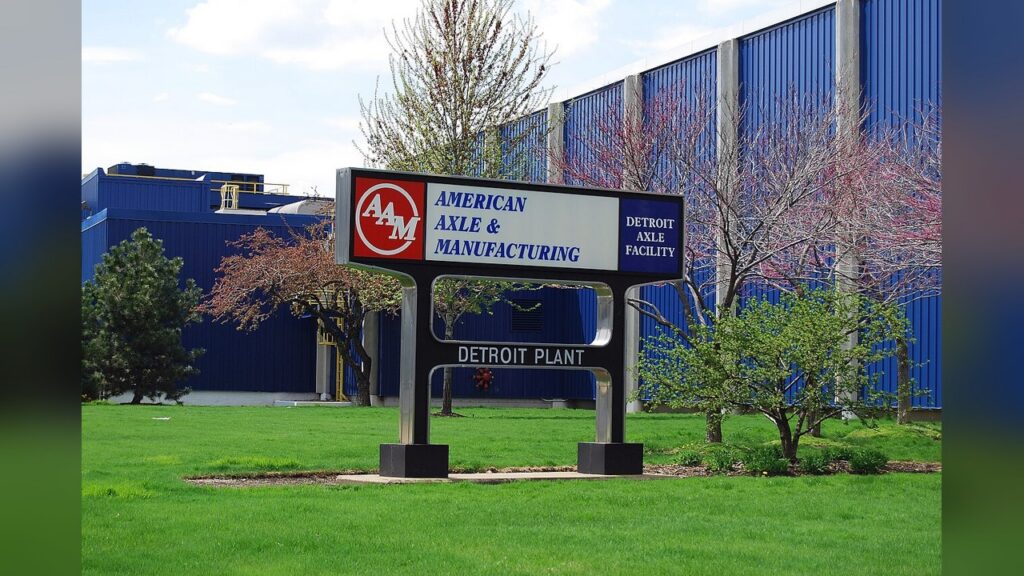 PDru2014 from Detroit, United States (CC BY 2.0) via Wikimedia Commons
Here’s what I’d tell the importers now crying about this ruling: the party’s over. Pay your duties like every American business already does. And if that cuts into your margins, maybe take it up with the foreign factories setting the prices, not the American court system you just ran to for a bailout.
The loophole is closed. The revenue starts coming in. And for once, a federal court did something a regular person can look at and say, yeah, that tracks.