


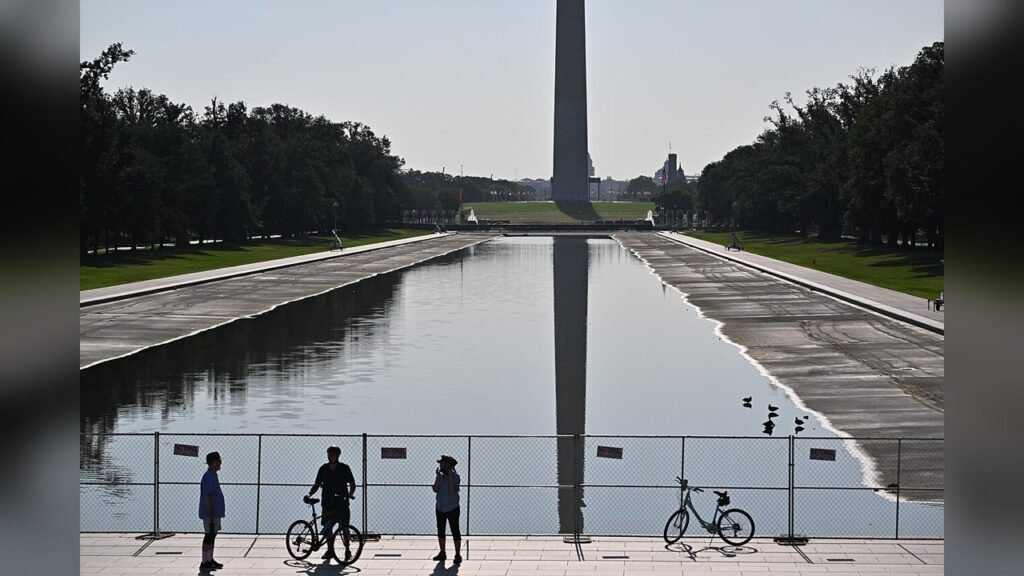
There is a concept in environmental economics, perhaps familiar to those who took more than a survey course, called rent-seeking. It describes the phenomenon whereby an actor extracts wealth from the public commons not by creating value but by manipulating the apparatus of the state to redirect resources toward themselves. One could, if one were inclined to be generous, call what the Trump administration has done to the National Park Service a case study. One would be understating the matter considerably.
Internal budget documents obtained by The Atlantic reveal a transfer of public wealth so brazen, so structurally deliberate, that it would be comforting to dismiss it as mere tackiness. It is not mere tackiness. It is the systematic hollowing of a 109-year-old federal institution to finance the aesthetic preferences of one man who found Tennessee flagstone insufficiently grand. The walkway between the White House residence and the Oval Office, paved in that flagstone since the Truman administration, is now polished African granite carved in Italy. The cost to taxpayers: $689,232, part of a $1.3 million project. The president told a reporter in March that he paid for it himself. He did not.
 Suki Lee / Pexels
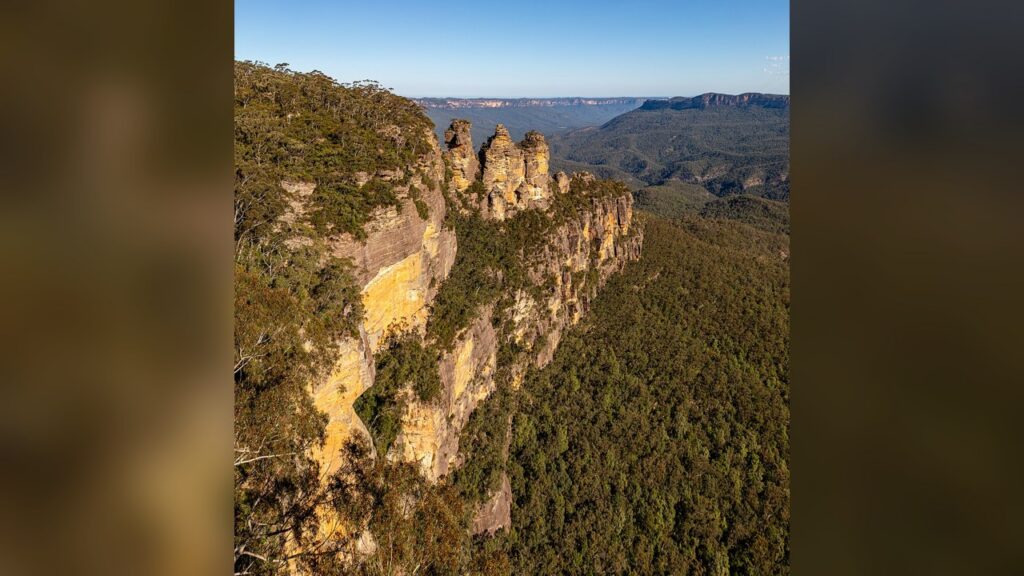
Consider the architecture of the diversion. Taxpayer spending on National Park Service projects in the National Capital Region has increased 92 percent in a single year. Spending around Washington rose by approximately $100 million, drawing on revolving maintenance accounts and more than $100 million in fees collected almost entirely from parks elsewhere. Meanwhile, project spending outside Washington fell by $854 million, a 68 percent collapse. Pacific West parks, including Yosemite, lost $235 million. The Intermountain Region, home to Yellowstone, lost $254 million. Alaska lost $33 million. More than 900 park projects that were expected to receive funding this year did not. A $1.5 million roof replacement at the Yellowstone Center for Resources to stop pest invasions and water leaks: canceled. Guardrails on the cliff edge of Black Canyon of the Gunnison: canceled. The free shuttle system at Acadia: canceled.
What did that money purchase instead? The Lafayette Park fountains, restored for $17.4 million after a 2022 projection of $3.3 million. The Lincoln Memorial Reflecting Pool, painted “American flag blue” for $13.1 million, though Trump initially said it would cost $1.8 million. A $347,503 stucco replacement on the colonnade wall that cleared the way for gold frames and plaques mocking previous presidents. A $1.6 million Fourth of July fireworks display. And approximately $310 million in donations from presidential allies, most of it earmarked for a new White House ballroom.
 Dietmar Rabich (CC BY-SA 4.0) via Wikimedia Commons
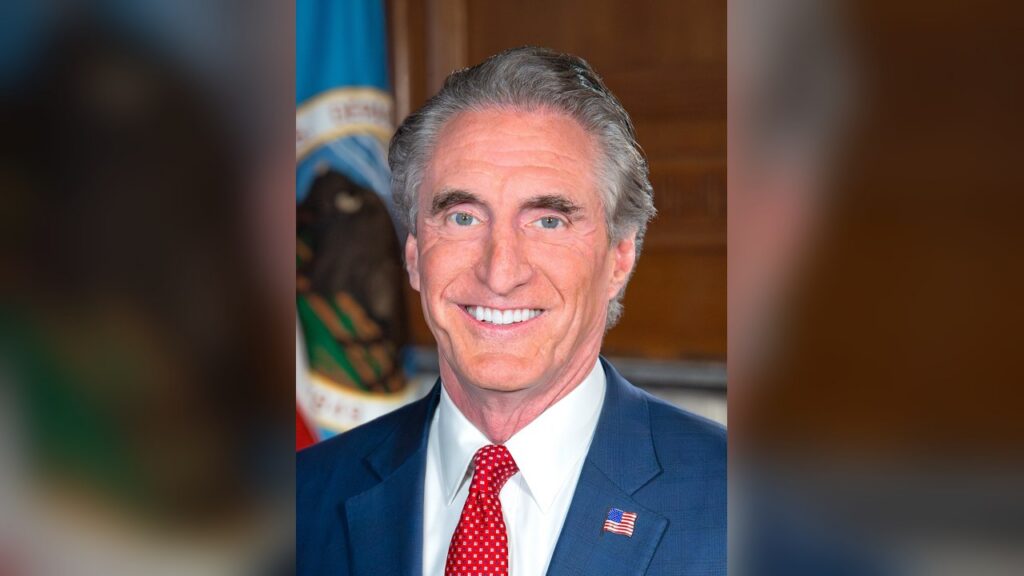
The Park Service has lost nearly a quarter of its staff since Trump returned to office in 2025, through terminations, early retirements, and a federal buyout. His 2027 budget proposes cutting another 3,967 full-time employees, a 31 percent reduction, alongside a $757 million cut to the National Park System operating budget. The system already carries a $24 billion deferred maintenance backlog. Interior Secretary Doug Burgum, whose role in this enterprise the Center for Western Priorities has characterized with a precision I will not improve upon, is scheduled to defend these figures before the House Natural Resources Committee. One trusts the questioning will be rigorous, though one’s trust in that institution has been tested of late.
What we are witnessing is not a scandal in the tabloid sense. It is something more durable and more depressing: the repurposing of a public good as a private treasury. Tim Whitehouse of Public Employees for Environmental Responsibility described the Park Service as “a piggy bank for Trump’s vanity projects,” which is correct as far as it goes, though the metaphor perhaps understates the institutional damage. A piggy bank, after all, can be refilled. The question is whether the National Park Service, after four years of this, can be.
 United States Department of the Interior (Public domain) via Wikimedia Commons
The Senate has so far refused Trump’s request for $1 billion in East Wing “security enhancements” and his $10 billion supplementary slush fund. Congress, in this instance, is performing its constitutional function as a check on executive appropriation. One wishes it had more company in that performance.
There is $24 billion in deferred maintenance across the National Park System. The president has added to it while painting the bottom of a reflecting pool the color of a flag. The literature on institutional capture is extensive. One need not consult it to recognize the pattern. One need only look at the numbers.