


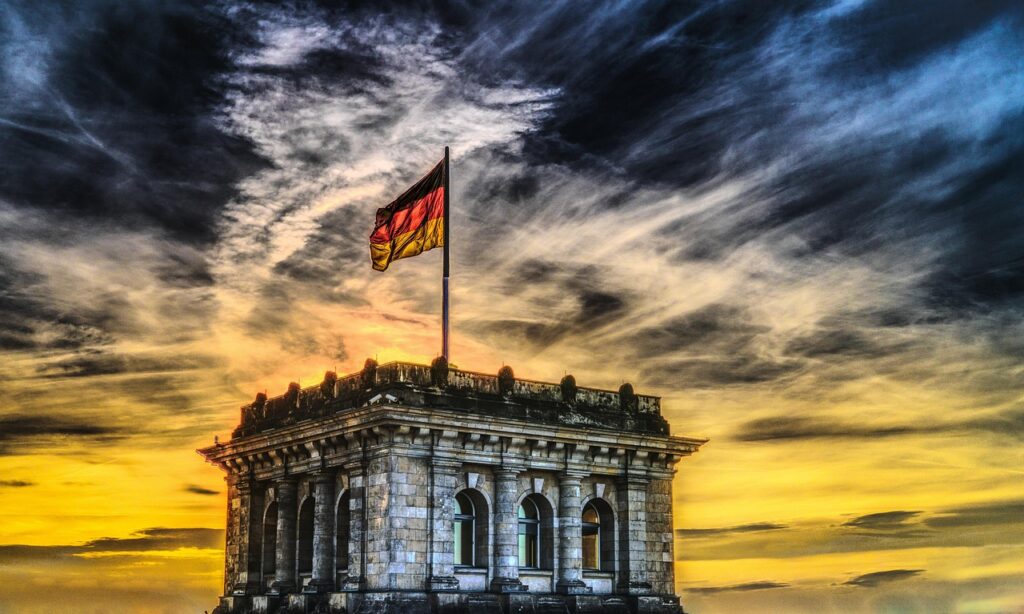
The Revolution Will Be Televised, but the Counter-Revolution Has No Channel
One hesitates to use the word “revolution” lightly. It is a term that political scientists deploy with the same caution that epidemiologists reserve for “pandemic,” because once you name it, you have already conceded that the normal mechanisms of containment no longer apply. And yet here we are. The Carnegie Endowment, an institution not given to hyperbole, has published a serious analysis comparing Donald Trump’s second-term foreign policy reorientation to the American responses to Pearl Harbor and 9/11. The difference, as Stewart Patrick drily notes, is that “we are not at the creation but the destruction.” American hands are shattering the institutional framework for global cooperation that those same American hands built over eight decades. This is not a scandal. It is a structural rupture, and treating it as a news cycle rather than a civilizational event is part of how it keeps happening.
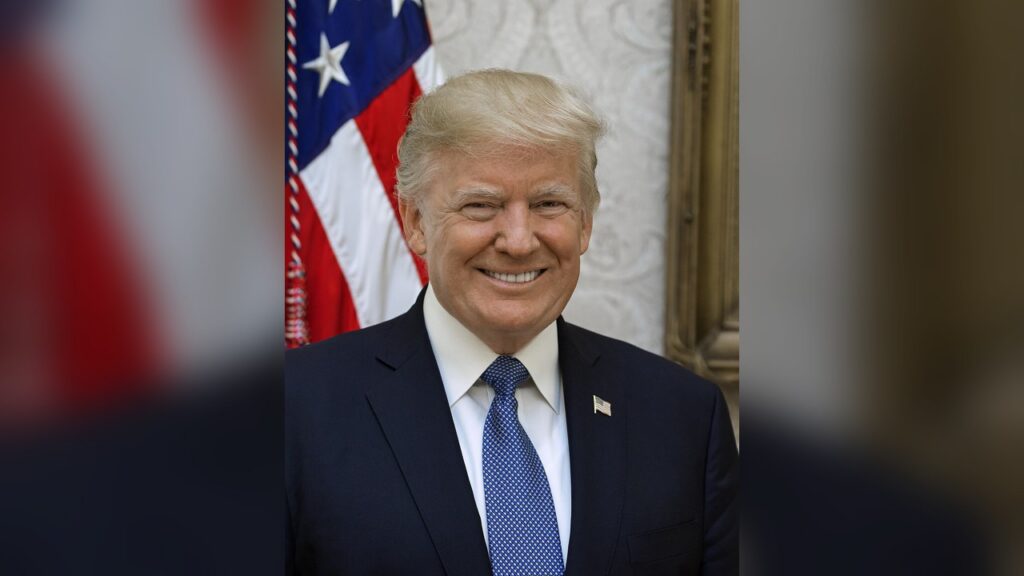 Shealeah Craighead (Public domain) via Wikimedia Commons
The numbers are instructive, as numbers tend to be. The Trump administration has issued 225 executive orders in ten months. It has repudiated the Paris Climate Agreement and withdrawn from the World Health Organization. It has directed the secretary of state to audit every international treaty and organization the United States belongs to, with instructions to recommend which obligations to terminate by late July. The State Department, in other words, has been tasked with inventorying the architecture of the post-1945 order so that it can be dismantled with bureaucratic efficiency. One thinks of Lenin’s observation that the capitalists would sell the communists the rope with which to hang them. The American bureaucracy is now compiling its own hanging list.
Meanwhile, the allies have noticed. Germany, lacking confidence in NATO’s Article 5 guarantee, has opened talks with France and the United Kingdom about nuclear weapons sharing. EU Foreign Secretary Kaja Kallas, after Trump’s calamitous White House meeting with Volodymyr Zelensky, declared that “the free world needs a new leader.” Let us sit with that for a moment. The European Union, built in large measure as an American project, is now publicly auditioning replacements for American leadership. The Friends of Europe analysis compares Trump’s personalization of power to Louis XIV’s “L’État, c’est moi,” which is generous to Louis, who at least had the decency to maintain a functioning diplomatic corps.
 Aurore Martignoni / European Union (CC BY 4.0) via Wikimedia Commons
So the impulse to “de-Trumpify” America, as the counter-movement now forming would have it, is not merely a partisan reflex. It is a structural necessity, the institutional equivalent of emergency surgery. The Friends of Europe piece frames the central question of 2026 as whether the revolution will “run into the sand” or continue unabated, and points to the November midterms as the first real pressure valve. This is the correct analytical frame. Revolutions, as the literature makes tediously clear to anyone who has sat through a seminar on 1789 or 1917, define themselves first by what they destroy and only later, if ever, by what they build. The destruction phase is comparatively easy. Edmund Burke, cited in both analyses, observed that “rage and frenzy can tear down in half an hour what prudence, foresight and deliberation cannot build up in a hundred years.” The counter-revolution, such as it is, faces the asymmetry that always faces counter-revolutions: you cannot un-smash a vase by smashing it again in the opposite direction.
Which is why the de-Trumpification project, however necessary, must be understood as something more arduous than a midterm strategy. The institutional framework Trump is demolishing, the UN, the IMF, NATO, the WHO, the entire rule-bound architecture of multilateralism, took decades to construct and was never as robust as its champions believed. It depended on American hegemony as its load-bearing wall, and Trump has removed that wall not by accident but by design, with the enthusiasm of a man who has finally found the renovation project he always wanted. Rebuilding it will require not just electoral victories but the patient, unglamorous work of institutional reconstruction that this political moment has almost no appetite for.
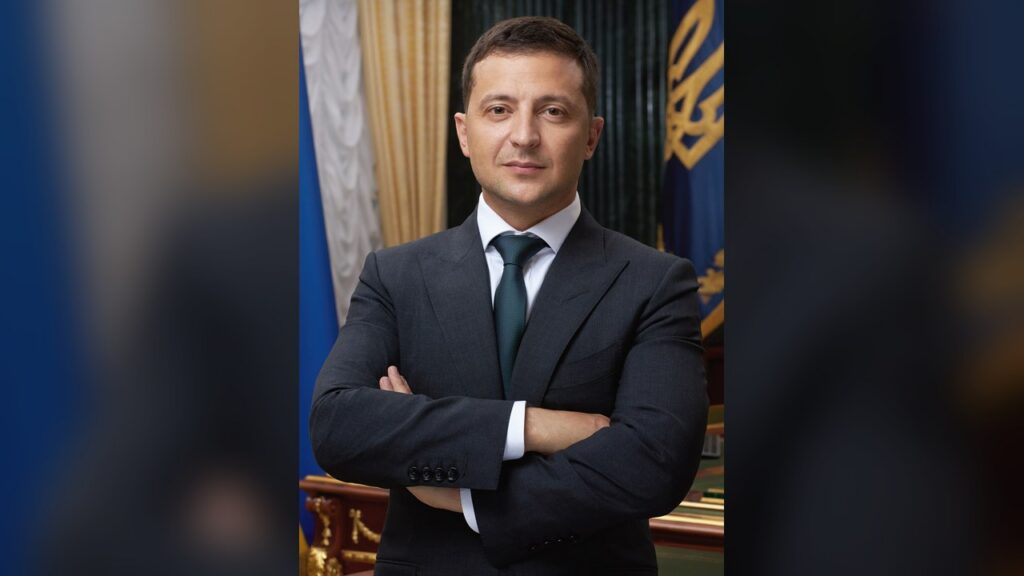 http://www.president.gov.ua/ (CC BY 4.0) via Wikimedia Commons
The counter-forces are regrouping, as stunned forces eventually do. Whether they can rebuild what has been demolished at the speed required is the open question of 2026. The historical record on counter-revolutions is not encouraging. It took seven coalitions and 24 years to defeat Napoleon. We do not have 24 years. We may not have 24 months.