


There is a passage in the literature on democratic backsliding, most associated with the political scientists Bermeo and Levitsky, that distinguishes between coups and what they call “executive aggrandizement.” The coup is the dramatic event. Executive aggrandizement is the slow, legalistic hollowing out of the institutions designed to constrain executive power. It is, in other words, not a scandal. It is a system. And we are watching one assemble itself in real time, with a thoroughness that ought to disturb anyone who has ever taught a syllabus on this subject.
In the span of three weeks, the Trump administration has forced out the heads of the Office of Government Ethics and the Office of Special Counsel, which processes whistleblower complaints and enforces the Hatch Act. It has paused enforcement of the Foreign Corrupt Practices Act, a statute that has, since 1977, prevented American companies from bribing foreign officials to secure contracts. It has fired nearly 20 inspectors general, apparently in violation of a law requiring 30 days’ notice to Congress. It has purged prosecutors who worked on the classified documents and January 6 cases. It has pardoned Rod Blagojevich, who was convicted of trying to sell a Senate seat, and ordered the Justice Department to drop corruption charges against New York Mayor Eric Adams. And it has rescinded Biden’s executive order restricting the revolving door between lobbying and the executive branch.
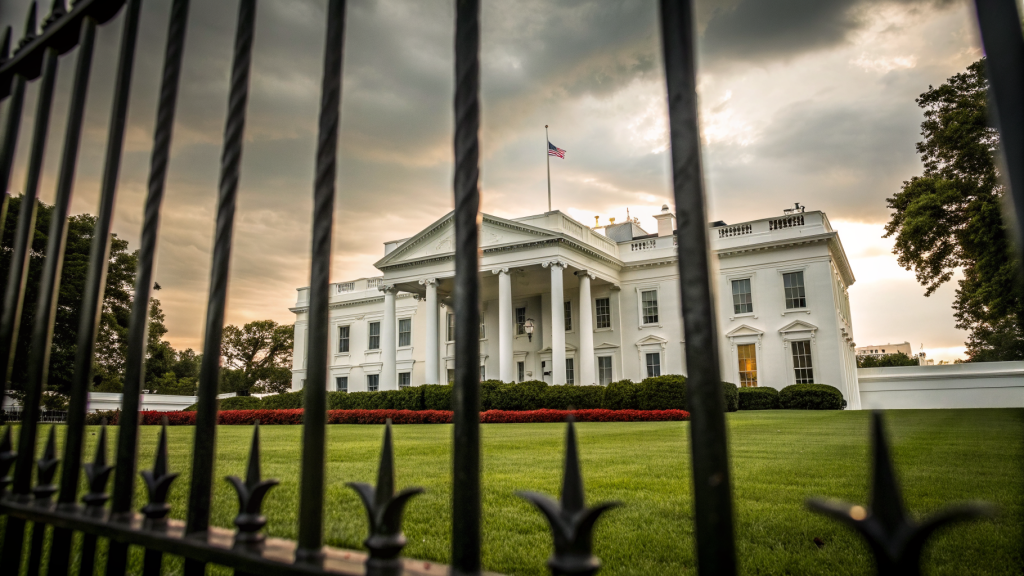
 Ronald Woan from Redmond, WA, USA (BY-SA) via wikimedia
Norm Eisen, who served as legal counsel during Trump’s first impeachment, called it “the most corrupt start we’ve ever seen in the history of the American presidency.” Princeton’s Julian Zelizer put it more precisely: the end goal is to remove the people whose job is oversight. This is the architecture of accountability being dismantled, brick by brick, while a congressional majority watches with the serene disinterest of a body that has forgotten why it exists.
One might expect, in a functioning constitutional order, that the counterweight would come from the courts, or from Congress, or from the opposition party mobilizing institutional resistance. Instead, the most effective check on this president’s behavior this month came from Taylor Swift’s copyright attorneys, who managed to strip the audio from multiple White House and Republican campaign TikTok videos that had used her music without authorization. The videos, including one of Donald and Melania Trump watching fireworks set to “August” from Folklore, now play in silence. The administration that is dismantling the Foreign Corrupt Practices Act was brought to heel, however briefly and however narrowly, by intellectual property law.
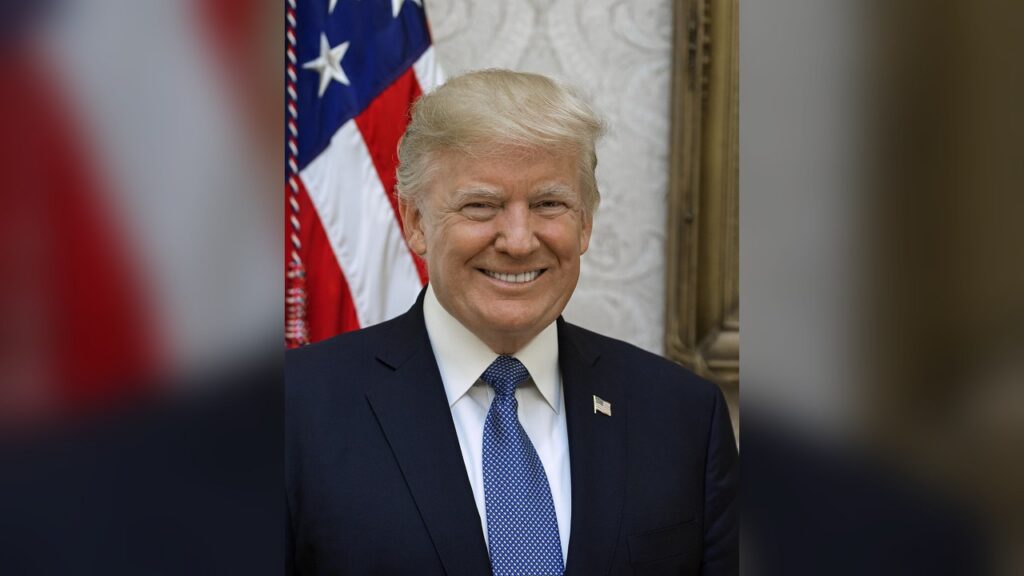 Shealeah Craighead (Public domain) via Wikimedia Commons
The irony is not merely rich. It is diagnostic. When the institutional guardrails of a republic are systematically removed, the remaining constraints on executive behavior arrive from the most unexpected quarters. A pop star’s legal team should not be the most consequential opposition a sitting president faces. That it currently is tells you more about the state of American checks and balances than any political science journal I could assign you.
Trump, for his part, posted “I HATE TAYLOR SWIFT!” on Truth Social and declared her “no longer HOT,” which is, I suppose, the level of institutional critique we have come to expect from a man who campaigned on draining the swamp and has instead built a pipeline from it directly into the Oval Office. The Trump Organization, meanwhile, has struck deals for hotels and golf resorts in Vietnam, Saudi Arabia, and the United Arab Emirates. The president’s personal financial interests now overlap with his foreign policy portfolio in ways that would, in any administration that took ethics seriously, trigger immediate review by the very offices he has just shuttered.
 TenAsia (CC BY 4.0) via Wikimedia Commons
The literature on democratic erosion is quite clear on this point. The institutions do not fall in a single dramatic moment. They are emptied gradually, by people who understand that the absence of oversight is itself a form of power. What we are witnessing is not improvisation. It is doctrine. And the fact that the loudest pushback has come not from Congress, not from the courts, but from a recording artist’s publishing rights, is less a punchline than an epitaph for the institutional architecture that once made this country something other than a personality cult with a flag.