



There is a particular kind of political columnist, and I shall not name them because they are legion, who regards the phrase “college student” and “city council” in the same sentence as evidence of civilizational decline. Margaret Fabrizio, who shares a ward with Ithaca’s newest council member, put it with admirable directness: “You’re having people who are voting on a budget who have never even seen a tax bill, let alone paid taxes.” One almost admires the confidence required to argue, in public, that the 70 percent of your constituents who happen to be undergraduates should be governed by the 30 percent who are not. This is not a political position. It is a gerrymander of the imagination.
What happened in Ithaca’s Ward 5 is, structurally, the least surprising thing in American politics, which is why it took everyone by surprise. A council seat opens in a district that is 70 percent students. Jorge DeFendini, himself a former undergraduate council member, notices this arithmetic. He calls Sara Almosawi at Cornell’s Young Democratic Socialists. They find Hannah Shvets, a sophomore who had already reestablished the campus YDSA chapter. Shvets wins the primary with 40 percent of the vote against two moderate candidates who obligingly split the remainder. She then beats the independent challenger, a psychotherapist who graduated from Cornell in 1988, by nearly 30 points. The New York Post, performing its designated social function, ran the headline “Upstate NY city one-ups Zohran Mamdani by electing Communist student, 20.” Shvets is, in fact, a member of the Communist Party USA. She identifies as a democratic socialist. These are not contradictory positions so much as overlapping ones, and the distinction matters only to people who use both terms as synonyms for “person I dislike.”
The interesting finding, though, is that Ithaca was not first. It was not even particularly early. Sam Poole, Shvets’s campaign manager, began calling other YDSA chapters and discovered at least three had already pulled off the same maneuver since 2024: Marek Broderick at the University of Vermont in Burlington, Adrian Stancil-Martin at Lawrence University in Appleton, and Cecilia Lunaparra at UC Berkeley. Uncoordinated, campus-level improvisations, each exploiting the same structural feature: student-majority districts where the existing political class had simply never bothered to organize the student vote because it assumed students would not vote. This is what social scientists call a “collective action failure,” and what I call the kind of oversight that happens when a political establishment confuses habit with strategy.
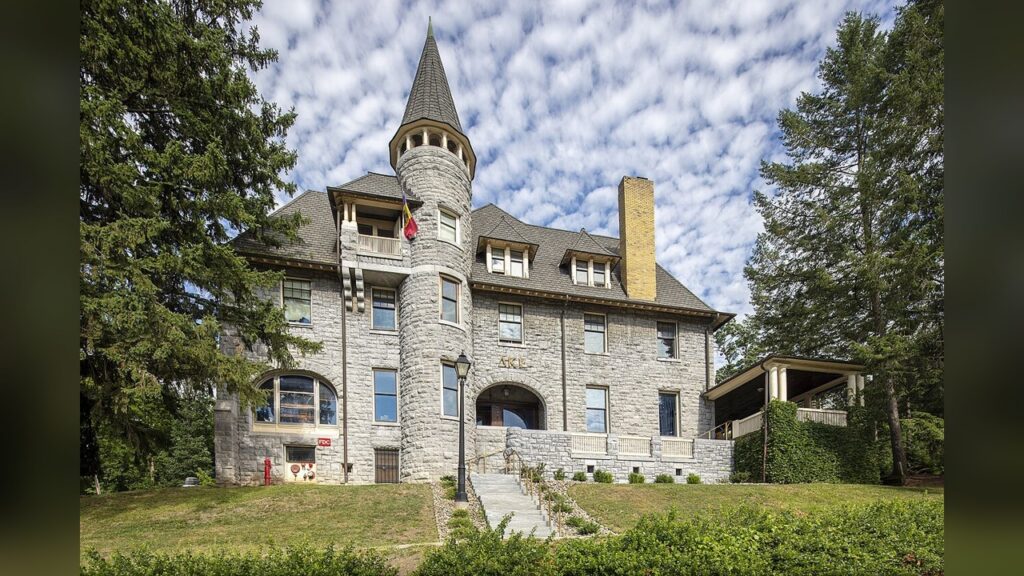 Hlevy2 (CC BY-SA 4.0) via Wikimedia Commons
The response from older council members is a case study in institutional self-regard. Pat Sewell complained that students are uninterested in the “unsexy” work of local government, citing a prior student member who pushed a sanctuary city resolution that had already been enacted at the state level. One might note that Sewell’s complaint is actually about a student doing redundant symbolic work, which is to say, behaving exactly like a typical city council member. Ben Traverse, in Burlington, offered the more substantive critique that student members create turnover. This is true. It is also true that turnover is a feature of democratic systems, not a bug, and that the alternative, a council of permanent residents governing a transient population, has its own democratic deficits that Traverse did not pause to enumerate.
What has changed is that the improvisation is now becoming infrastructure. Poole authored a resolution to revive YDSA’s Youth Electoral Committee, which passed with 68 percent at the August 1 national convention. Almosawi and Poole are identifying student-majority districts across more than 50 interested chapters. Three campaigns are being organized for 2027. The resolution explicitly targets districts “in key Democratic primary states for the 2028 presidential election.” DSA membership has grown from roughly 50,000 in October 2024 to nearly 130,000 as of July 2026. YDSA chapters have increased from 100 to 150, membership from 2,000 to 3,600. These are not seismic numbers. They are, however, the kind of numbers that indicate an organization has stopped declining and started building.
The policy record, meanwhile, is modest but real. Lunaparra co-drafted Berkeley’s Tenant Protection and Right to Organize Act. Broderick authored legislation for a standardized dorm complaint form and is pushing a property transfer tax for Burlington’s housing trust fund. Shvets helped create a tenant reporting page for poorly maintained apartments. Stancil-Martin introduced a ranked-choice voting resolution that came up one vote short. One vote. In Appleton, Wisconsin. By a college student.
 Detroit Free Press (Public domain) via Wikimedia Commons
The older council members are not wrong that students lack certain kinds of experience. They are wrong about which kinds matter. The experience of being a tenant in a poorly maintained apartment, of paying rent that consumes a disproportionate share of income, of navigating a housing market designed by and for property owners, turns out to be rather relevant to the work of a city council. The experience of having paid a tax bill, by contrast, is relevant primarily to the experience of having paid a tax bill. Fabrizio’s complaint assumes that fiscal empathy flows downward from property ownership. The literature on this is quite clear: it does not.
What we are watching is not a youth movement or a socialist surge or any of the frames the press prefers. It is something more prosaic and more durable: a demographic that was always eligible to vote, always concentrated in specific districts, and always ignored, discovering that it was always eligible to vote, always concentrated in specific districts, and always ignored. The discovery is the story. Everything else is implementation.