


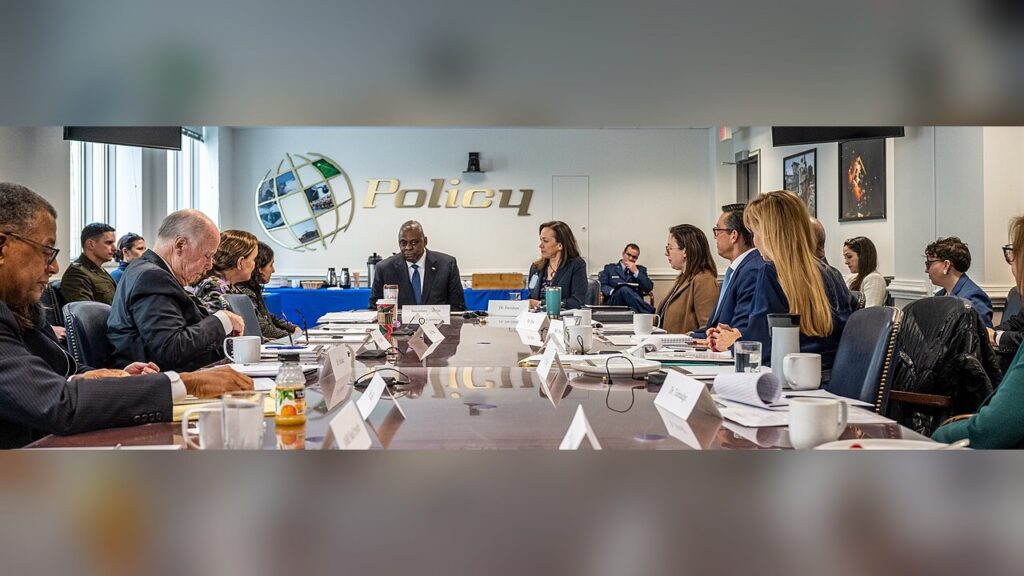
Funny how this works. Pete Hegseth, the guy who couldn’t run a veterans’ charity without it collapsing under his feet, is now hand-picking who gets to whisper in the Pentagon’s ear about which defense contractors deserve your tax dollars. And wouldn’t you know it, two of his picks just happen to be tied to the same venture capital fund where Donald Trump Jr. collects a paycheck.
Here’s the setup. Hegseth appointed Marc Andreessen and Blake Masters to the Defense Policy Board, a panel that advises the defense secretary on strategy, force structure, and national security. Andreessen’s firm, Andreessen Horowitz, co-invests alongside 1789 Capital, the fund where Trump Jr. is a partner, in at least three defense contractors. Masters sits on the boards of three ventures tied to 1789 through Omeed Malik’s Colombier blank-check companies. Both men now advise the Pentagon on the exact defense-technology sector those companies operate in.
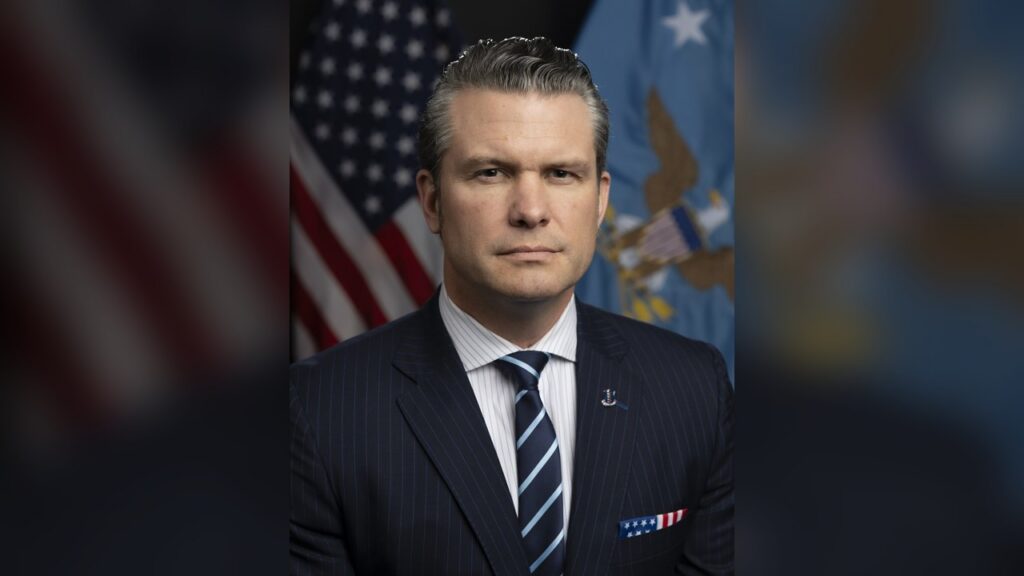 U.S. Department of Defense (Public domain) via Wikimedia Commons
Ask yourself who benefits. The companies jointly backed by a16z and 1789 have already pulled billions in federal loans and contracts since Trump’s second term started. Anduril Industries, the autonomous weapons maker, landed a contract worth up to $20 billion from the Army and pulled about $1.25 billion in federal money in the first 500 days of this administration, up from roughly $760 million under Biden. A16z co-led Anduril’s $5 billion funding round in May 2026 that doubled its valuation to $61 billion. Months after the Army handed it that $20 billion contract. You or I would call that a return on investment. The Pentagon calls it “fresh thinking.”
That’s literally what Hegseth called it when he disbanded the board in April 2025, cleared out everyone else, and reconstituted it on June 29, 2026 with 15 hand-picked members chaired by former trade representative Robert Lighthizer. Fresh thinking. Bold changes. Translation: out with the career officials, in with the people who write checks to the family business.
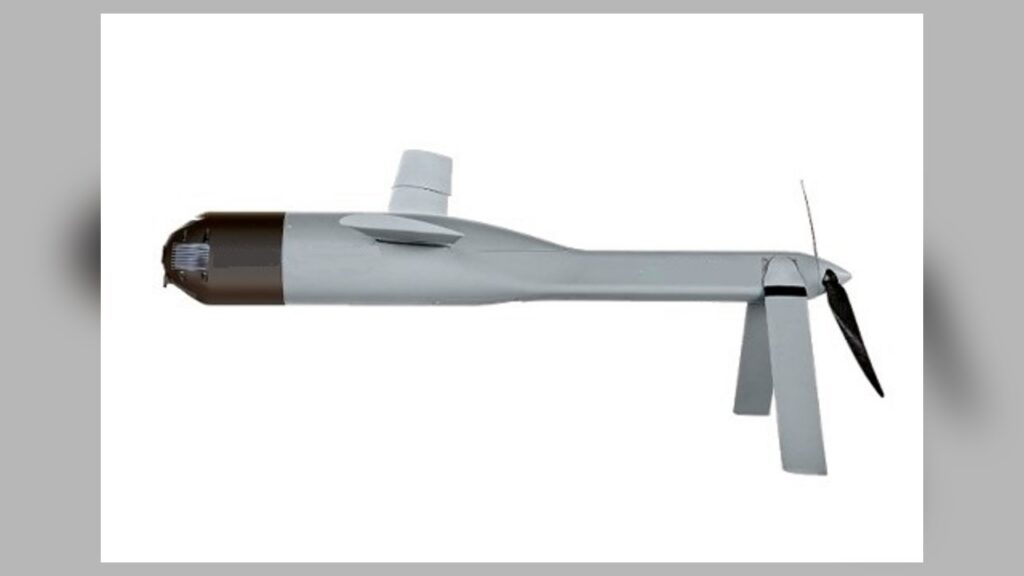 REDSTONE ARSENAL (Public domain) via Wikimedia Commons
Then there’s Hadrian, which builds automated factories churning out precision parts for weapons systems. It runs a production line inside a Lockheed Martin missiles plant. It won a Navy partnership worth up to $900 million for nuclear submarine components and an $80 million Army contract to automate a depot in Texas. Both a16z and 1789 hold stakes. And SpaceX, which a 1789 partner called the fund’s single biggest investment, has roughly $22 billion in cumulative federal awards and just picked up a $4.16 billion Golden Dome contract plus a $2.29 billion deal for a military data network in orbit. Weeks before a planned public offering. Funny how that timing works.
Scott Amey, general counsel at the Project on Government Oversight, put it plainly: people on these advisory committees are “seeking business with the agency they’re serving.” He asked whether they’re there to “raid the cupboards and learn as much as they can to give a competitive advantage to their employer or clients.” That’s not a hypothetical. That’s the business model.
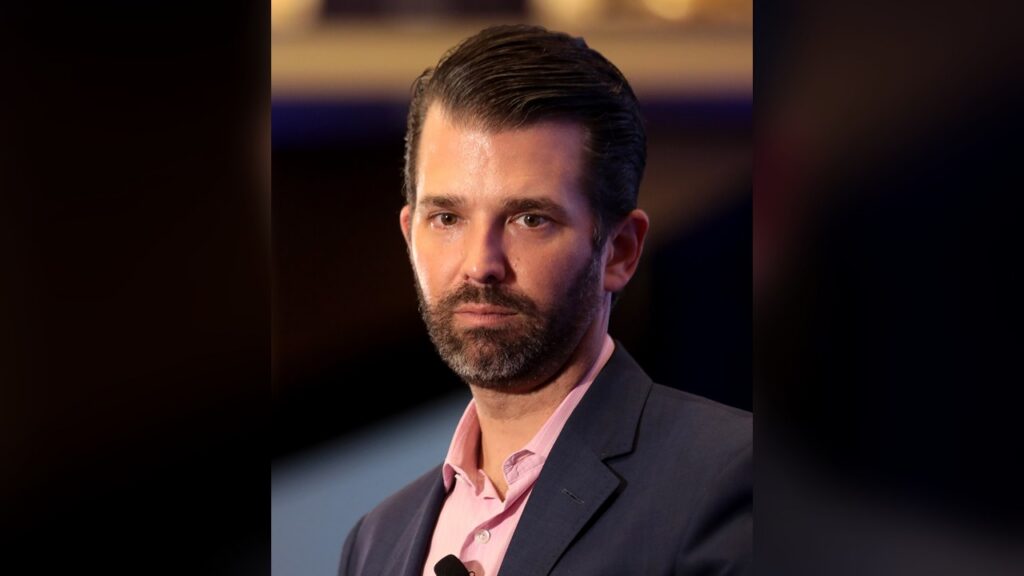 Gage Skidmore from Peoria, AZ, United States of America (CC BY-SA 2.0) via Wikimedia Commons
The Defense Department didn’t respond to The Guardian by deadline. A16z didn’t respond. Hegseth’s office didn’t respond. When the people in power go quiet, that tells you everything. They’re not preparing a defense. They’re counting on you not to care.
And why would you care, right? You’re busy. You’ve got a job, a mortgage, kids. You’re supposed to trust that the man who once had to be talked out of deploying the National Guard against peaceful protesters is now staffing the world’s most powerful military advisory body with his boss’s son’s business partners, and it’s all above board because nobody’s technically broken a law they wrote for themselves.
The swamp was never drained. It was just restocked with bigger alligators, and they’re wearing venture capital hoodies now.