


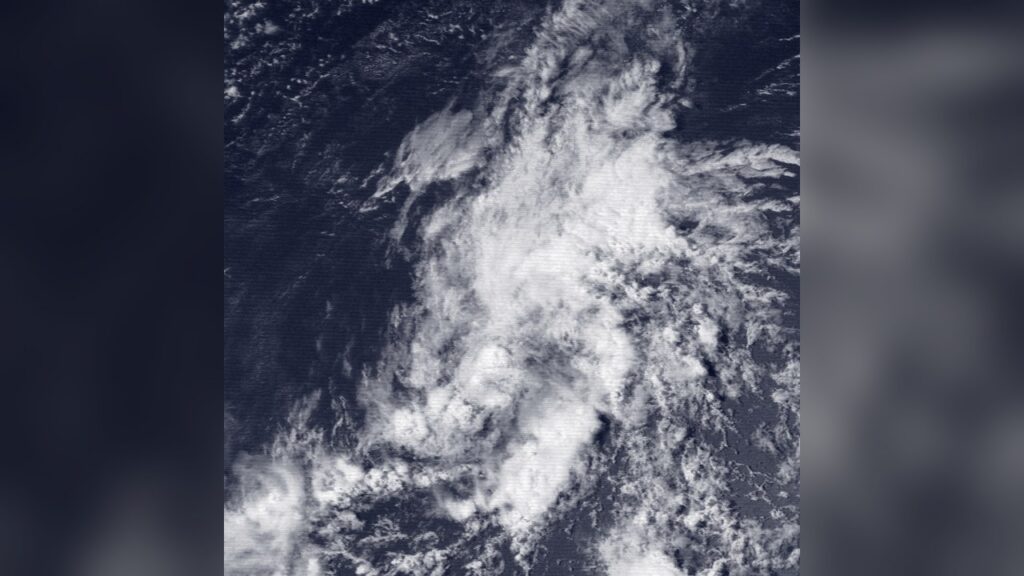
Funny how that works. The National Oceanic and Atmospheric Administration, an agency that burns through billions of your tax dollars every year to tell you what the weather might do, announced just this season that 2026 had a 55% chance of being a “below-normal” hurricane year. Below-normal. Their words. And now Hawaii’s Big Island is staring down its first direct hurricane hit since Ulysses S. Grant was president.
Hurricane Lala cranked up to Category 1 on Saturday morning, 75 mph sustained winds, moving west at 10 mph straight toward the southern coast of the Big Island. The eyewall was forecast to pass over or near South Point by Saturday evening. The National Hurricane Center had the storm’s center about 75 miles south-southeast of the island at 10 a.m. local time. Already, sustained winds of 41 mph with gusts to 64 mph were hammering the coast. Nearly 37,000 customers had lost power by Saturday afternoon. Landslides had already cut off roads. A meteorologist in Hilo told the BBC the Wailuku River was so swollen that Hilo Bay, normally blue, had turned blood red from sediment.
But sure. Below-normal season. Trust the experts.
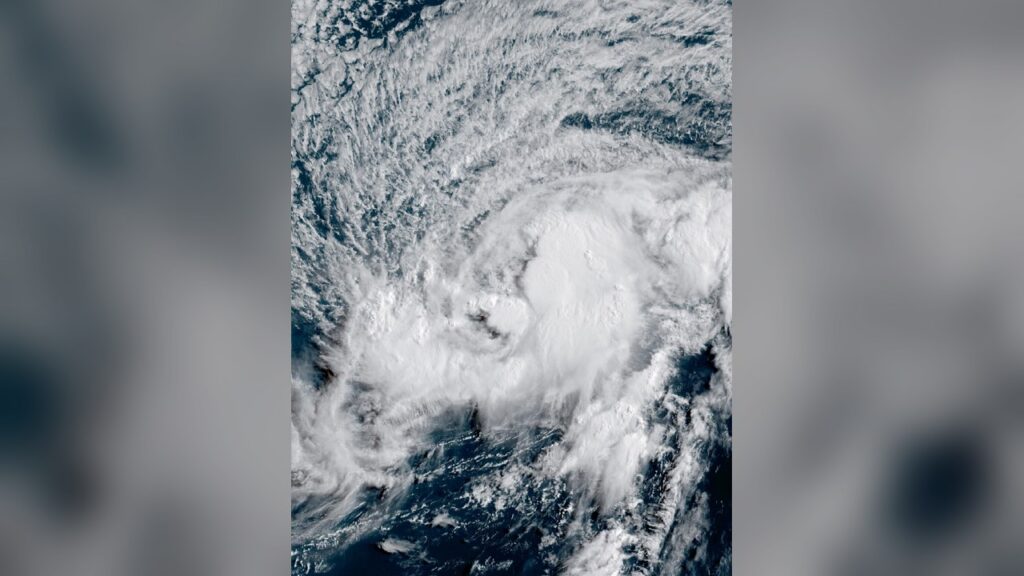 GOES-West / ABI (Public domain) via Wikimedia Commons
Governor Josh Green declared a state of emergency on Thursday, activating the National Guard and ordering all state agencies to cooperate with disaster relief. He called Lala “a serious storm” and warned residents to brace for “an incredible amount of water.” The Big Island could see 10 to 20 inches of rain, with localized totals up to 25 inches. A 3-foot storm surge is possible. The National Weather Service is talking about “life-threatening” floods and mudslides, rivers overflowing their banks in multiple places.
Over 200 flights canceled across the state. At Hilo International, 80% of flights were grounded. At Kona International, 40%. Stores got mobbed. People lined up at Costco in Central Maui and Kahului, filling carts with water and food, gassing up their trucks, tying down anything that wasn’t bolted down. In Captain Cook on the Big Island, people were filling sandbags on Friday. Businesses in Lahaina were installing flood barriers. Regular people doing what regular people always do when the sky turns. They don’t wait for a press conference. They move.
The last time a hurricane made direct landfall on the Big Island was 1871. 155 years. The last time any Hawaiian island took a direct hit was Hurricane Iniki in 1992, a Category 4 that slammed Kauaʻi, killed six people, and did $3 billion in damage. Modern meteorological records going back to 1950 show exactly two hurricanes striking Hawaii: Iniki and Hurricane Dot in 1959. Both hit Kauaʻi. The Big Island has never taken a direct hit in the modern record.
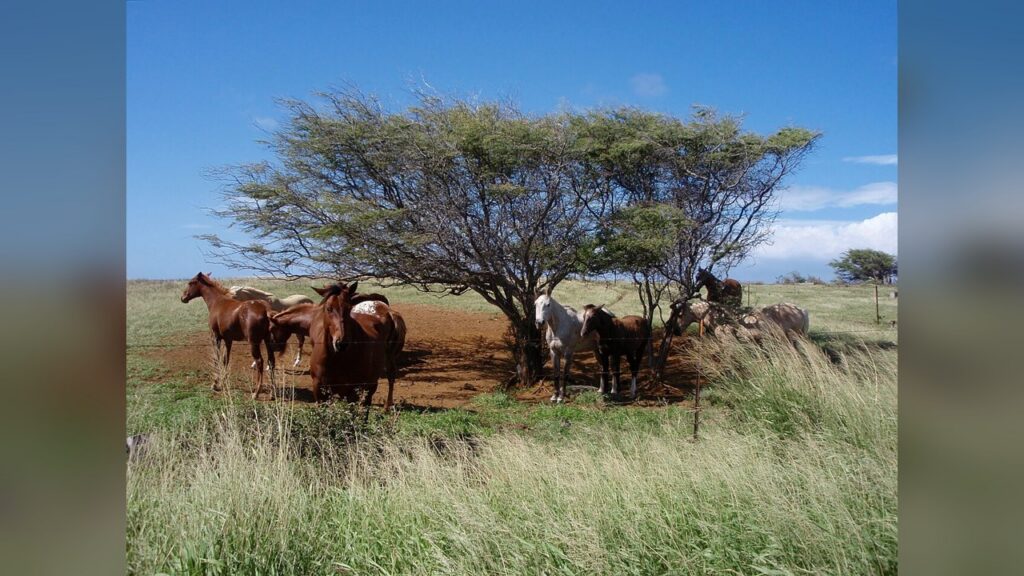 jonny-mt (CC BY-SA 3.0) via Wikimedia Commons
And here’s the part nobody in the media wants to dwell on. Last month, the world’s oceans hit their hottest ever recorded temperatures for July. The EU’s climate monitoring service confirmed it. El Niño conditions are developing in the Pacific. Record warm water feeding a hurricane aimed straight at Hawaii. But NOAA, the same agency sitting on all that ocean temperature data, told you the season would be quiet. Ask yourself how an agency with satellites, supercomputers, and a budget bigger than some countries’ GDP can look at record-warm Pacific waters and still call for a below-normal year. Either their models are garbage or they are not telling you what they actually see.
I know which one I’d bet on.
The people of Hawaii are filling sandbags and boarding up windows. The experts are filling press releases. Funny how the regular folks always seem to take the storm more seriously than the people paid to predict it.