


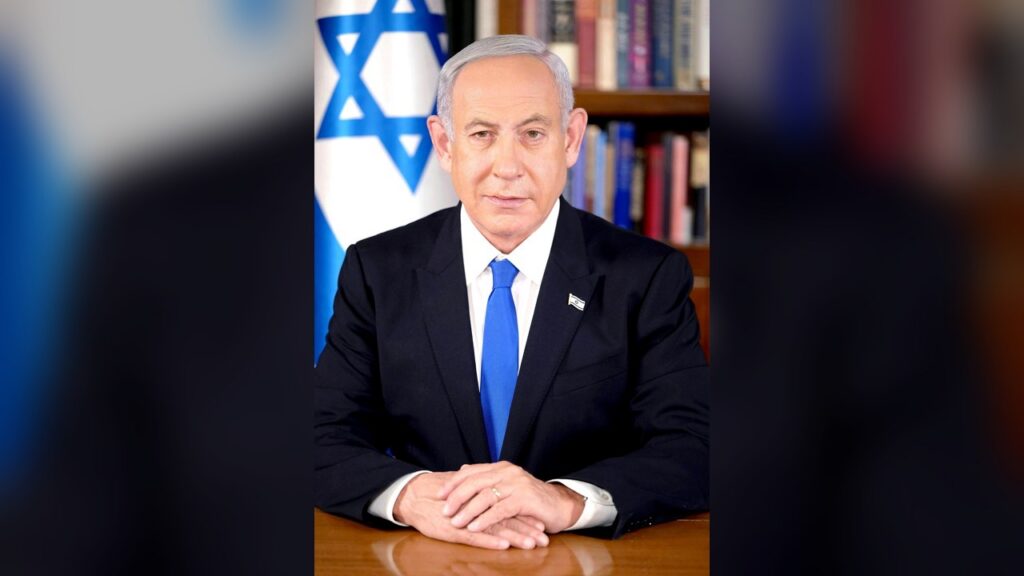
Let us be precise about what happened Sunday, because the structural implications are more interesting than the spectacle. Nine days before Israel’s October 27 parliamentary election, President Donald Trump posted a “Complete and Total Endorsement” of Benjamin Netanyahu on Truth Social, praising him as “Strong, Brave, and Brilliant” and warning, in a sentence that deserves to be read twice, that “if Israel has the wrong Leader, which would be anyone other than Bibi, America will have to do this work ourselves, and I am not inclined to do so.”
Set aside, for a moment, the novelty of an American president issuing a candidate endorsement in a foreign democracy’s legislative race as though it were a contested House primary in Ohio. What we are observing is not a scandal, exactly. It is a symptom of something larger: the full collapse of any pretense that alliance is a relationship between states rather than a relationship between men.
Consider the timeline, which the literature on alliance politics would call instructive. Earlier this month, asked repeatedly about Netanyahu’s performance in a Time interview, Trump declined to endorse him at all, pivoting instead to his own popularity. In June, the president acknowledged describing Netanyahu as “f***ing crazy” in a phone call. The two men have met more than half a dozen times since January 2025, amid documented disagreements over the war against Iran. And now, with the polls tight and the election imminent, out comes the capital-lettered blessing: “BIBI NETANYAHU WILL NEVER LET YOU DOWN!” One is tempted to ask what changed. One is not especially tempted to believe the answer is principle.
Netanyahu, for his part, responded with a gratitude video calling Trump “the greatest friend of Israel in the White House,” which is a category with more members than it used to have, and then, remarkably, turned to address the American people directly about the cost of living. This is the part I would gently complicate for you. The Israeli prime minister campaigning for his own coalition found it useful to reassure U.S. voters about gas prices. That is not diplomacy. That is two incumbents, each polling poorly, jointly renting each other’s legitimacy.
Because the domestic data are not subtle. An AP-NORC poll published October 1 found Americans disapprove of the president’s handling of the Iran war and blame him for higher prices, with his approval near historic lows, and midterms arriving November 3. Energy Secretary Chris Wright, meanwhile, spent the weekend insisting the administration has not broken its promise to lower gas prices amid a war with a major oil producer, which is an argument one makes when the argument has stopped making itself.
So the endorsement is best understood not as a foreign policy decision but as a hedging instrument. If Netanyahu wins, Trump backed a winner. If Netanyahu loses, Trump has already announced, in writing, that America is “not inclined” to finish the job alone, a pre-positioned exit ramp dressed as loyalty. The complication, of course, is that the exit ramp was built by the same man who widened the road into the conflict, and the voter being asked to pay the toll was never consulted about the route.
Presidents have long preferred friendly incumbents abroad. What is new is the candor, and the candor is the tell. When an American president tells a foreign electorate that anyone but his preferred candidate constitutes “the wrong Leader,” he is not describing an alliance. He is describing a dependency, and confessing, in the same breath, that he would rather not carry it. That is the most honest sentence in the post. It was almost certainly not intended to be.