


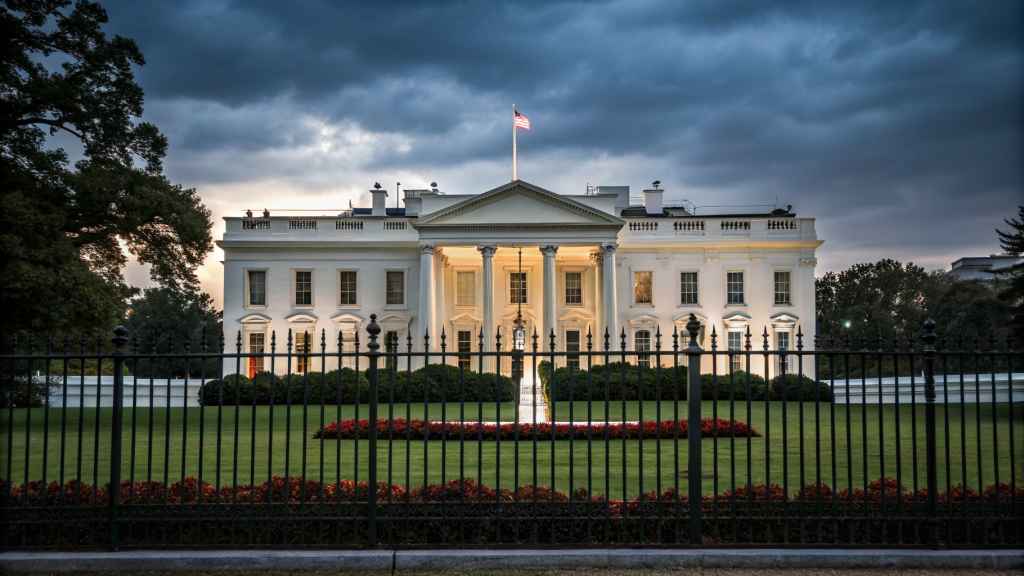
Mark Carney stood up at the World Economic Forum in Davos back in January and told the assembled billionaires and bureaucrats that the international order was going through “a rupture, not a transition.” He warned that middle powers need to “withstand pressure” from bigger countries. He said sovereignty depends on it. The crowd at Davos, where the champagne flows and the private jets idle on the tarmac, ate it up. A former central banker turned prime minister, lecturing the world about resisting coercion. Beautiful stuff. Really moving.
Now President Trump has put 50% duties on about $20 billion worth of Canadian goods, and suddenly Carney’s big speech isn’t a TED talk anymore. It’s a bill that came due.
Here’s what the negotiations broke down over, and nobody in the press wants to say it plainly. Washington slipped language into the final hours of talks that would have restricted Canada’s ability to cut trade deals with other countries. Carney called it “a question of sovereignty.” British Columbia Premier David Eby said accepting it would have reduced Canada to “the economic equivalent of the 51st state.” Trump, of course, has been saying the quiet part loud for months. He calls the border artificial. He posts on Truth Social that “Canada wants the benefits of being a State, without being one!!!” He told Carney point blank: “Canada lives because of the United States. Remember that, Mark.”
Now, you can call that a lot of things. Subtle is not one of them. The man is not hiding the playbook. He’s reading it out loud and daring anyone to stop him. And the same people who spent eight years telling you Trump is a chaos agent with no plan are now squawking because the plan is right there in front of them, executing on schedule.
Carney walked away from the table Friday. Saturday, the tariffs hit. Carney announced dollar-for-dollar retaliation starting September 8. “We’re going to hit back,” he said. Good for him. Sincerely. An American ally actually refusing to fold is a rare sight these days. The European Union prepared retaliatory tariffs last year and then suspended them over and over while “negotiating,” which is diplomat-speak for caving slowly enough that nobody notices. Carney at least has the spine to say no.
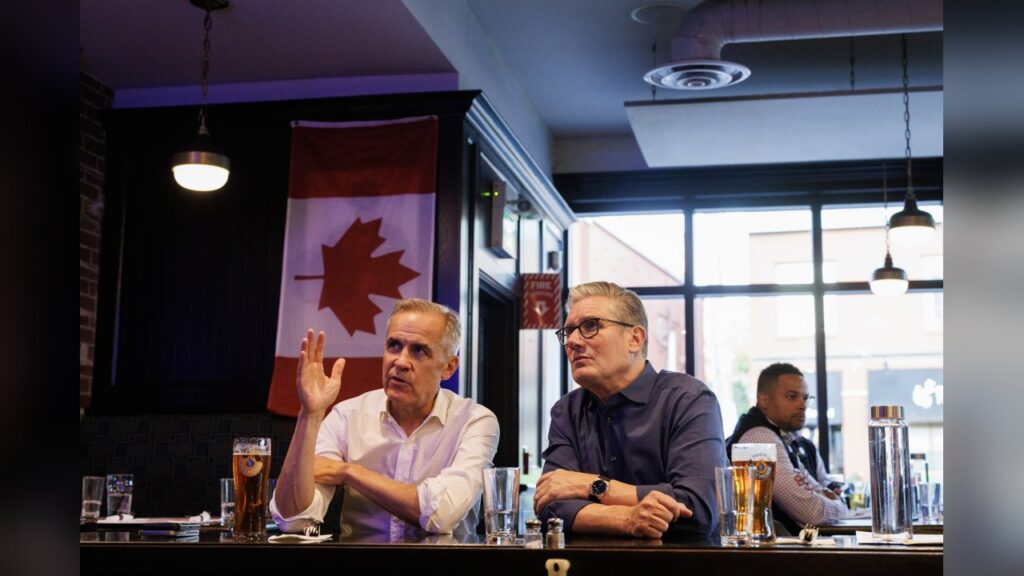 Number 10 (BY) via wikimedia
But let’s not pretend this is some clean morality play. Carney is a central banker. He ran the Bank of Canada, then the Bank of England. He’s been inside every elite financial institution that matters. When a guy like that talks about “economic coercion,” what he really means is coercion that isn’t being done by the right people. The World Economic Forum crowd doesn’t object to economic pressure. They object to economic pressure they didn’t approve.
U.S. Trade Representative Jamieson Greer says Ottawa introduced new demands and backed away from commitments. Carney says Washington’s “signature was written in pencil.” Both sides are spinning. Both sides always spin. The difference is that Trump is openly telling you what he wants. He wants Canada in a box. Carney wants to stay out of the box while keeping the system that put him in power intact.
Nearly three-quarters of Canadian exports go to the United States. The American economy is ten times the size of Canada’s. Carney admitted his own retaliation will “raise costs and reduce choice for Canadians.” So the little guy on both sides of the border gets the bill while two men in suits trade press conference lines about sovereignty and strength.
Manitoba Premier Wab Kinew said Canadians should be ready to “duke it out for two years” and wait for sanity to return after the U.S. midterms. That’s the real tell. The whole strategy isn’t about winning. It’s about holding on until the political winds shift. Same game, different players, and the people paying the tariffs at the register are supposed to feel grateful somebody is fighting for them.
Carney warned the world about economic coercion. Turns out the warning was a resume line. Now the job is real, and the bill is coming due September 8.