


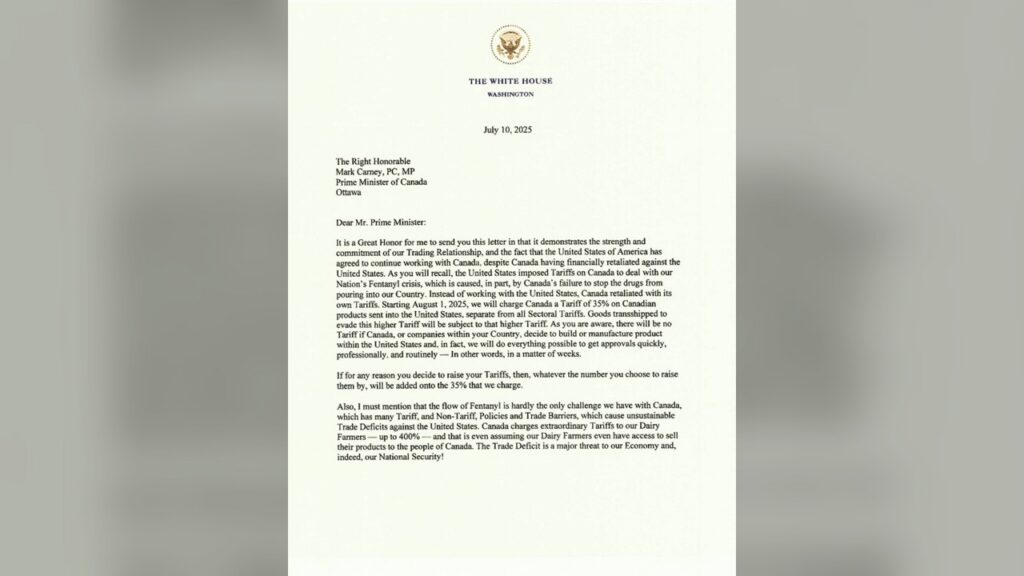
The post-war liberal trade order was not, as some of my colleagues in the political science department occasionally suggest over sherry, a conspiracy of Davos cocktail napkins. It was a deliberate, institutional architecture designed to prevent exactly the kind of self-immolating tariff spiral we are now watching unfold between the United States and Canada. That it is unfolding between these two countries, across an undefended 5,525-mile border through which $2 billion in goods pass daily, is what historians of institutional decay call a late-stage symptom.
 Carlos Delgado (CC BY-SA 4.0) via Wikimedia Commons
At midnight, 50 percent tariffs on roughly $20 billion in Canadian goods took effect. Hockey sticks. Tongue depressors. Steel. Aluminum. The product list reads less like a trade policy than a fever dream of a customs agent who has lost the plot. Prime Minister Mark Carney suspended negotiations, recalled his team from Washington, and pledged to match the levies “dollar for dollar.” U.S. Trade Representative Jamieson Greer blamed “new demands and