


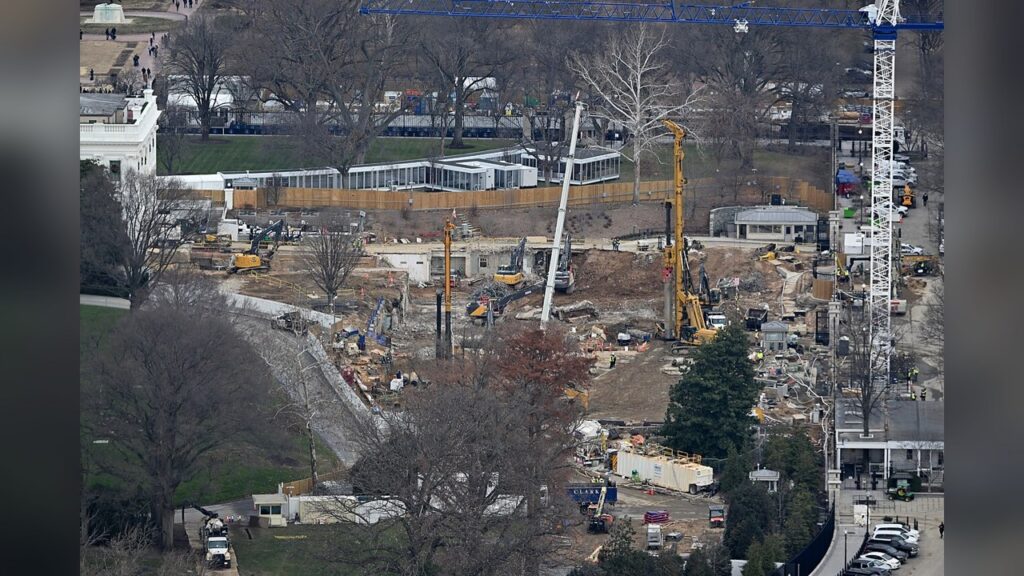
There is a well-established principle in administrative law, familiar to any first-year student who stayed awake through the second semester, that provisional remedies tend to become permanent ones. The Supreme Court demonstrated this Friday with characteristic elegance. Chief Justice John Roberts signed a temporary stay permitting President Trump to continue building a 90,000-square-foot ballroom on the rubble of the East Wing, and the word “temporary” is doing more load-bearing work in that sentence than the 250-person construction crew currently laboring 20 hours a day on the site.
The National Trust for Historic Preservation, which sued to halt the project, put the matter with unusual directness in its brief: if the Court allowed construction to continue, the case was effectively over. The administration has been quite candid about its strategy of accelerating construction to outrun judicial review. As of August 14, the project was 65% complete. One does not need a doctorate in game theory to see how this ends. By the time the justices convene to consider “next steps,” the ballroom will exist, the East Wing will not, and the Court will face the familiar choice between ordering the demolition of a completed structure or shrugging at a fait accompli. The literature on irreversible injunctive relief is not ambiguous about which outcome prevails.
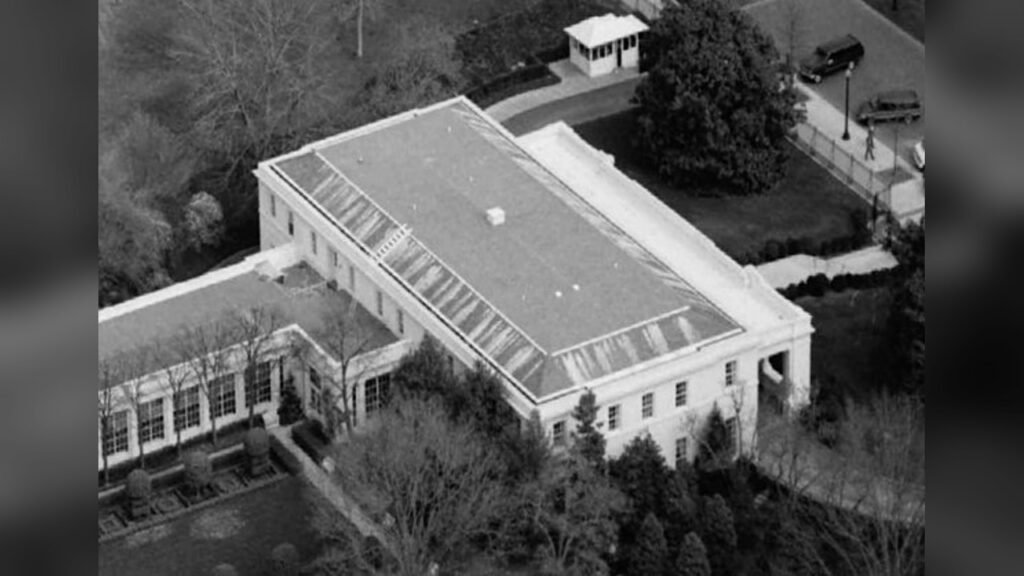 HABS (Jack Boucher) (Public domain) via Wikimedia Commons
What elevates this beyond a garden-variety property dispute is the scale. The ballroom, at 90,000 square feet, would be twice the size of the existing White House complex. The administration claims it is privately funded at $400 million; NPR reports it will cost taxpayers at least $300 million. Both figures cannot be correct, and the discrepancy is itself a diagnostic indicator of how this project has been managed. Trump has insisted the structure will house bomb shelters, a hospital, sniper nests, and a drone port, which is why he has taken to calling it the “Military/Ballroom Complex.” One trusts the national security rationale is more robust in classified briefings than it is in Truth Social posts.
The procedural history is instructive. Judge Richard Leon, a Republican appointee, ruled in March that construction had to stop. The D.C. Circuit upheld that ruling on August 7, giving the administration until Friday to halt. Roberts’s stay arrived with hours to spare. The legal question the Court has flagged as central is whether the