


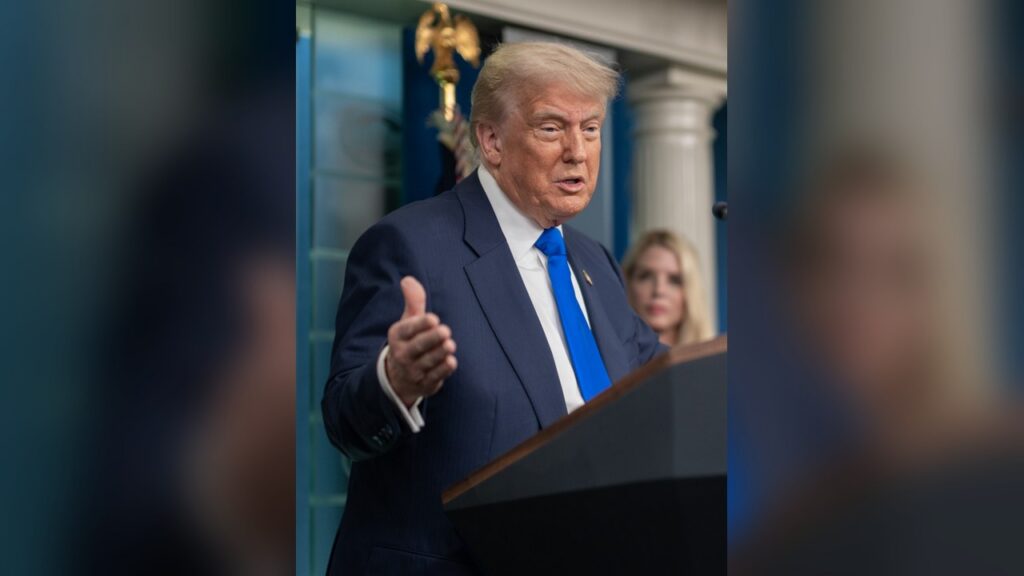
The Justice Department finalized a rule Monday that does exactly what it sounds like: it creates a new online portal for people convicted of felonies to apply for their gun rights back. Attorney General Todd Blanche, barely settled into his chair after confirmation, announced the change with the kind of constitutional piety that gun lobbyists have been mainlining for decades.
“The Second Amendment is not a second-class right,” Blanche said in a statement, “and the federal government should not permanently deprive Americans of a constitutional right without regard to whether they pose a danger to public safety.”
Notice the framing. A constitutional right, treated as though it exists in a vacuum, stripped of any relationship to the harm a person has already inflicted on their community. Blanche wants you to hear “deserving Americans” and not think about what “deserving” means when the people doing the deciding are political appointees in an administration that has spent its first months dismantling gun regulations at every turn.
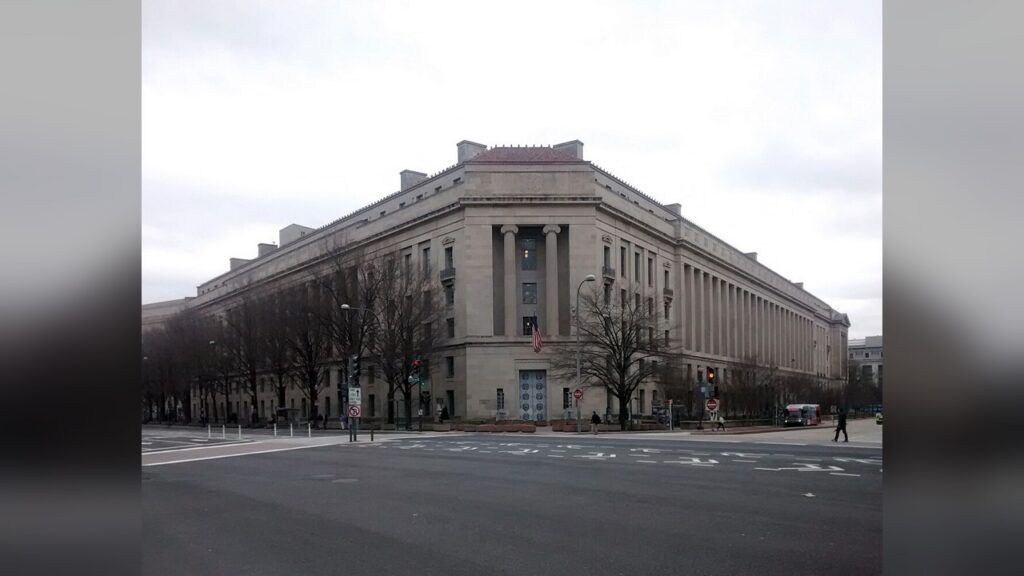 Gunnar Klack (CC BY-SA 4.0) via Wikimedia Commons
Here is what actually happened. Federal law has long allowed people with felony convictions to petition for gun rights restoration. But since 1992, Congress has blocked the Bureau of Alcohol, Tobacco, Firearms and Explosives from processing those applications. That was not an accident. Lawmakers understood that giving ATF the resources to adjudicate every petition would either be prohibitively expensive or dangerously slipshod, and they chose to shut the pipeline down rather than rubber-stamp it.
The Trump administration’s solution is to build a new pipeline around the old one. An online portal. Case-by-case review. Officials say people convicted of violent crimes, registered sex offenders, and undocumented immigrants will be denied “absent extraordinary circumstances.” Read that phrase again. Absent extraordinary circumstances. Who defines extraordinary? What threshold clears that bar? The rule does not say, because the point was never to build a rigorous system. The point was to build a door and leave it unlocked.
Kris Brown, president of Brady, the gun safety organization, said her group is still reviewing the final rule but stressed the need for “a robust and thoughtful system that minimizes the risk to public safety.” She also noted what everyone already knows: the Trump administration has consistently moved in the opposite direction. Earlier this year the Justice Department rolled back and modified a slate of gun regulations. It separately declined to challenge a court ruling that struck down rules on firearm suppressors and certain guns. This is not a single policy shift. It is a pattern.
 Tima Miroshnichenko / Pexels
The people who will bear the consequences of this rule are not the ones writing press releases. They are the families living in neighborhoods where a restored firearm is not an abstract constitutional exercise but a concrete threat. They are the survivors of crimes committed by people who already demonstrated, through a conviction, that they could not be trusted with the power a gun confers. They are the communities that gun violence already devastates at rates this administration has never bothered to address with anything except more guns.
Blanche calls this “a real path to restoration.” The gun lobby calls it a victory. The rest of us should call it what it is: a deliberate expansion of access to lethal weapons under the banner of constitutional rights, executed by an administration that treats public safety as an afterthought and community harm as someone else’s problem.
Congress blocked this pipeline for over thirty years for a reason. The fight now is not just over this rule. It is over whether anyone in power will treat the safety of communities as more than a footnote in a press release. Call your representatives. Demand oversight hearings. Support the organizations doing the work Brady is doing. This rule is not the end of the rollback. It is the beginning.