


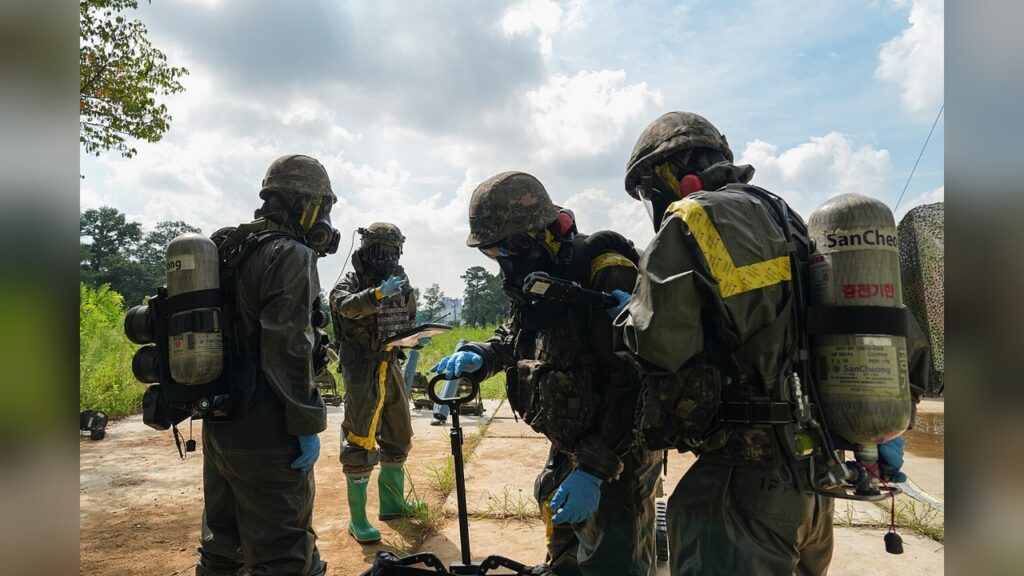
There is a particular species of foreign policy decision that only makes sense if you understand it as a transaction between one man’s ego and another man’s army. President Donald Trump’s order Sunday to “substantially reduce” the annual Ulchi Freedom Shield joint exercises with South Korea is a textbook specimen. The stated rationale is a compound of grievances so structurally incoherent that one hesitates to call it a rationale at all, and yet it follows a pattern that is, at this point, well-documented in the literature on personalist regimes and their foreign policy outputs.
Let us enumerate the moving parts. Trump posted on Truth Social that the exercises are “costly” and “send a signal that is totally inappropriate and hostile” to North Korea, which he described as “unthreatening and respectful” during his presidency. He then added, with a parenthetical “(?)” that I can only assume is the closest thing to epistemic humility this administration produces, that he had asked South Korea’s president to join the “denuclearization” of Iran and received the reply “No thanks!” The exercises, which began Monday, involve 18,000 South Korean soldiers and are designed to maintain readiness against a North Korean threat that is, by every available metric from the intelligence community, not “unthreatening.” North Korea conducted ballistic missile tests this month in defiance of UN Security Council resolutions. Pyongyang’s foreign ministry on Friday called the drills “a rehearsal for an aggressive war.” These are not the behaviors of a respectful partner. They are the behaviors of a state that has correctly read the American president’s incentives.
What we are witnessing is not a strategic pivot. It is the logical endpoint of a foreign policy framework in which alliances are evaluated solely on their immediate transactional yield to the sitting president. South Korea declined to participate in a conflict with Iran that it has no strategic interest in joining, and the punishment is a unilateral degradation of the combined readiness that has deterred conflict on the Korean Peninsula for seven decades. The 28,500 American troops stationed in South Korea are not, one must point out, a charitable contribution. They are forward-deployed components of a regional posture that serves American interests, which is presumably why every administration since the 1953 armistice has maintained them.
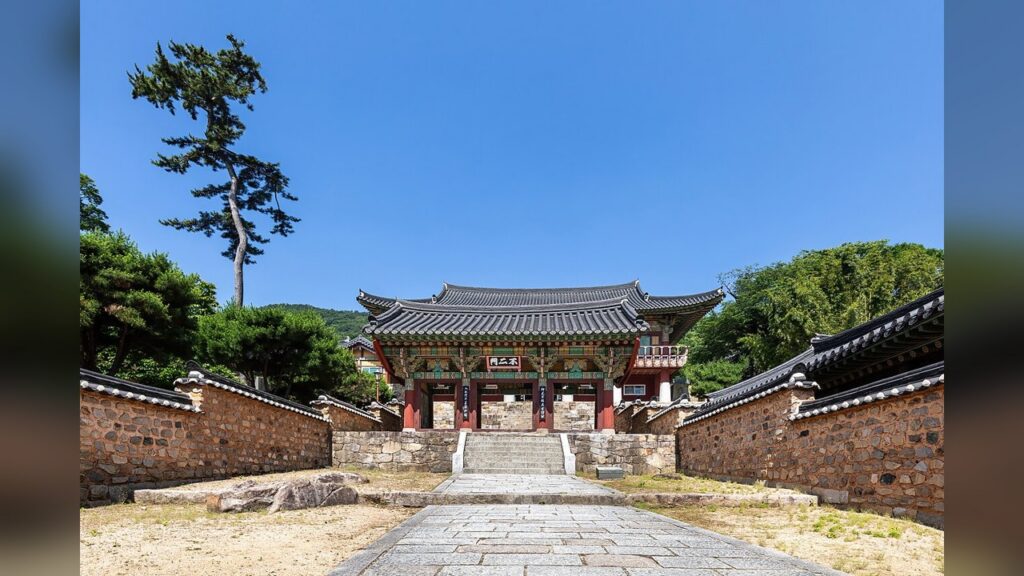 Basile Morin (CC BY-SA 4.0) via Wikimedia Commons
The historical parallel is not reassuring. Trump suspended these same exercises in 2018 after his Singapore summit with Kim Jong Un, calling them “provocative” and “war games.” The diplomacy collapsed within a year. North Korea accelerated its nuclear and missile programs. Kim has since demanded the US drop its “delusional obsession with denuclearization” as a precondition for further talks. The pattern is clear to anyone who has read the literature on coercive bargaining: when a stronger party unilaterally concedes leverage in exchange for personal rapport, the weaker party pockets the concession and raises its price. This is not speculation. It is the documented outcome of the 2018-2019 diplomatic cycle.
Senator Mark Kelly, a former Navy pilot and not someone given to hyperbole about military readiness, called hollowing out the exercises “shortsighted and a mistake.” He is correct, though the framing is generous. This is not shortsightedness, which implies a failure to anticipate consequences. The consequences were anticipated, demonstrated, and catalogued the last time Trump tried this. The decision is better understood as an indifference to consequences that do not register on the president’s personal ledger of who was sufficiently grateful.
Secretary of War, as Trump now styles Pete Hegseth, praised South Korea in May for its “commitment to increase defense spending” and called its burden-sharing a model “all of America’s partners would do well to follow.” That was three months ago. The ally has not changed. The president’s mood has.
The deeper structural problem is that alliance architecture built over decades cannot survive a framework in which it is reassessed every time a foreign leader fails to flatter or assist the incumbent. South Korea is not the first ally to receive this treatment. NATO partners have been berated for insufficient enthusiasm for the Iran operation. Japan, France, and the UK have drawn similar displeasure. The common variable is not their behavior. It is a president who treats the postwar order as a loyalty program in which he is the sole arbiter of points.
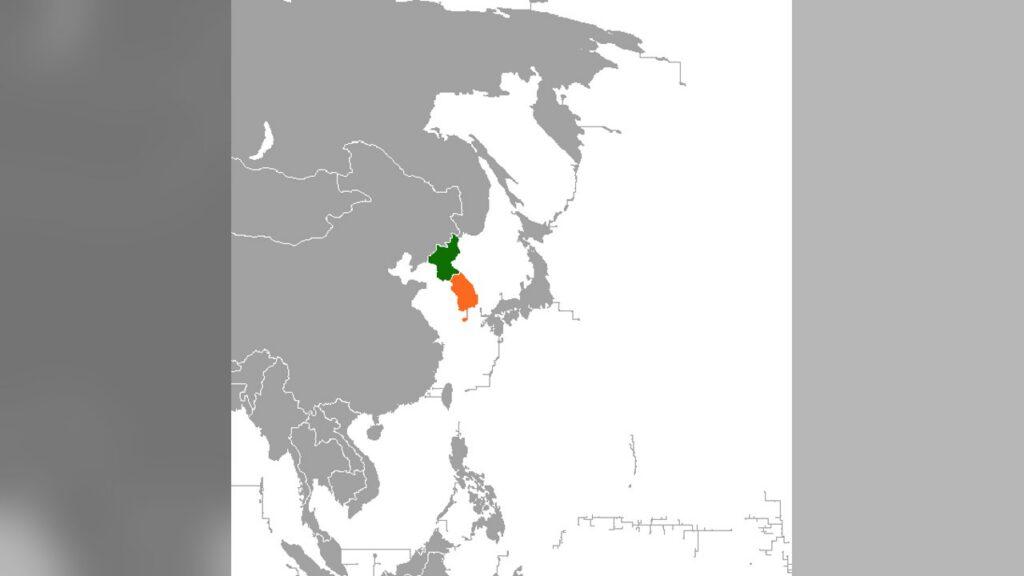 Aridd at English Wikipedia (Public domain) via Wikimedia Commons
One does not need a conspiracy theory to explain what is happening. One needs only to read the post and watch the pattern. The exercises will be reduced. North Korea will interpret this as concession. The missile tests will continue. And the academic literature on personalist foreign policy will acquire another case study, which is, I suppose, the one institutional benefit of the entire exercise.