


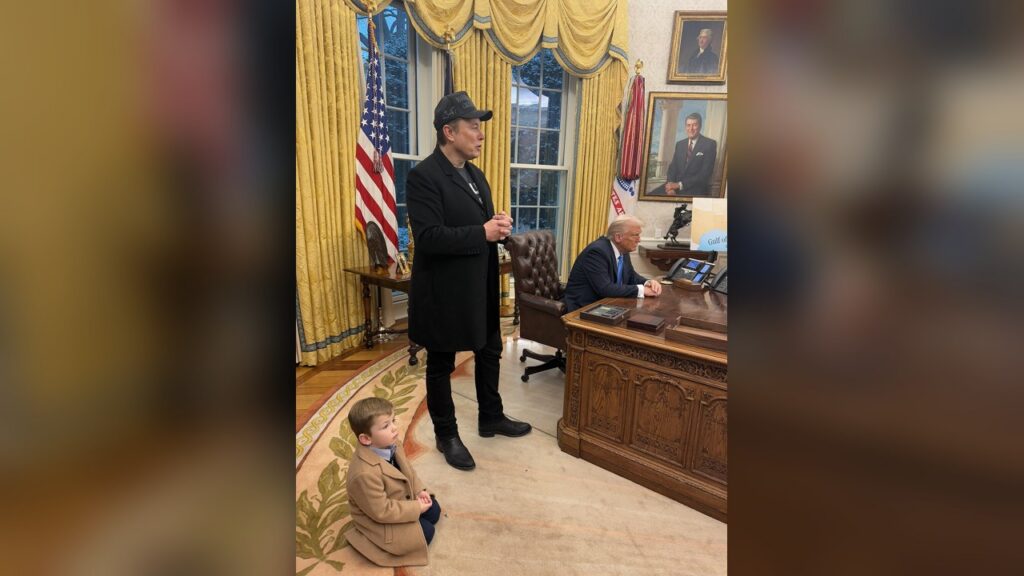
$290 Million Bought a Presidency. Now Musk Is Shopping for the Midterms.
Elon Musk handed Donald Trump’s campaign more than $290 million. He built a super PAC for the occasion. He got a made-up department out of the deal, the Department of Government Efficiency, which he used to slash regulations and restructure federal agencies while serving a tidy 130 days as a “special government employee.” Then he criticized one bill, and the whole arrangement detonated on social media for the entire summer.
Now they are talking again. Roughly once a month, per the Wall Street Journal, discussing AI, China, and world events. Trump told his own aides they will never be as close as they once were. They reunited publicly at Charlie Kirk’s memorial service in September. And Musk is reportedly preparing a $100 million spending push for Republican midterm candidates.
Read that sequence back and tell me this is politics. This is a procurement contract.
The feud itself was instructive. Musk called the One Big Beautiful Bill Act a “disgusting abomination.” Trump told a roomful of reporters, with the German chancellor sitting beside him, that Musk was upset about electric vehicle subsidies and would have lost Pennsylvania without him. Musk floated a third party. Musk threatened to surface Trump in the Epstein files. For two weeks it looked like the most powerful billionaire in the country might actually break with the most powerful politician.
He did not. He will not. Because the relationship was never about ideology or friendship or even mutual respect. It was about access. Musk bought access to the regulatory state he wanted dismantled, and Trump sold it. When the product disappointed, the buyer complained. When the seller reminded the buyer who controls the market, the buyer came back with a new order.
 Department of Government Efficiency (Public domain) via Wikimedia Commons
This is the structure. A single individual can drop nearly a third of a billion dollars into one presidential campaign, receive a government post, oversee the gutting of federal agencies, publicly threaten the president, and then resume the arrangement months later because both sides still need each other’s leverage. There is no accountability mechanism inside that loop. The FEC will not catch it. Congress will not investigate it. The same party that cashes the checks writes the rules.
Trump’s aides say he considers the relationship permanently diminished. That is not a principle. That is a negotiating position. Musk is not being frozen out. He is being managed. The monthly calls about AI and China are not social visits. They are strategy sessions between a president who controls trade policy and a billionaire who controls the platform where that policy gets debated.
And the $100 million midterm pledge is the part that should focus every organizer in this country. Musk spent $23 million trying to buy a Wisconsin Supreme Court seat and lost. He is now preparing to spend four times that across multiple races. The lesson he took from Wisconsin was not that money cannot buy elections. It was that he did not spend enough.
Every door knocked, every voter registered, every neighbor talked to is a direct counterweight to this kind of purchased power. The system is not broken. It is working exactly as it was designed, for the people who can afford the invoice. The only thing that has ever interrupted that design is organized people showing up in numbers too large to outspend.