



There is a well-established literature on what organizational theorists call “substitution of preference for analysis,” and it is, I am afraid, once again time to assign the reading.
Donald Trump has signed a national security memorandum directing Defense Secretary Pete Hegseth and acting Navy Secretary Hung Cao to replace the electromagnetic aircraft launch system and advanced weapons elevators on the USS Doris Miller, a Ford-class carrier already two years behind schedule, with steam and hydraulic systems. They have 60 days to produce a plan. The ship’s construction is nearly 50 percent complete. General Atomics, which builds the electromagnetic system, has noted with characteristic corporate understatement that “changing course now would introduce significant cost, schedule, and integration risks.” One does not need a doctorate in systems engineering to grasp that tearing out the structural skeleton of a half-built warship to reinstall a technology the carrier class was specifically designed to move beyond is not, in the technical sense, a good idea.
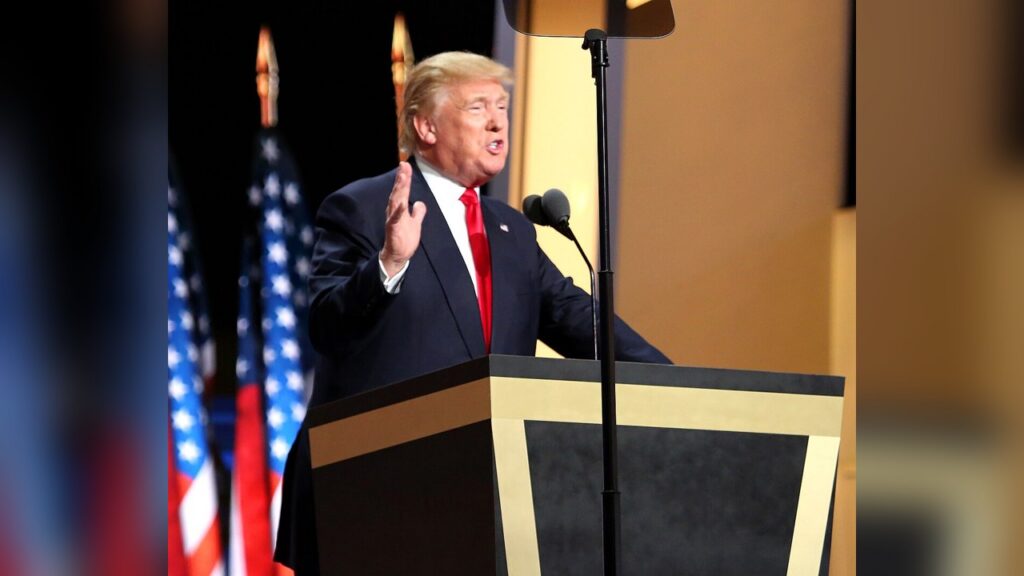 Ali Shaker/VOA (Public domain) via Wikimedia Commons
But the interesting question is not whether this is sound procurement policy. It manifestly is not. The interesting question is how a single anecdote, repeated annually for nine years across Thanksgiving calls, CPAC speeches, campaign rallies, and a Tucker Carlson interview, hardens into national security directive. Trump has told the story of the “catapulter” since 2017. The narrative is always the same: he meets a sailor who has worked catapults for 25 years, asks whether steam or electric is better, and is told that steam can be fixed with “a hammer and a blowtorch” while the electric system requires “geniuses from MIT.” The tale has the structural properties of an urban legend: unverifiable informant, consistent moral, infinite retellability. It survived a pandemic, two impeachment cycles, and a return to the presidency. He brought it up at Tulsi Gabbard’s swearing-in as director of national intelligence, which is not, strictly speaking, a naval event.
What we are observing is the institutional capture of engineering by epistemology. The Ford-class carriers moved to electromagnetic launch for reasons that are exhaustively documented in Naval Sea Systems Command technical literature: higher launch energy, reduced airframe stress, finer control over launch profiles, lower maintenance burden over the lifecycle. These are not matters of taste. They are matters of measured performance. But in the framework now governing Pentagon procurement, the testimony of one unnamed “catapulter” with a hammer and a blowtorch carries equivalent epistemic weight to a decade of test data, because the framework does not distinguish between expertise and authenticity. A man who fixes things with his hands is “real.” A company that produces engineering analyses is “complicated.” “Digital” is, in the president’s own formulation, something you need to be Albert Einstein to understand, which is meant as an indictment of the technology rather than of the listener.
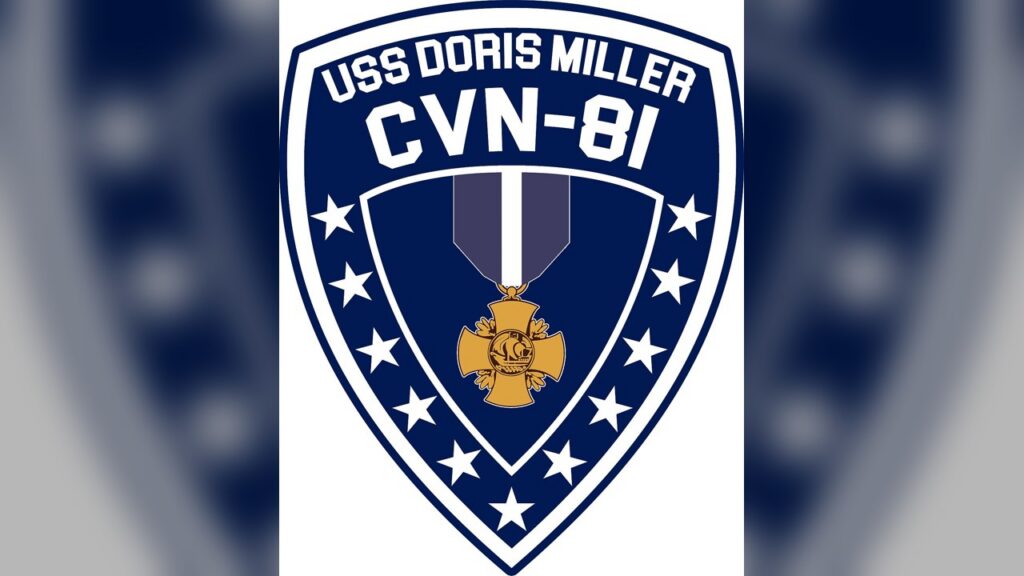 TMKNIGHT (CC BY-SA 4.0) via Wikimedia Commons
Senator Mark Kelly, who holds a master’s degree in aeronautical engineering and has launched from carrier decks hundreds of times as a naval aviator and test pilot, responded with the observation that even he would not presume to tell the Navy how to engineer specific ship systems, and that Trump should “stick to what he knows best: ballrooms, bankruptcy, and bullshit.” The vulgarity is regrettable. The structural analysis is not.
The USS Doris Miller is named for a Black sailor who manned a machine gun at Pearl Harbor without orders and without training, because the situation demanded it. There is a certain grim poetry in a carrier bearing his name being redesigned by a man who believes the problem with modern naval engineering is that it employs too many people who went to MIT.