


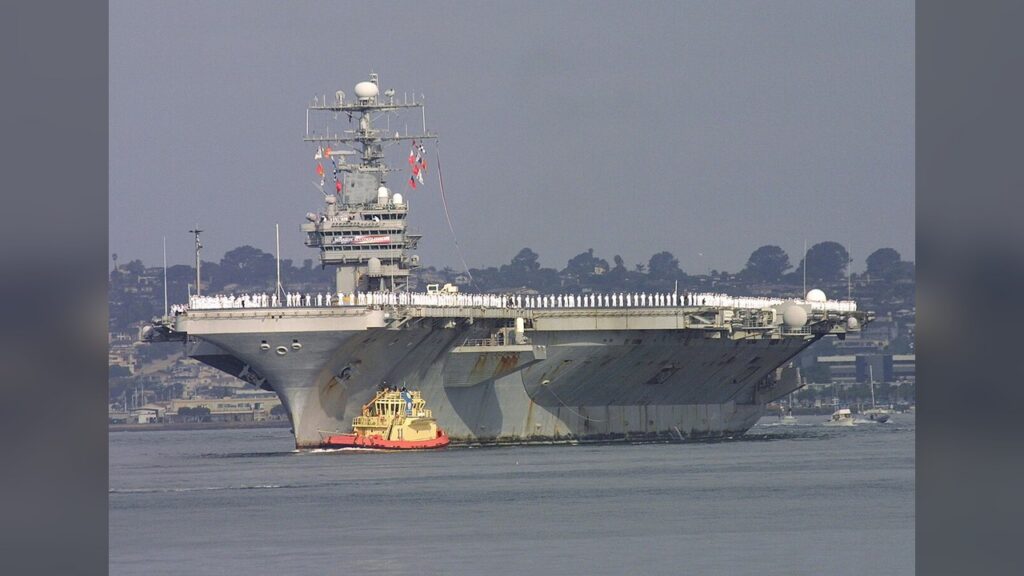
Here’s how you know something’s wrong: the Pentagon’s public affairs shop fires off a press release to tell you everything is fine.
CENTCOM put out a statement Thursday calling reports of seven sailors dead in a brawl aboard the USS Abraham Lincoln “false.” They also swatted down talk of a spike in suicidal ideation among the crew. No service members have died, they said. One sailor fell overboard on Aug. 3 and was “quickly and safely recovered.” The carrier strike group remains “resilient and resolved.”
Resilient and resolved. Got it. Anything else you’d like me to write down in the “totally fine” column?
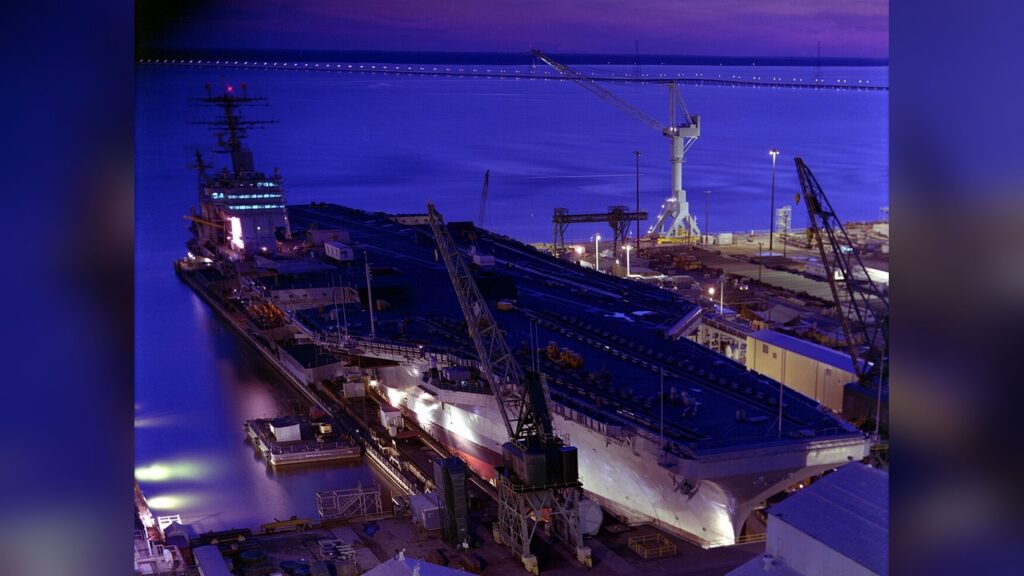 Camera Operator: PH1 DAVID J. CUMMINGS (Public domain) via Wikimedia Commons
Because here’s what CENTCOM’s own statement also tells you, buried under the reassuring adjectives: the Abraham Lincoln has been at sea for more than 260 days. Two hundred and sixty. That’s eight and a half months. In that time, the crew has launched 10,000 aircraft flights and expended 1.5 million pounds of ordnance. That is not a deployment. That is a floating war factory with 5,000 people trapped aboard it since January, when the ship was yanked to the Middle East ahead of the war with Iran.
And the response from your government to the question of whether those sailors are okay? A denial that seven of them died in a fistfight. Well, that’s a relief. I feel much better now.
Here’s what I’d like to ask the manager: why was a rumor about a mass casualty brawl on a U.S. aircraft carrier circulating widely enough that Central Command had to issue an official denial? Sailors talk. Families talk. Something happened on that ship, or something nearly happened, or the conditions on that ship got bad enough that people on the inside started saying things that sounded plausible enough to spread. You don’t get a CENTCOM press release because somebody made up a story out of whole cloth on a slow Tuesday. You get one because the whisper network got loud enough that the brass couldn’t ignore it anymore.
And while we’re asking questions: Defense Secretary Pete Hegseth stood in front of reporters Thursday and said the Navy can maintain its blockade of the Strait of Hormuz “indefinitely” by rotating ships in and out. Indefinitely. He said that word out loud, on purpose, like it was a selling point. The Lincoln is finally being relieved by the USS George Washington, and Hegseth’s pitch is that we’ll just keep doing this forever. One crew hits 260 days, we swap in the next one, and on it goes.
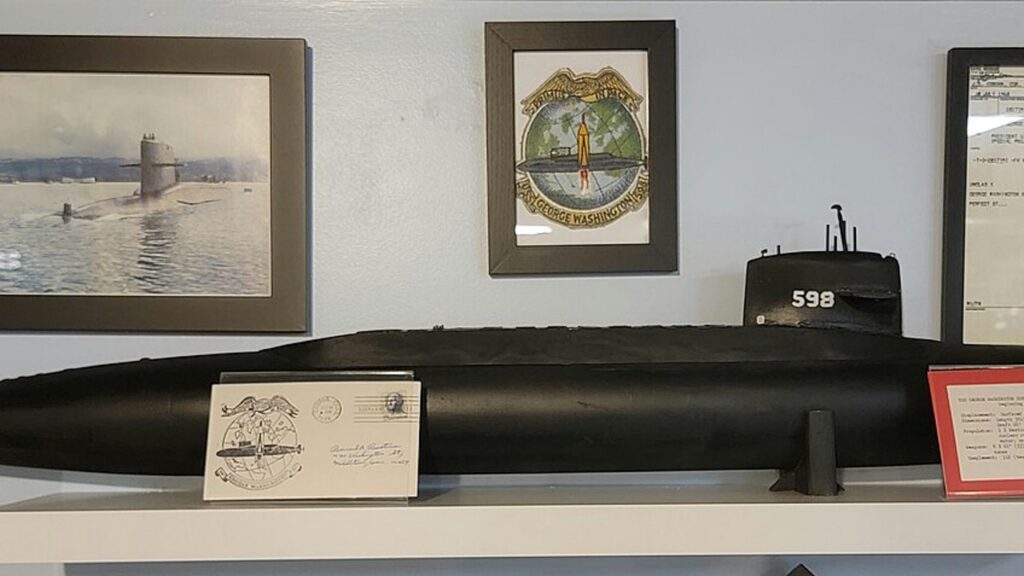 Fritzmann2002 (CC BY-SA 4.0) via Wikimedia Commons
The Lincoln’s official Facebook page posted a photo captioned “Prepared for launch” and one of the top comments reads, and I quote, “This gives the same energy as that proof of life photo Mitch McConnell’s team posted.” When your carrier’s morale is being compared to a hostage situation on the command’s own social media, maybe “resilient and resolved” isn’t the full picture.
I don’t know what happened on the Abraham Lincoln. I know what CENTCOM says happened, which is nothing, and I know what 260 days at sea in a war zone does to human beings, which is not nothing. I know that the same government that told us the Afghanistan withdrawal went fine and the southern border is secure is now telling us the crew is “resilient.” And I know that the fix isn’t a press release. The fix is bringing those sailors home and not replacing them with another 5,000 people sentenced to the same indefinite floating deployment.
But Hegseth said “indefinitely,” so I guess we’re not doing that.