


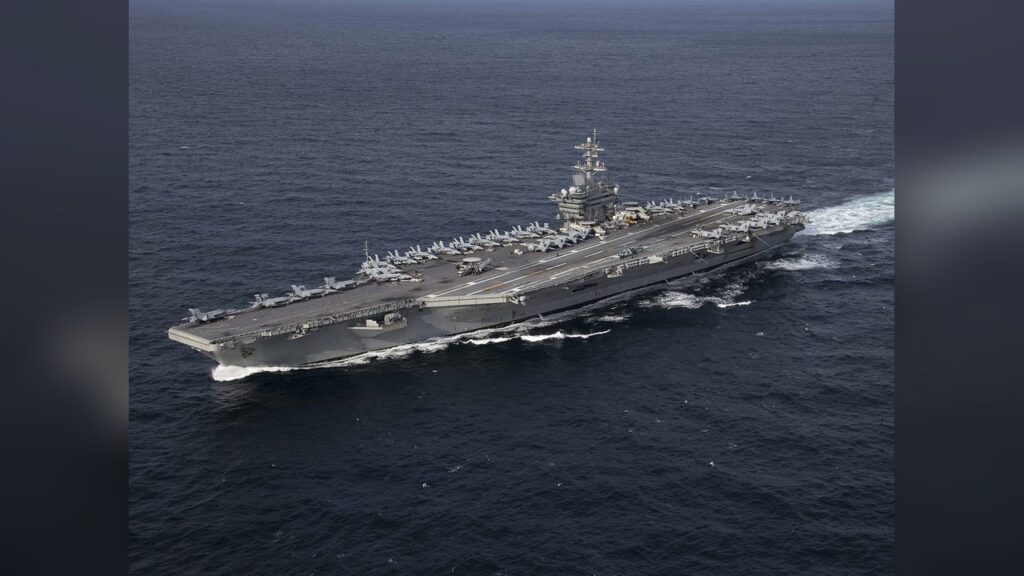
There is a well-established body of literature on deployment fatigue, stretching back to the Army’s own studies of the Vietnam-era rotation system, and it converges on a finding so consistent that one hesitates to call it a discovery: human beings are not indefinitely renewable resources. The USS Abraham Lincoln has now been at sea for over 250 days, roughly 200 of them without a single port call, in a combat zone where the traditional supply hubs were disrupted by the very bombing campaign the carrier was conducting. The Navy’s own doctrine prescribes port visits every 30 to 45 days. The Lincoln got none. And now, we are told, the USS George Washington is being dispatched to relieve it as part of a “regularly scheduled deployment.”
One must admire the phrasing. Sailors aboard the Lincoln have been attempting to throw themselves overboard. Crew members physically restrained one who tried. Family members have publicly described food shortages, water contamination, plumbing failures, mail that vanished for months, and air conditioning that does not work in the Arabian Sea in summer. Senator Richard Blumenthal wrote a letter to Secretary of Defense Pete Hegseth and Acting Navy Secretary Hung Cao cataloguing these conditions in the careful, evidentiary tone of a man who used to be a prosecutor and knows what a paper trail looks like. And the institutional response, in April, was to call the food shortage reports “false.”
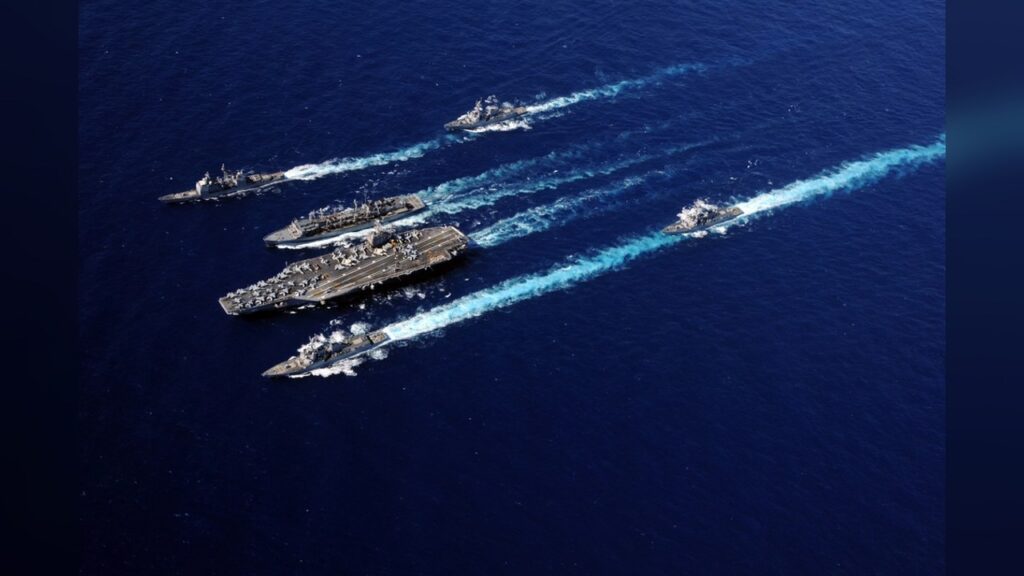 U.S. Forest Service (source) (CC0) via rawpixel
This is the part that should interest anyone who studies organizations under stress. The denial came first. The town hall came second, and by all accounts it was tense, with Hung Cao sitting in front of families who had been watching their sailors deteriorate for months while the Navy’s public affairs office insisted everything was fine. The relief order came third. And the framing, throughout, has been that this was all part of the plan, that the George Washington was already on its way, that the timing is coincidental. The literature on institutional crisis management has a term for this sequence. It is called covering your archival trail.
Consider the larger system. The Lincoln is not an anomaly. The USS Gerald R. Ford returned home in May after an 11-month deployment, the longest carrier deployment since the Vietnam War, during which it supported both the Iran war and the capture of Nicolás Maduro. The USS George H.W. Bush remains in the Arabian Sea. The Strait of Hormuz is bottled up with hundreds of ships. We are maintaining a two-carrier presence in a war zone with a force structure designed for a different era, and the strain is not a bug in the system. It is the system. When you fight an open-ended war with a finite fleet, the fleet breaks. The people inside the fleet break first.
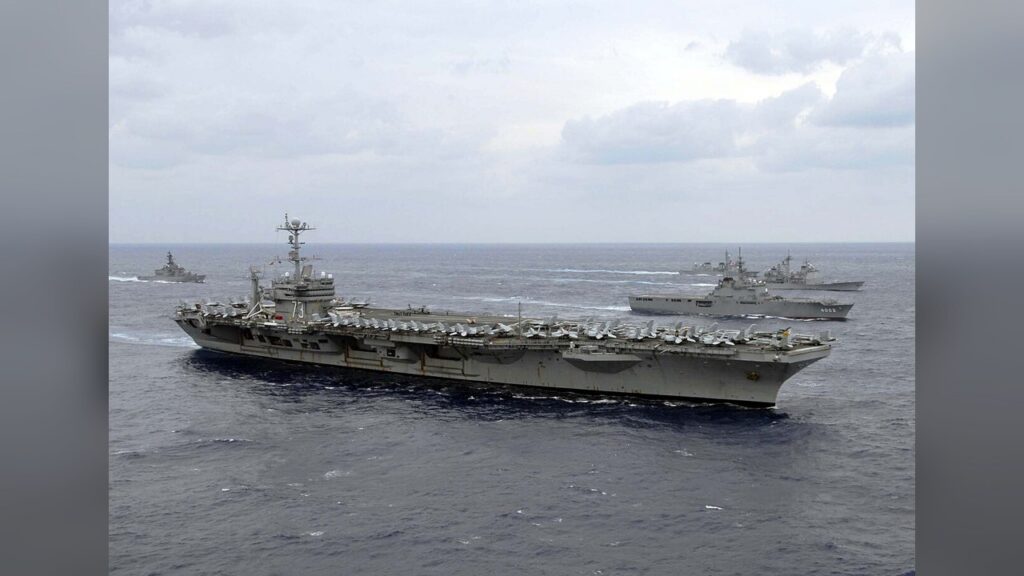 Mass Communication Specialist Seaman Brendan Morgan (Public domain) via Wikimedia Commons
Rep. Marlin Stutzman, a Republican from Indiana, said he plans to seek a report from the Pentagon and the Trump administration detailing conditions aboard the ship. One appreciates the initiative. One also notes that the conditions are not a mystery. They were reported. They were denied. They continued. The families went public because the chain of command did not work. The sailors tried to jump because the relief did not come. And now the relief is coming, and we are asked to understand it as routine.
The George Washington left Da Nang last week, crossed the Singapore Strait, and entered the Strait of Malacca. It will arrive in the Arabian Sea, and the Lincoln will finally go home to San Diego, and the Navy will issue statements about healthy meal options and clean water, and the war will continue with a different hull and a different crew who will, in due course, also not get port calls. The literature tells us what happens next. The literature has been telling us for fifty years. The question is whether anyone with the authority to change the system is reading it.