


One hesitates to use the word “bribe” in a political culture that has spent two centuries engineering its own immunity to the concept. And yet Senators Elizabeth Warren and Richard Blumenthal, in their letter this week to the Antwerp World Diamond Center, have deployed the phrase “cartoonish bribe” with a precision that deserves engagement, not dismissal.
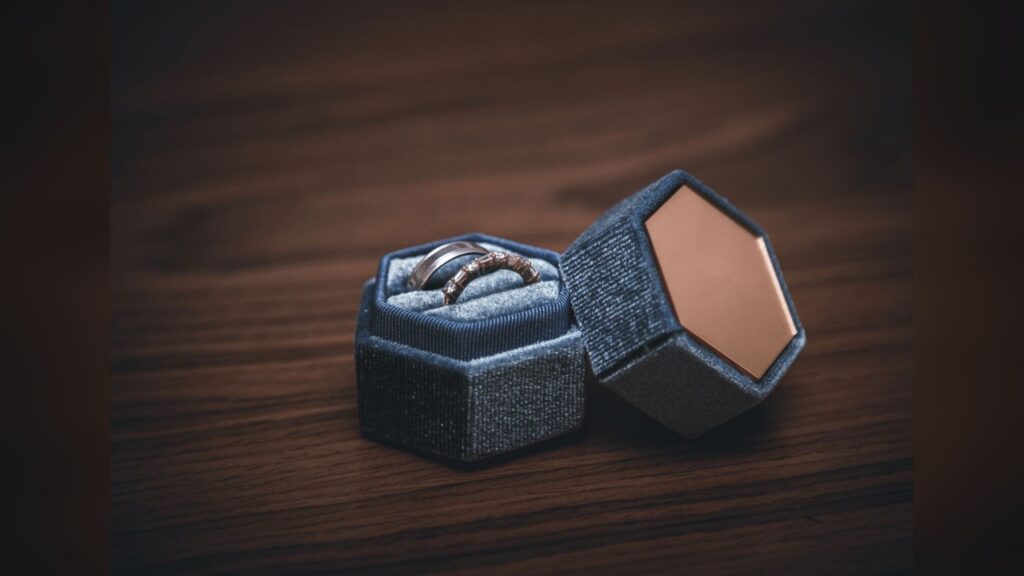
The facts are these. On June 28, at an America 250 celebration in Brussels, the AWDC, a public-private partnership of the Belgian diamond industry, presented U.S. Ambassador Bill White with a custom 18-karat gold ring for delivery to President Trump. The ring bears 321 diamonds, 56 sapphires, 13 emeralds, six rubies, two diamond “T” emblems, Superman-style “45” and “47” logos, the Presidential Seal, and an interior engraving reading “Crafted in Antwerp for Donald John Trump.” It is valued between $25,000 and $35,000. Isidore Mörsel, president of the AWDC, explicitly linked the gift to trade relations at the presentation. Weeks later, the administration exempted European natural diamonds from its new Section 301 tariffs. Antwerp exports roughly $2 billion in diamonds to the United States annually. At a 10 percent rate, the exemption saves importers approximately $200 million per year. The return on a $35,000 ring, if one is keeping accounts, is roughly 5,700-fold.
 The Glorious Studio / Pexels
What we are observing is not an aberration. It is a pattern with a literature. The senators themselves catalogued the precedents. Apple CEO Tim Cook donated $1 million to the inauguration committee and offered a “24-karat gold gift” before securing tariff exemptions on Apple products imported from China. Nvidia CEO Jensen Huang bought a $1 million seat at Mar-a-Lago, after which the administration reversed rules that would have blocked Nvidia from selling its most advanced chips to China. Swiss executives, including Rolex CEO Jean-Frédéric Dufour, presented Trump with a personalized gold bar worth over $130,000 and a luxury desk clock. Days later, Swiss tariffs dropped from 39 percent to 15 percent.
The White House, through spokesperson Kush Desai, has assured the public that “the only special interest guiding the Trump administration’s decision-making is the best interest of the American people.” One notes, with the weariness that accompanies any reading of institutional rhetoric, that this sentence is grammatically perfect and substantively empty. It answers nothing. It cannot. The structural architecture here is the point. There is no need for a smoke-filled room when the transaction occurs at a televised commemoration and the quid is engraved with the recipient’s name.
The Emoluments Clause question the senators raise is legally sound but, in the current institutional environment, practically decorative. AWDC’s entanglement with the Belgian government means the gift may constitute a present from a foreign state requiring congressional consent. But Congress has shown neither the appetite nor the mechanism to enforce that clause against a president who has already normalized its violation across two administrations. The clause was written for a republic that still recognized the concept of corruption as distinct from governance. We no longer inhabit that republic, if we ever did.
 United States Senate (Public domain) via Wikimedia Commons
What is genuinely striking is the aesthetic register. A ring with Superman-style “45” and “47” logos, a gem-encrusted presidential seal, and an interior engraving of the recipient’s full name is not subtle. It does not pretend to be. It operates in the same visual grammar as the gold-plated Trump Tower lobby, the oversized signature on presidential documents, the branded steaks. The AWDC did not misread its audience. They understood, as any competent lobbyist would, that the relevant incentive structure here is not policy argument but personal tribute calibrated to a specific personality’s well-documented affinity for shiny objects bearing his own initials.
The senators gave AWDC until August 24 to respond. One suspects the response will be as carefully crafted as the ring itself, and considerably less expensive.
 United States Senate (Public domain) via Wikimedia Commons