


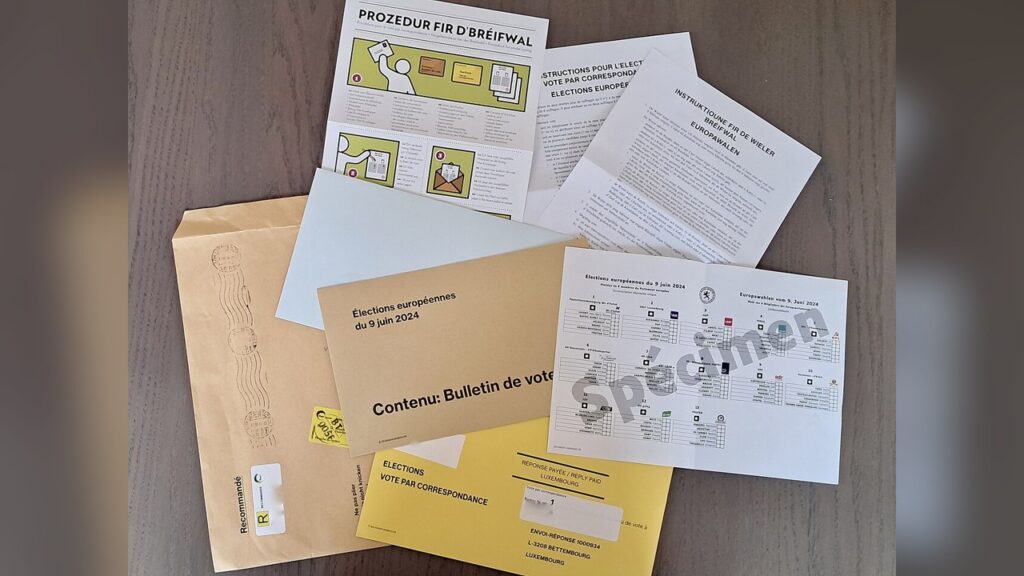
Funny how nobody in Washington ever proposes making it easier to vote. The ideas always go one direction. Tighter, harder, more hoops. And when they dress it up as “election integrity,” you know who gets to jump through the hoops. Not them. You.
President Trump’s March executive order on mail-in voting was a masterpiece of swamp engineering. Here’s how it would have worked: every state sends the U.S. Postal Service a list of voters who requested mail-in ballots, complete with barcode tracking information. Then the Post Office, an agency that loses packages between zip codes in the same city, gets to decide whether your ballot is on the approved list. If it’s not, they simply refuse to deliver it. Your vote goes in the garbage because a mail sorter in a warehouse didn’t see your name on a spreadsheet.
 Shealeah Craighead (Public domain) via Wikimedia Commons
A federal judge in Boston said no. U.S. District Judge Indira Talwani, in a 37-page ruling, declared the whole thing unconstitutional. The president, she wrote, doesn’t have the authority to regulate state elections or build centralized voter lists. She’d already blocked the order in 23 states back in June. This week she expanded that block, and voting rights groups led by the League of Women Voters of Massachusetts pushed her to go national with it.
Now ask yourself a question. Why does the executive order also direct the Department of Homeland Security and the Social Security Administration to build a nationwide list of voters? Since when is the agency that runs airport security in the business of compiling voter rolls? Since when does Social Security, which can barely process retirement claims, need to know who’s requesting an absentee ballot?
The answer is they don’t. But the data does. Centralized lists are the foundation of every voter purge operation ever run in this country. You build the list, you “verify” it against some other database, and then you start scratching names off. We’ve seen this movie before, and the people whose names get scratched off never seem to be the ones in charge.
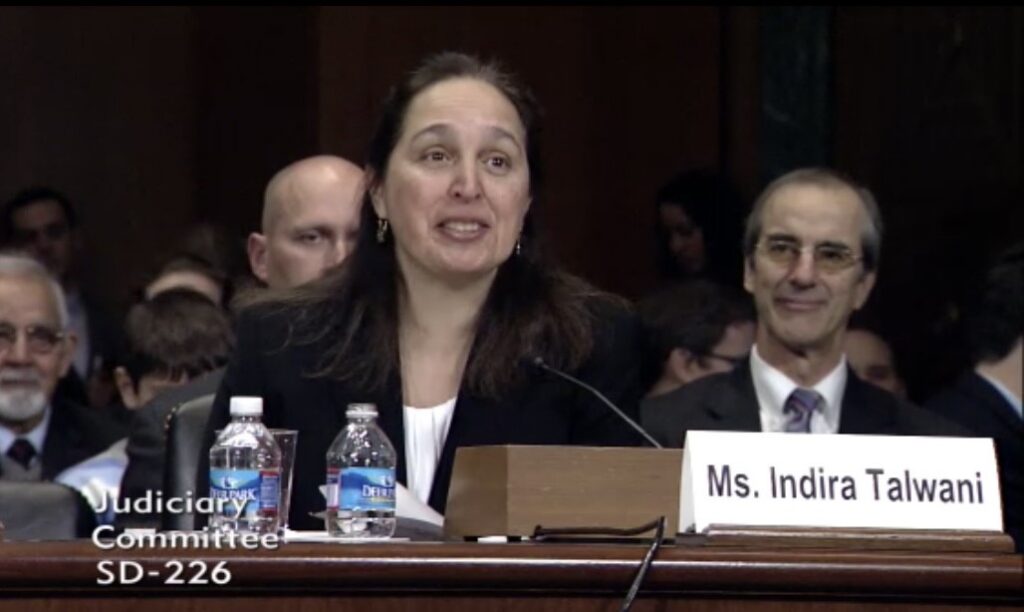 U.S. Senate Judiciary Committee (Public domain) via Wikimedia Commons
And here’s the part the official coverage barely touches. A federal court in Washington, D.C., had already suspended a separate injunction that was keeping USPS from working on this thing. So while Judge Talwani was blocking the order in Boston, another court was unblocking it in D.C. Four separate lawsuits are still active against this executive order. Four. That tells you this isn’t one bad idea that slipped through. This is a coordinated, multi-agency operation to take control of mail-in voting from the states and hand it to the federal government.
The same people who spent years screaming about federal overreach are now perfectly fine with the president telling states how to run their elections. The same crowd that wants to dismantle the administrative state just tried to build the biggest administrative voting apparatus in American history. The Post Office. The agency that can’t deliver a letter on time. That’s who they wanted guarding your ballot.
 Norman B. Leventhal Map Center at the BPL (CC BY 2.0) via Wikimedia Commons
Judge Talwani did the right thing. But don’t get comfortable. The D.C. court already showed you which way the wind blows. They’ll be back with a rewritten order, a different legal theory, some new justification. The swamp never stops. It just changes the paperwork.
Your vote is not a spreadsheet entry. And the mailman is not a poll worker.