


One hesitates to dignify a two-word verdict with a literature review, but here we are. Ty Cobb, who served as Donald Trump’s White House counsel during the Mueller investigation and left the administration well before January 6, sat down with Mehdi Hasan on the Zeteo podcast and offered his assessment of Todd Blanche’s confirmation as attorney general. “We’re screwed,” Cobb said. Hasan, facetiously: “Great. That’s what I suspected.” And there, in that exchange, you have the entire institutionalist dilemma compressed into nine syllables.
Let us be precise about what has happened, because precision is what separates analysis from alarmism. Todd Blanche was Donald Trump’s personal defense attorney. He is now the attorney general of the United States, having narrowly won Senate confirmation on Saturday. The man who represented the president in court now commands the prosecutorial apparatus of the federal government. This is not a conflict of interest. It is the elimination of the concept of conflict of interest as an operative category.
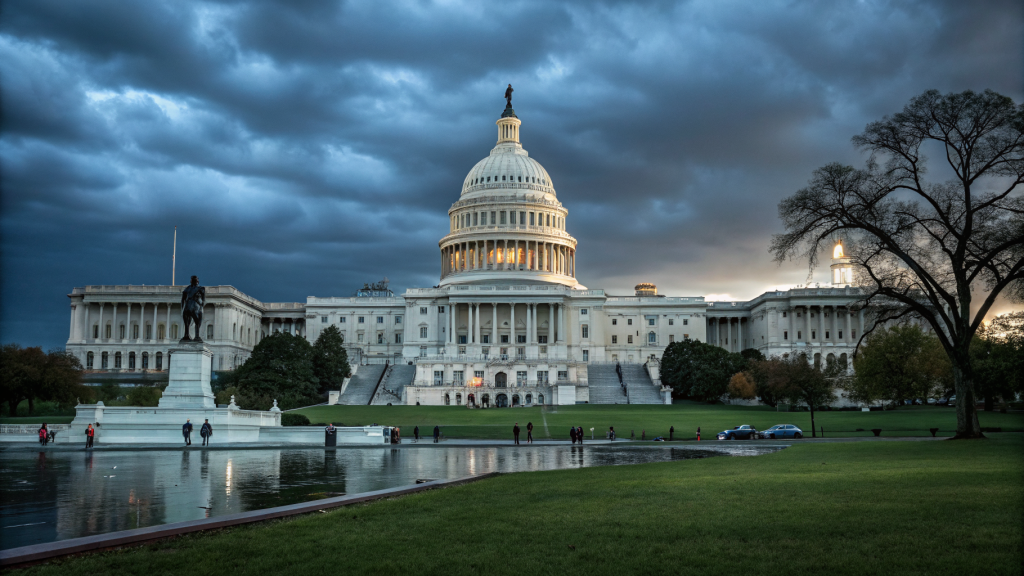
 International Film Service (Public domain) via Wikimedia Commons
Cobb, to his limited credit, did not mince words. When Hasan asked whether Blanche would stand up to Trump if asked to fabricate evidence of voter fraud, Cobb’s answer was not hedged, not qualified, not delivered in the careful subjunctive that former officials typically deploy to preserve their cable-news viability. “We’re screwed.” He went further, comparing Trump’s corruption unfavorably to Idi Amin and Vladimir Putin. “They’re pikers compared to what Trump is doing,” Cobb said. He described the president as “a malignant narcissist” whose “narcissism now has no frontal lobe restraint,” a clinical characterization that, while perhaps diagnostically imprecise from a lawyer, aligns with what every functioning institutionalist in Washington has privately concluded and publicly refused to say.
The Reddit post that brought this interview to wider attention framed Cobb as comparing Blanche’s swearing-in to Hitler’s consolidation of power in 1934. That specific analogy does not appear in the published interview segment available from Yahoo News and HuffPost, which cite the Idi Amin and Putin comparisons instead. The Mediate coverage referenced in the Yahoo article may contain additional context I could not independently verify. But the structural point stands regardless of which dictator Cobb invoked: the capture of the Justice Department by the president’s personal lawyer is a textbook stage in what the comparative politics literature calls executive aggrandizement. You do not need a 1934 analogy. You need a political science textbook from any decade.
 Ryan M. Biller, U.S. Department of Justice (Public domain) via Wikimedia Commons
What is exasperating, frankly, is the performative shock. Cobb himself is not innocent here. He served as White House counsel during the first term, shielded the president through the Mueller investigation, and departed before the architecture of authoritarian capture became visible to everyone who had not been willfully looking away. He is now performing the role of the conscience-stricken former official, appearing on podcasts, delivering verdicts in two words, and collecting the book-deal dividends that accrue to anyone who eventually says what was obvious three years earlier. The literature on democratic backsliding has a term for this: elite complicity followed by elite defection. The defection is necessary. It is also insufficient, and it is always late.
Blanche has already blocked the release of Jeffrey Epstein files, overseen Trump’s retaliation cases against former FBI Director James Comey, and signaled that U.S. attorneys who decline to follow presidential orders regardless of merit can be fired. Cobb told Hasan it is a “virtual certainty” that Trump will continue operating what amounts to a slush fund, and that the president will persist in his effort to “rewrite history and make the Jan. 6 thugs heroes.” These are not speculative claims. They are descriptions of observed behavior pattern-matched against a well-documented trajectory.
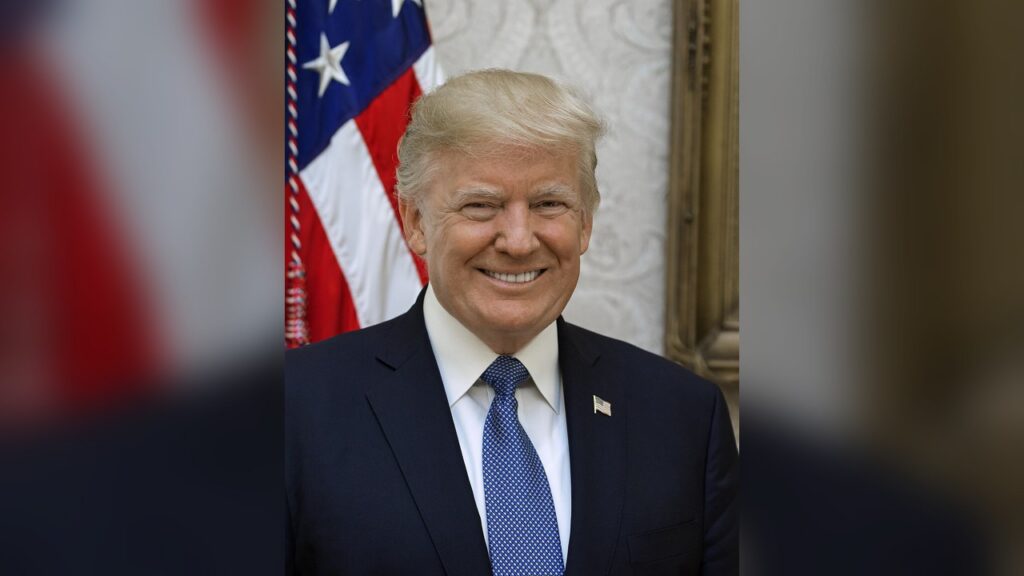 Shealeah Craighead (Public domain) via Wikimedia Commons
The Senate Republicans who demanded written assurances from Blanche about dismantling Trump’s $1.8 billion Anti-Weaponization Fund took the Department of Justice at its word. Cobb’s response to whether that trust was naive: the slush fund is a virtual certainty. The senators asked for a guarantee from a man whose entire career is now defined by personal loyalty to a single client. They received a promise from the apparatus. The apparatus does not keep promises. The apparatus captures.
The midterms are the remaining structural firewall. If Congress is not reclaimed by people willing to exercise actual oversight, the 2026 elections will be the last procedural mechanism available before the system settles into its new equilibrium. Ty Cobb said “we’re screwed” and then went back to his podcast circuit. The rest of us do not have a podcast circuit to retreat to.