



Donald Trump stood before Congress and declared that the murder rate saw “its single largest decline in recorded history.” He said it like he’d personally talked every gun off the street. He pointed to his federal troop deployments in Washington, D.C., Memphis, and New Orleans and called them a “big success.” He even asked, with that practiced incredulity of his, “How did that happen?”
Here is how it happened: it didn’t start with him.
The data is unambiguous. Homicides peaked in 2021 at 26,031 nationwide, according to the CDC. By 2024, they had fallen to 20,162, roughly the pre-pandemic level. Jeff Asher, the crime statistician behind the Real-Time Crime Index, put it plainly at a February panel: “We saw a record drop in murder in 2023, 2024, and then again in 2025. So the roots of it are probably stuff that happened in the 2021-2022 time frame.” That is, before Trump was anywhere near the Oval Office. In D.C., the city Trump now brags about, gun violence had been dropping for two straight years before he sent in the National Guard. The trend line didn’t bend when the troops arrived. It just kept going.
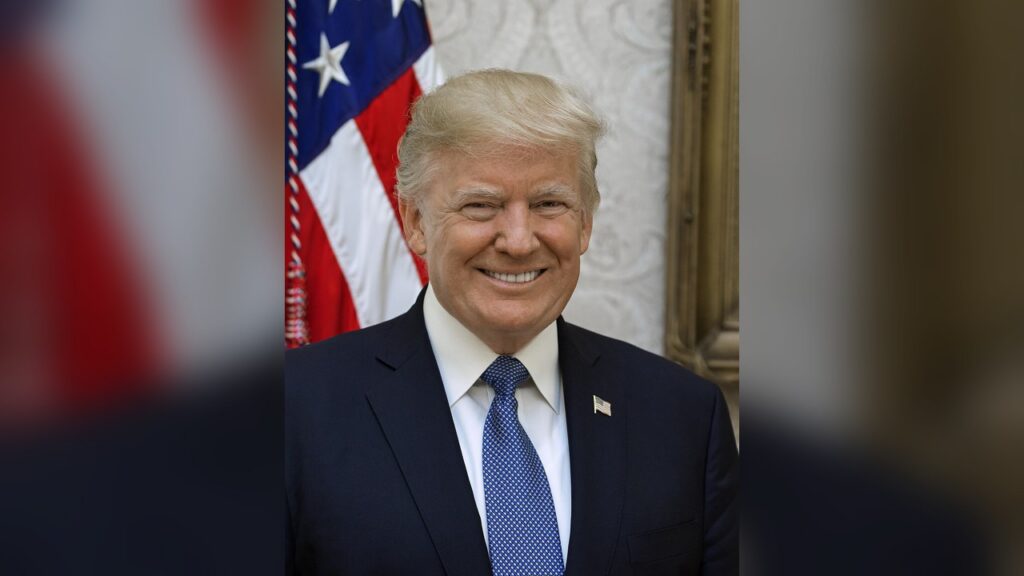 Shealeah Craighead (Public domain) via Wikimedia Commons
What actually happened in that 2021-2022 window? The federal government poured money into community violence intervention at a scale never seen before. The American Rescue Plan Act and the Bipartisan Safer Communities Act funded jobs programs, mental health services, substance use treatment, street-level outreach, and alternative crisis response. Boston, a pioneer in community violence intervention, ended 2024 with its lowest murder count since the 1950s. Mayor Michelle Wu credited coordination between police and community-based organizations, plus 10,000 summer youth jobs. Baltimore, Detroit, and St. Louis saw homicides fall below pre-pandemic levels. These are not flukes. These are the results of investment in people.
And what is Trump doing now? He is gutting the programs that produced these results. His administration has slashed more than $800 million in DOJ grant funding, including over $168 million that went directly to community safety and violence prevention. He has signaled he cares more about “uplifting the image of the law enforcement profession” than funding the work that actually keeps people alive. He is cutting Medicaid, housing assistance, and treatment programs that researchers identify as core crime-reduction infrastructure. He is, in real time, dismantling the machinery that built the safety he claims to have created.
Meanwhile, he is using the crime decline to launder his mass deportation agenda. He told the Fraternal Order of Police that he removed “thousands of violent criminal illegal aliens” and that the murder rate “plummeted by 28 percent” as a result. The National Institute of Justice found that undocumented immigrants are arrested at less than half the rate of native-born citizens for violent and drug crimes. Sanctuary cities, the very places Trump demonizes, have lower crime rates than comparable jurisdictions. The people he is deporting, by and large, do not have criminal records. The crime drop is being weaponized to justify cruelty that has nothing to do with safety.
 Kenneth C. Zirkel (CC BY-SA 4.0) via Wikimedia Commons
This is not a debate about credit. This is about power and accountability. Trump is seizing the fruits of community investment, claiming them as his own, and then chopping the roots. If he succeeds in rewriting this story, the country will abandon evidence-based safety for the politics of occupation and deportation. The crime decline may not survive his administration. That might not even bother him. A president who sent the military into Los Angeles and called Portland “war-ravaged” needs disorder more than he needs peace.
The communities that did the work know what happened. Boston knows. Baltimore knows. The organizers and outreach workers and violence interrupters who walked the streets while Trump was holding roundtables know. The question is whether the rest of us will let the narrative be stolen, or whether we will defend the investments that made this possible and demand more of them. Safety was built. It can be unbuilt. That is the fight.