



Sen. Bill Cassidy spent 30 years as a physician telling parents that vaccines save lives. Then he handed the keys of the nation’s public health apparatus to a man who spent those same 30 years insisting they don’t. On Monday, the bill came due.
President Trump signed an executive order slashing recommended childhood vaccines from 19 to 11, peddling the same debunked autism lie that Robert F. Kennedy Jr. built his career on. Trump stood at a podium and said, with the confidence of a man who has never read a study, that splitting the MMR vaccine into three separate visits would have “a huge impact on autism.” It would not. Decades of research say so. Every credible pediatrician in the country says so. But the president has decided he knows better than the entire field of immunology, and the Health and Human Services secretary he installed is cheering him on.
 United States Congress (Public domain) via Wikimedia Commons
This is what happens when a movement lets one senator’s political calculation override the public trust. Cassidy, a Republican from Louisiana and chair of the Senate Health, Education, Labor and Pensions Committee, was the single most important vote confirming Kennedy to lead HHS. He did it based on private assurances that Kennedy would not gut federal vaccination programs. Kennedy then fired all 17 members of the Advisory Committee on Immunization Practices and replaced them with eight hand-picked picks, several with documented histories of vaccine skepticism. When Rep. Kim Schrier, a pediatrician herself, asked Kennedy directly whether he had lied to Cassidy, Kennedy replied: “I never made that agreement.”
So either Kennedy lied to Cassidy’s face to secure his confirmation, or Cassidy sold a confirmation vote for promises that were never real. Either way, the structural failure is staggering. One senator’s career ambitions opened the door to a systematic dismantling of the childhood immunization schedule, and now the American Academy of Pediatrics has been forced to announce it will publish its own vaccine recommendations because the federal government’s process is too compromised to trust.
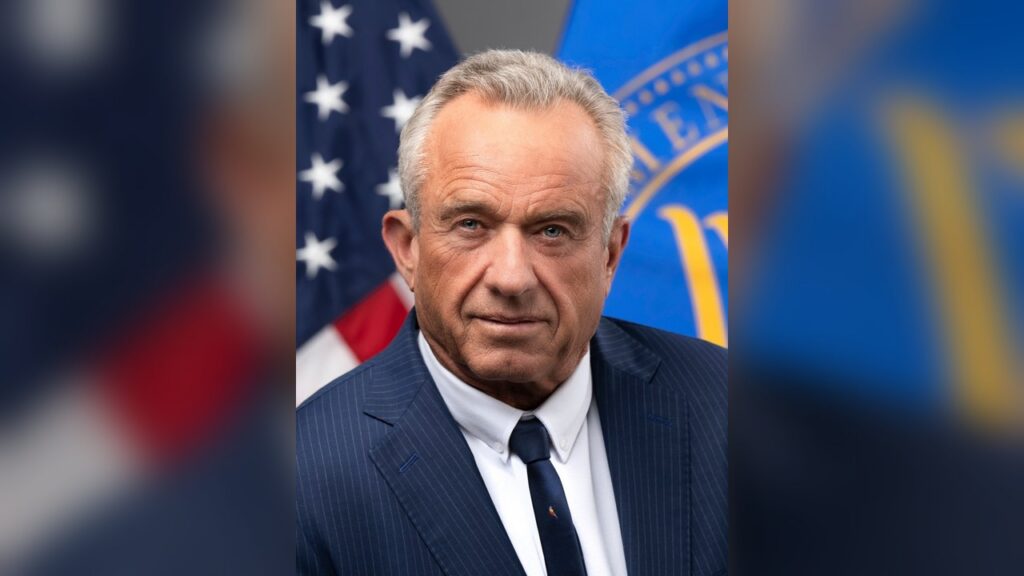 U.S. Department of Health and Human Services (Public domain) via Wikimedia Commons
Let us be clear about the harm. The United States is currently logging its worst year for measles infections in decades. Vaccination rates have been falling since the pandemic. The executive order directs the Department of Justice to investigate states for not honoring enough vaccine exemptions, turning the federal law enforcement apparatus into an enforcer of vaccine refusal. Trump acknowledged that splitting the MMR shot into three visits would be “inconvenient” and involve “five stops,” then waved off concerns about co-pays by saying “we’re going to work with the families” without specifying a single mechanism to do so.
This is not a debate between two reasonable sides. On one side: every major medical institution, decades of peer-reviewed evidence, and the lived experience of communities that have watched preventable diseases return. On the other: a president who thinks five doctor visits prevent autism and a health secretary who pulled $1.2 billion from global immunization programs.
 Rhododendrites (CC BY-SA 4.0) via Wikimedia Commons
Cassidy now says Trump has no “expertise to make these changes.” He says he was duped. He faces a primary in April from challengers who think he is not loyal enough to Trump. His regret is real, perhaps, but it is also convenient, and it comes after the damage is done. The ACIP is packed. The executive order is signed. The DOJ is being weaponized against states that try to protect their children.
Accountability means more than a senator saying he feels betrayed. It means rebuilding the advisory infrastructure Kennedy gutted. It means Congress asserting its authority over a health department being run into the ground by ideology. It means communities demanding that their state legislatures hold the line on vaccine requirements regardless of what this Justice Department threatens. The harm is systemic. The response has to be too.