


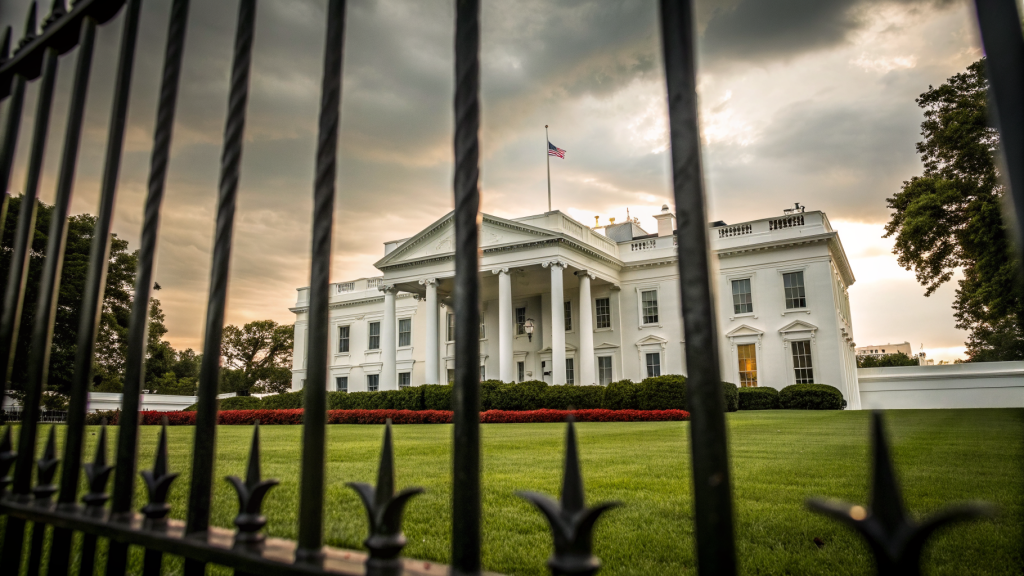
There is a particular species of governance, well-documented in the comparative politics literature, in which the state’s prosecutorial apparatus is gradually repurposed to settle personal scores. We tend to associate it with fragile democracies and constitutional transitions, not with a republic two and a half centuries old. And yet here we are, watching a sitting president use the Department of Justice to prosecute a man over seashells.
The facts, such as they are: former FBI director James Comey posted an Instagram photograph of seashells arranged on a beach to spell “86 47.” The Department of Justice, under President Trump’s direction, filed a two-count felony indictment in April asserting this constituted “a serious expression of an intent to do harm to the president of the United States.” The legal theory rests on the proposition that “86” is mob parlance for “kill,” a claim the DOJ reportedly shored up by consulting Salvatore “Sammy the Bull” Gravano, the former Gambino family hitman turned informant. One struggles to recall a prosecution whose evidentiary foundation rested more comfortably on gangster autobiography.
Comey’s lawyers have asked a federal judge to dismiss the case, arguing the alleged meaning of the code “is contradicted by every possible source of meaning: dictionaries, context, precedent, and common sense.” They are being generous. “86” has been American diner slang for “remove from the menu” since before Trump was born. The idea that a former federal prosecutor arranged seashells on a public beach as a coded assassination directive is not a legal theory. It is a paranoid reading, and the fact that it has been formalized into an indictment tells you something about the institutional decay it documents.
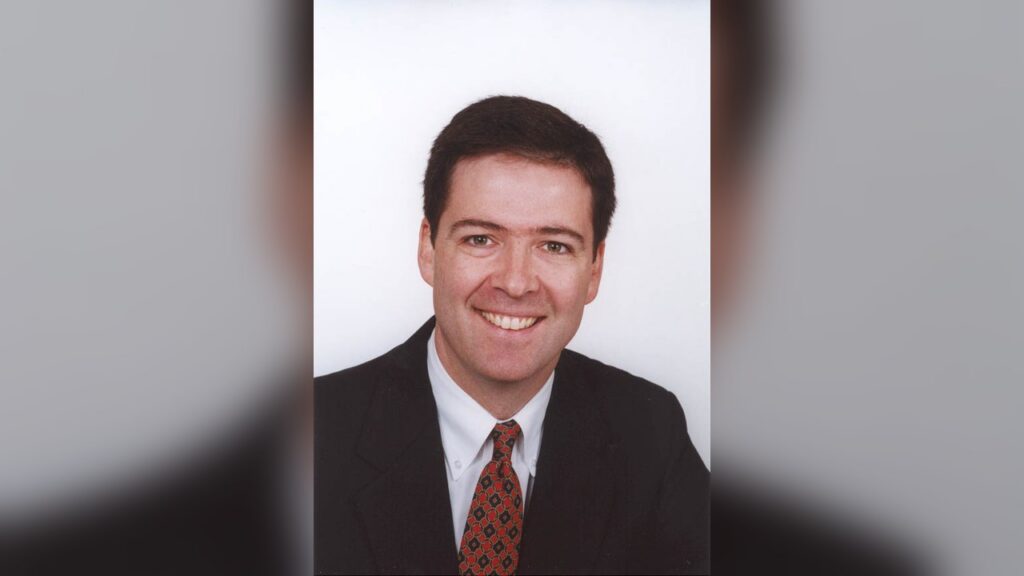 Department of Justice (Public domain) via Wikimedia Commons
But the Comey prosecution, absurd as it is, turns out to be the lesser spectacle. On Sunday night, the president took to Truth Social to suggest that graffiti reading “86 47” discovered on the grass adjoining the Lincoln Memorial Reflecting Pool was “probably gotten from James Comey.” The graffiti, roughly 15 by 30 feet, appeared near a $14.7 million renovation that has become its own minor disaster: the pool’s lining floated loose, the water turned green with algae, and the president himself has now acknowledged contractor error. So the monument’s problems stem partly from incompetence, partly from vandalism, and partly from whatever gravitational force compels this particular president to fold every grievance into a single, ever-expanding narrative of personal betrayal.
He was also, in the same post, attacking his own U.S. Attorney for the District of Columbia, Jeanine Pirro, for dismissing indictments against people accused of sabotaging the renovation. He cited court documents involving retired Olympic canoeist David Hearn, whom a National Park Service employee described as “violently” tugging at the pool’s coating. Whether that prosecution had merit, I cannot say. What I can say is that a president publicly berating his own hand-picked prosecutor for exercising charging discretion is not normal oversight. It is the behavior of someone who regards the DOJ as an extension of his personal will, and who experiences any deviation from that will as betrayal.
Comey, for his part, posted a video on Substack in which he said: “Nothing has changed with me. I’m still innocent, I’m still not afraid, and I still believe in the independent federal judiciary, so let’s go.” One does not need to admire Comey’s tenure at the FBI, and the literature on his 2016 interventions is robust and critical, to recognize that prosecuting him over a beach photograph is an act of institutional vandalism more serious than anything done to the Reflecting Pool. The pool can be re-lined. A justice system conditioned to indict the president’s critics on the strength of mob-movie etymology is rather harder to repair.
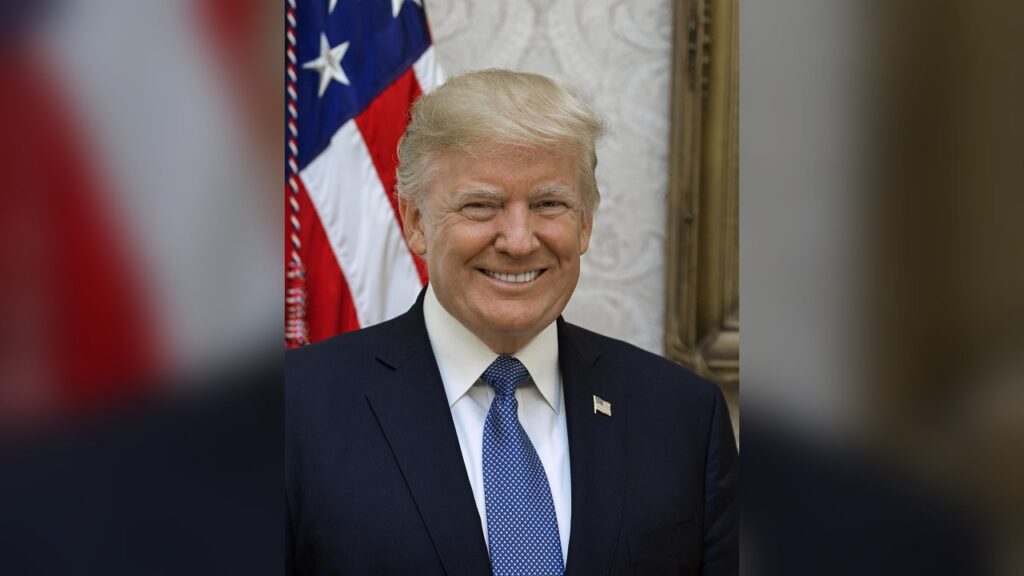 Shealeah Craighead (Public domain) via Wikimedia Commons
The president told reporters in the Oval Office: “You ever see the movies? ’86 him,’ the mobster says to one of his wonderful associates.” He is, characteristically, citing cinema as his evidentiary standard. The DOJ is citing Sammy the Bull. The rest of us are left to contemplate what it means when the federal government’s threshold for a felony prosecution has been lowered to the level of a Martin Scorsese screenplay.