


There is a particular genre of institutional failure that only becomes visible in retrospect, though the structural conditions for it were legible to anyone paying attention years in advance. The United States entered a war with Iran five months ago. It is now discovering, with what one can only describe as belated alarm, that wars consume munitions at rates that peacetime procurement cycles were never calibrated to sustain. This is not a scandal. It is a predictable outcome of a system designed for a world that no longer exists, operated by people who insisted it did.
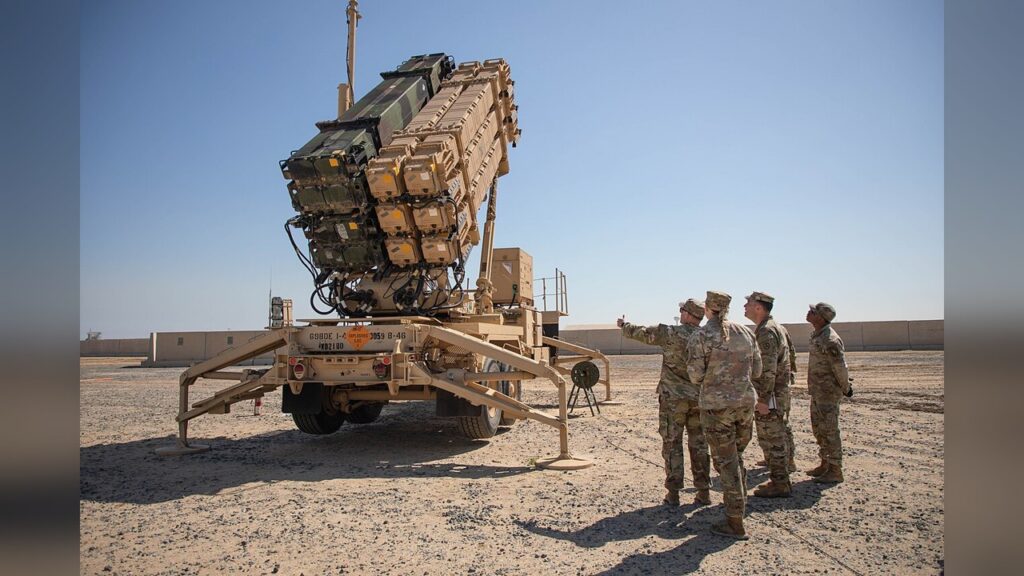
The Center for Strategic and International Studies, a think tank whose analytical rigor one would hope the administration might consult before rather than after launching military operations, estimates that Patriot interceptor inventories have fallen from 2,330 before the conflict to between 759 and 827 today. That is a reduction of at least 65 percent. THAAD interceptors, the other critical layer of upper-tier air defense, dropped from 452 to between 234 and 278, a depletion of at least 38 percent. These are not marginal drawdowns. They are the kind of numbers that, in any competent wargaming scenario, would trigger an immediate strategic reassessment rather than a polite request to industry for faster delivery.
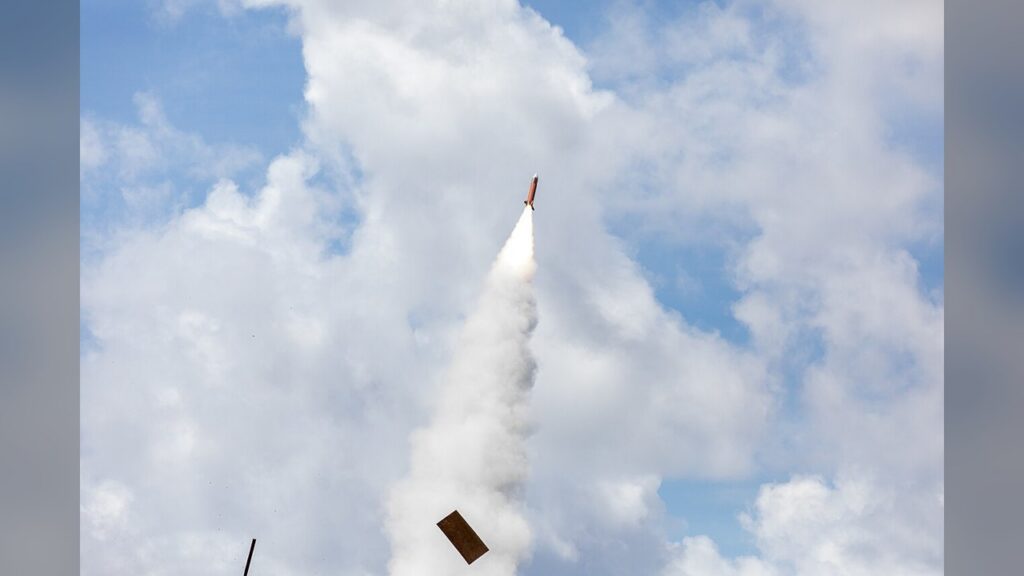 U.S. Army 94AAMDC by Maj. Nicholas Chopp (Public domain) via Wikimedia Commons
And yet. Deputy Defense Secretary Steve Feinberg, a man whose background is in private equity rather than procurement logistics, has written to defense industry leaders giving them 21 days to submit plans for “significantly faster, more aggressive delivery schedules.” “Years-long development cycles are not acceptable,” he declared, with the tone of someone who has just discovered that manufacturing complex guided missiles is not, in fact, analogous to scaling a software platform. One is tempted to note that the defense industrial base’s capacity constraints have been documented in literally decades of GAO reports, CSIS analyses, and congressional testimony, none of which required a five-month war to validate. The literature was there. The literature has been there since the Clinton administration.
Meanwhile, the president of the United States, in a posture that scholars of organizational behavior might classify under “executive denial in the face of adverse data,” posted on Truth Social that the U.S. has “massive amounts” of munitions and that “large amounts are being manufactured and shipped to the U.S. as needed.” His own Pentagon spokesman, Sean Parnell, felt compelled the following day to confirm that Feinberg’s urgent production memo is, in fact, “real,” which is a remarkable sentence for a government spokesperson to have to utter. One might charitably interpret the gap between the commander-in-chief’s social media assurances and his deputy secretary’s emergency procurement directive as a difference in framing. A less charitable reading, and the one the evidence supports, is that the president is either uninformed about the state of his own arsenal or deliberately misrepresenting it.
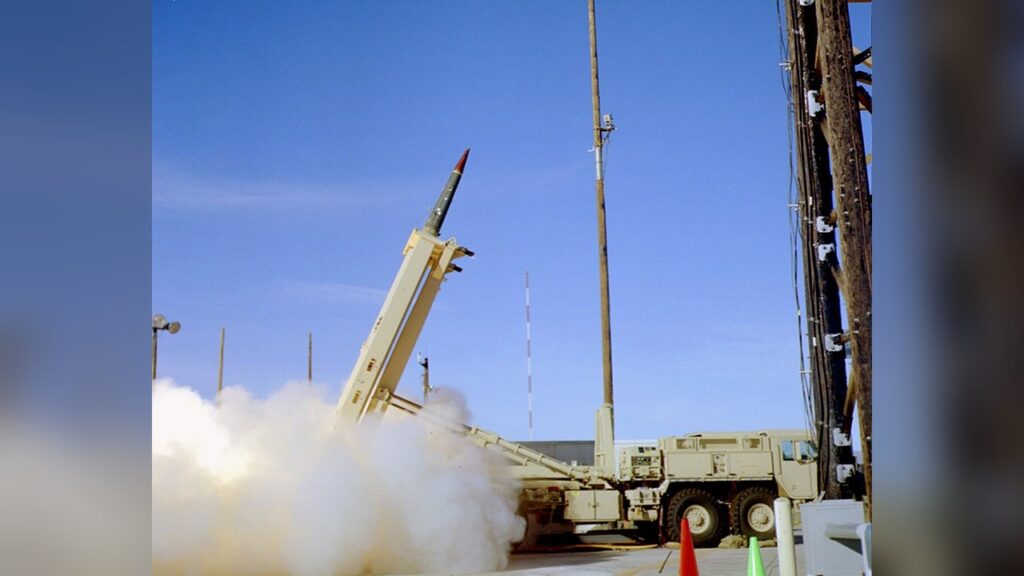 National Missile Defense image (Public domain) via Wikimedia Commons
The deeper structural problem, of course, is congressional. A defense spending bill that would raise the Pentagon budget from roughly $900 billion to $1.5 trillion is stalled, with lawmakers understandably reluctant to rubber-stamp a funding surge for a conflict many of them opposed. Defense Secretary Pete Hegseth is separately pitching a $350 billion replenishment package, a figure that, if one squints, resembles a negotiated fallback position rather than a coherent strategic request. The administration invoked the Defense Production Act to compel faster manufacturing, held a White House summit where Trump claimed defense CEOs “agreed to quadruple production,” and is pursuing a $58.6 billion Lockheed Martin agreement. None of these measures can function without congressional appropriations, and Congress is not currently in a mood to appropriate.
What we are observing, then, is not merely a stockpile crisis. It is the collision of an imperial foreign policy posture with a procurement architecture built for a unipolar moment that ended sometime around 2014, a legislative branch that has lost the capacity for timely authorization, and an executive whose public statements contradict the assessments of his own department. The CSIS analysis notes that shrunken interceptor inventories may force commanders to launch fewer missiles against incoming threats, raising the probability of penetration. That is the concrete consequence. American troops and regional allies will assume more risk because the system that was supposed to sustain them was never asked whether it could.
 3d U.S. Infantry Regiment (The Old Guard) (Public domain) via Wikimedia Commons
Parnell insisted this modernization effort “predated the five-month-old conflict.” Of course it did. Everything that was not done before the war predates the war. That is rather the point.