

Funny how the people who spent years screaming about “cancel culture” are now the ones canceling actual American history. Not statues. Not tweets. Signs at national parks. Taxpayer-funded signs about slavery, about Japanese internment, about what climate change is doing to the coast of Maine. Your money paid for those signs. Your government is now taking them down and telling you it’s for your own good.
Last March, President Trump signed an executive order with a name straight out of a propaganda ministry: “Restoring Truth and Sanity to American History.” The order instructs the National Park Service and the Smithsonian to scrub anything that “inappropriately disparages Americans” and replace it with language celebrating national greatness. Ask yourself who benefits when the government gets to decide which parts of history are too uncomfortable for you to read on a placard at Fort Sumter.
Jenny McBurney, a government publications librarian at the University of Minnesota, had a simpler idea. She launched Save Our Signs, a crowdsourced project to photograph every sign in all 400-plus national parks and historic sites before the administration can memory-hole them. As of August 3, volunteers had uploaded 17,236 photos. Charlene Forsythe, one of the most prolific contributors, sent in more than 2,000 from 53 parks she visited with her mother. They started taking the photos to share with Forsythe’s homebound grandmother. Now those photos are a record of what the government doesn’t want you to see.
And it’s not just park signs. The Data Rescue Project is filling private servers with CDC health data and EPA climate data that the administration has been quietly deleting. Over 1,600 volunteers have archived more than 50,000 photos and videos of Smithsonian exhibits. Georgetown history professor Chandra Manning, who helped organize the Smithsonian effort, said her deepest fear is that the administration plans to “rewrite and falsify who counts as an American.” Her colleague James Millward, who studies Chinese history, said the whole thing reminded him of the Chinese Communist Party’s directives to “tell China’s story well.” That’s not a comparison that should make any American comfortable.
Signs have already been confirmed removed or altered at Acadia, Cape Cod, Fort Sumter, Fort Moultrie, Gateway, Independence, Muir Woods, the National Mall, and the Virgin Islands national park. At Acadia, the signs describing how climate change drives sea level rise and storm surge are gone. The administration called reports about the removal of a famous Civil War photo of a whipped enslaved man at Fort Pulaski “misinformation” but declined to say which part was wrong. Funny how that works.
 U.S. Embassy The Hague (Public domain) via Wikimedia Commons
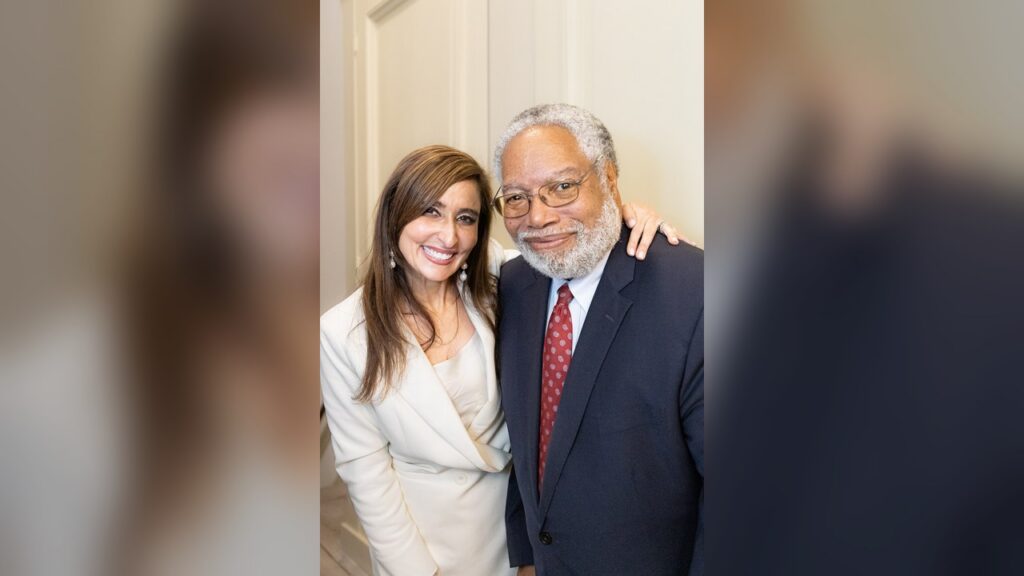
Trump sent a formal letter to Lonnie G. Bunch III, the first Black secretary of the Smithsonian, giving him 120 days to “begin implementing content corrections.” Then he took to Truth Social to explain himself in his usual style: “The Smithsonian is OUT OF CONTROL,” he wrote, complaining that “everything discussed is how horrible our Country is, how bad Slavery was.” How bad slavery was. That’s what the President of the United States objects to a museum mentioning.
A Massachusetts district judge ruled in June that the administration had to put the removed signs back. An appeals judge reversed that in July. So the signs stay down. The courts, the agencies, the executive orders, all moving in the same direction, and a librarian in Minnesota and a few thousand volunteers are the ones standing between the public record and the shredder.
McBurney put it plainly. “We don’t want this information to just disappear in the dark.”
The establishment counts on you not noticing what’s missing. You can’t miss what you never knew was there. That’s the whole play. And 1,600 people with cameras just called it.